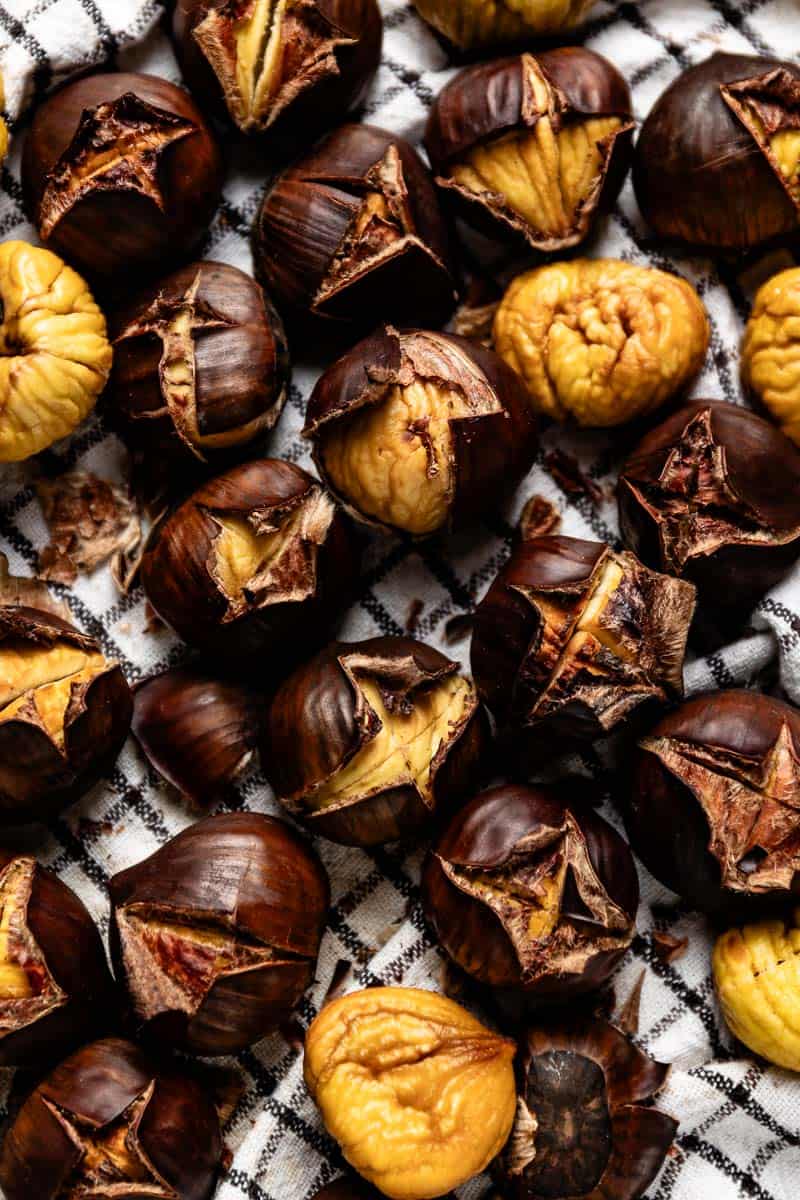
However, as with all one-ingredient recipes, the key to getting the best results is to begin with high-quality chestnuts. Here are just a few things to keep in mind when selecting your nuts:
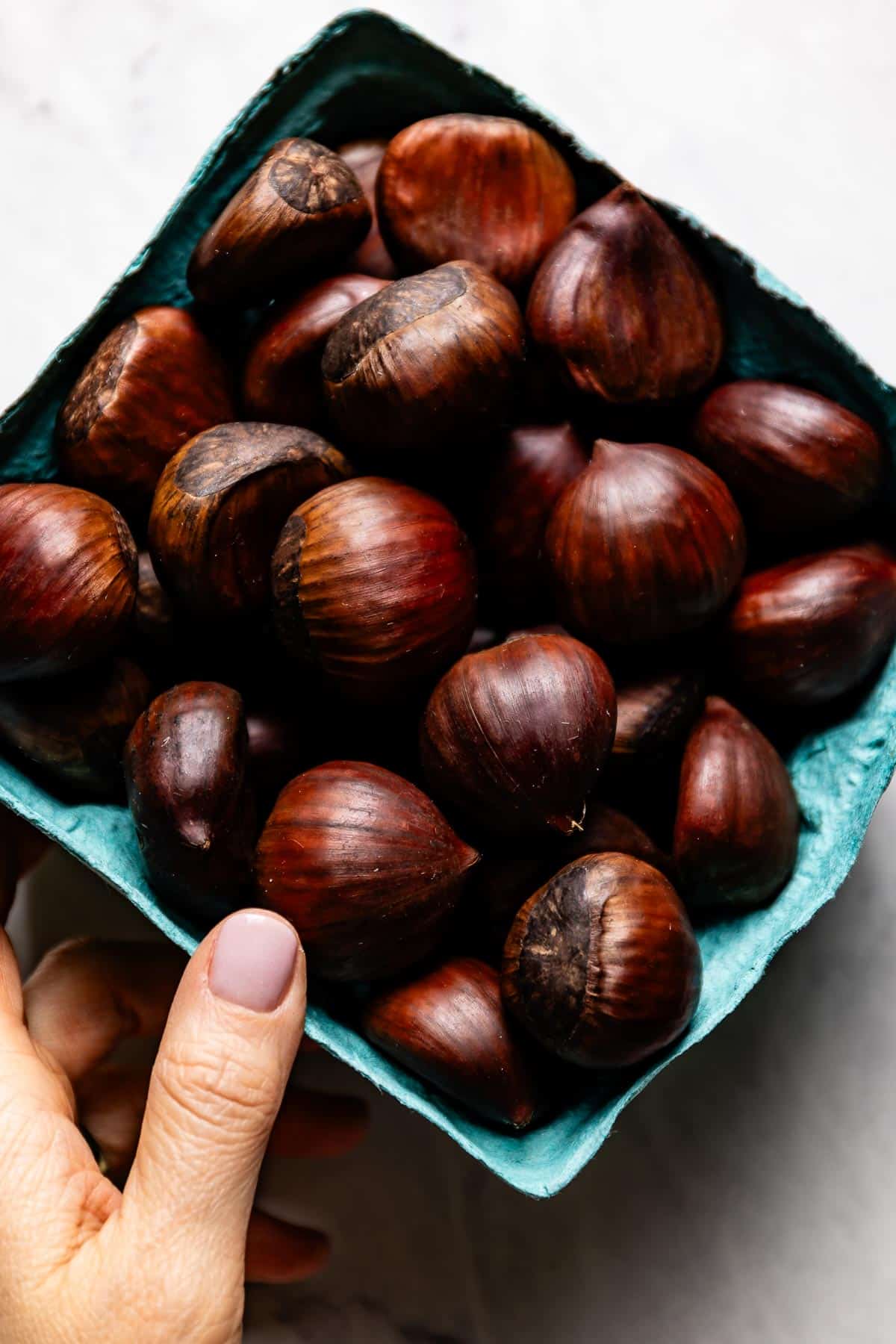
Type of chestnuts: For this recipe, I highly recommend using Italian chestnuts (also known as European chestnuts) or American chestnuts, as they peel easily and are altogether easier to work with. Chinese chestnuts—the most popular variety in Asia—also taste good, but I find that they are harder to peel, so I don’t suggest using them in this recipe. Choose equally sized chestnuts: If possible, try to hand-pick chestnuts of an equal size, as they’ll roast the most evenly in the air fryer. Ensure your chestnuts are of high quality: When looking for chestnuts, try to find ones that are smooth, plump, and shiny—especially those without blemishes or mold. I also encourage you to handle the chestnuts in your hand to ensure the skin isn’t dry. Where to buy: You should be able to find fresh chestnuts in most U.S. grocery stores. However, they also crop up in farmer’s markets during fall and winter, should you prefer a locally grown alternative. Avoid chestnut mix-ups: Though similar in name, be careful not to accidentally purchase horse chestnuts (which are toxic) or water chestnuts. These two are not the same as regular chestnuts and will drastically change the taste and texture of your recipe.
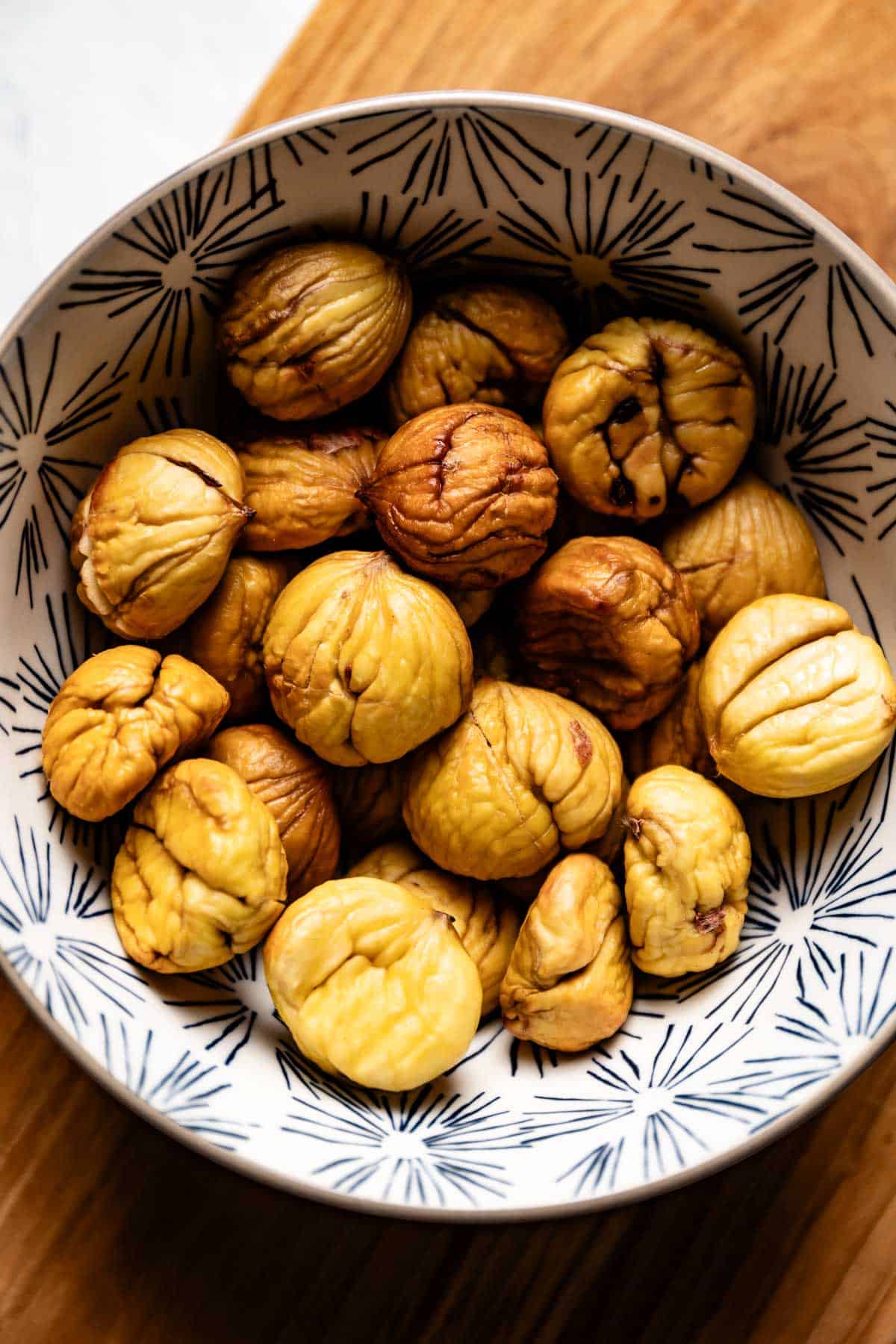
Store: When ready for storage, let your air roasted chestnuts reach room temperature and then transfer them to an airtight container. You can then store them in the refrigerator for up to four days. Freeze: To freeze your peeled air fryer chestnuts, transfer them to a freezer bag and remove as much air as possible. Then, tightly seal the bag and freeze your chestnuts for up to three months. Thaw: When ready to thaw, remove your chestnuts from the freezer and defrost them in the fridge overnight.
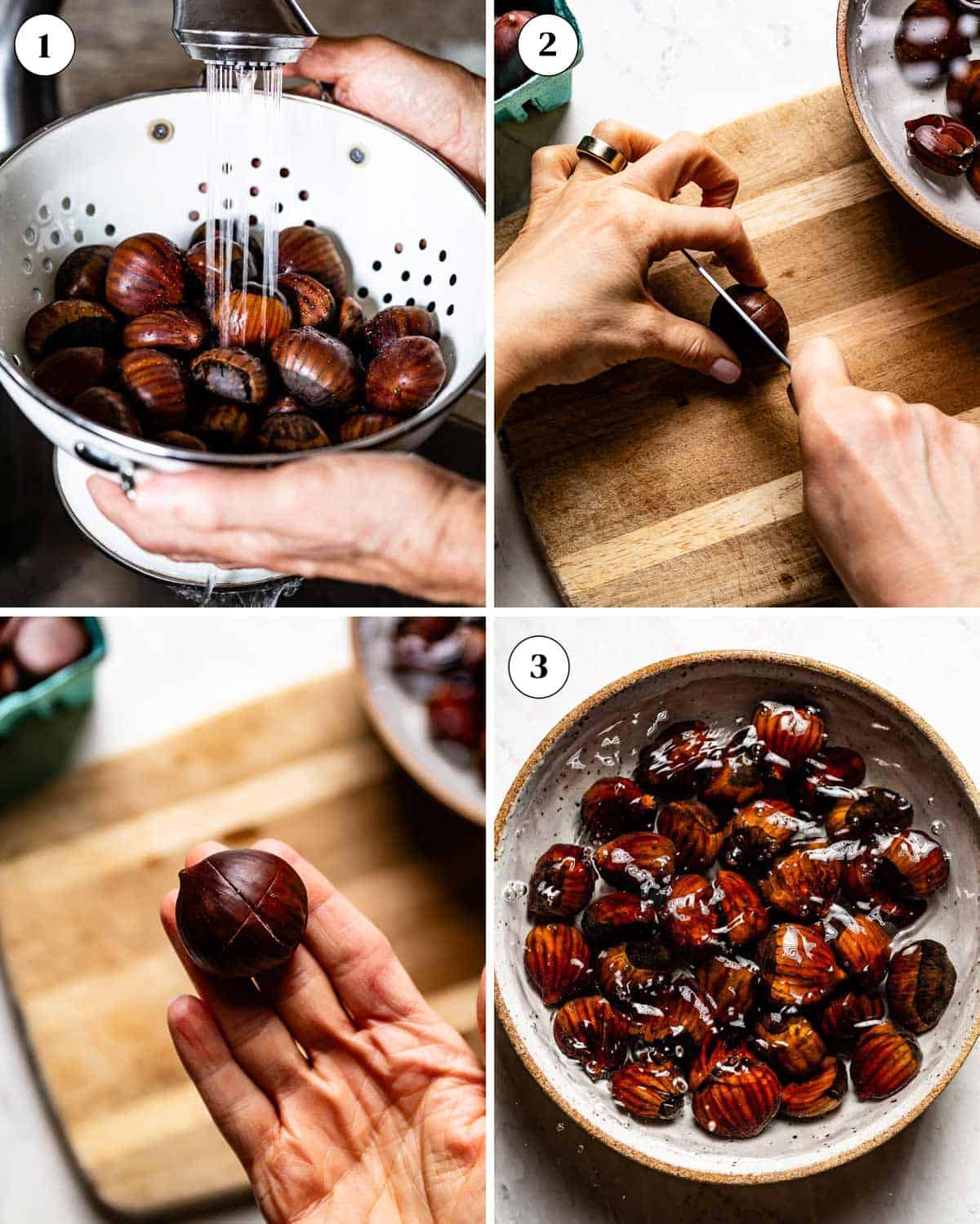
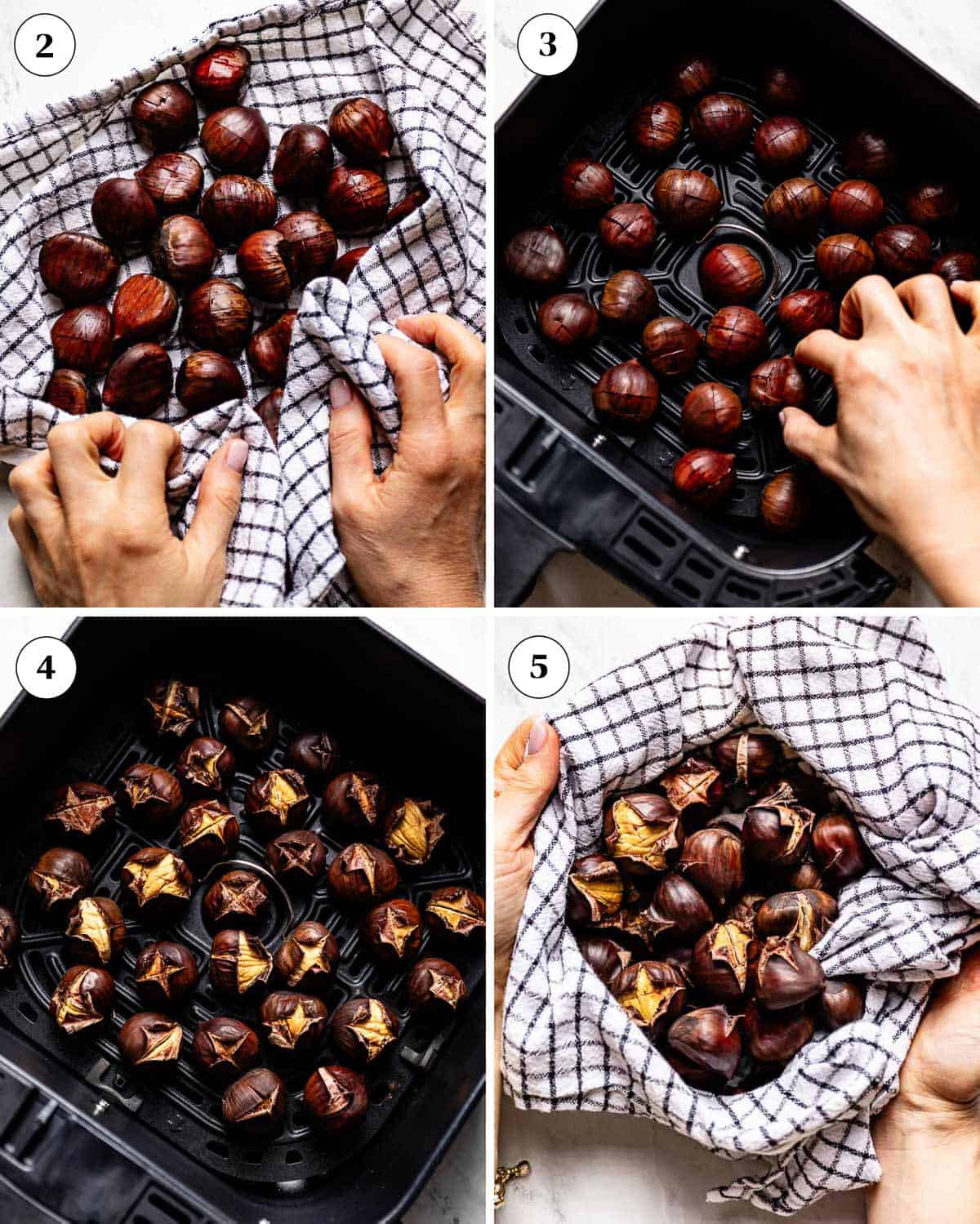
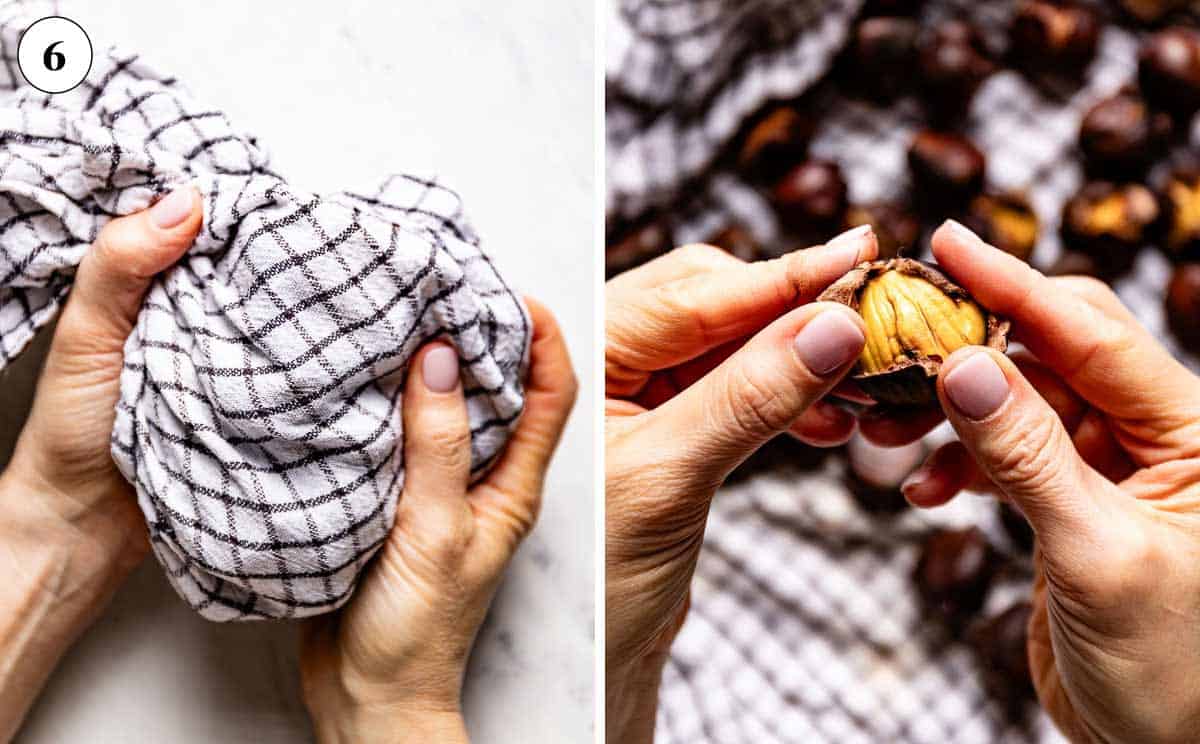
Scoring: Because chestnuts can be slippery, it’s important to be safe when scoring them, which is essential for easy peeling later on. Therefore, I recommend placing your chestnuts on a cutting board with their flat sides facing down and rounded sides facing up. Then, firmly secure the chestnut with one hand and use a sharp, serrated, or chestnut knife to score the rounded edge in the shape of an “X.” Soaking: Though popular belief holds that you must soak your chestnuts in hot water (or warm water) for hours on end, I’ve found that a quick soak in cold tap water (30-60 minutes) is more than sufficient. Air fryer temperature: When making this recipe, you may consider speeding up the roasting process by increasing your air fryer temperature. However, we found that cooking chestnuts in the air fryer at higher temperatures (like 400 degrees F. and 375 degrees F.) led to a fully cooked exterior and uncooked interior. Therefore, we recommend keeping your cooking temperature low—ideally 350 degrees F. for 17 minutes—to ensure the whole chestnut roasts at an even rate. Don’t overcrowd: As with all air fryer recipes, you mustn’t crowd your air fryer basket while cooking, as proper air circulation is essential for thoroughly roasting your chestnuts. We were able to fit a pound of chestnuts into our basket, though this amount may change depending on the size of your air fryer and individual chestnuts. No matter how many chestnuts you can fit into your basket, just be sure to arrange them so that their scored “X” faces up. Look for visual cues: If you’re not sure whether you’ve fully roasted your chestnuts by the end of their cooking time, I recommend looking for the following visual cues: When ready to steam and peel, your chestnuts’ scored edges should begin opening up, and their exteriors should lightly brown. However, because every air fryer behaves differently, I suggest testing a chestnut at the 15-minute mark to see whether it’s ready to serve or needs more roasting time. Peel while still warm: If you want a chestnut with a smooth, nutty taste, you must remove its fuzzy skin before serving. Therefore, I suggest using either of my five-minute steaming methods (either by a wrapped towel or paper bag) to loosen the nuts’ outer and inner skins before peeling, making the process much easier. Buy more than you need: It’s inevitable when buying chestnuts that some of them will be “bad,” whether they’re moldy, blemished, or otherwise spoiled—with special consideration to their time of harvesting. Therefore, I highly advise purchasing more chestnuts than you need to eliminate these undesirable picks and still end up with a whole serving. A word on easy peeling: My step-by-step instructions are a foolproof way to ensure easy peeling and excellent taste for high-quality chestnuts. However—no matter how closely you follow the steps—it won’t be possible to get good results if you’re using chestnuts of poor quality. Plus, keep in mind that the age and size of the chestnuts matter, so I recommend getting the most
Honey and vanilla: If you want your air fryer chestnuts to have an irresistibly dessert-like finish, mix two tablespoons of honey with a teaspoon of vanilla. Once thoroughly combined, drizzle the honey mixture over your cooked chestnuts for a great holiday season treat. Melted butter and maple syrup: Richly sweet and easy to customize, try drizzling your chestnuts with a mixture of melted butter and maple syrup. You can even sprinkle ground cinnamon over your nuts if desired for a warmer, woody flavor. Balsamic glaze with a sprinkle of sea salt: Coating your air-roasted chestnuts with a rich balsamic reduction is an easy way to give your recipe complexly sweet notes—a flavor profile that tastes straight out of Europe. Finish this tasty variation with a sprinkle of sea salt, and every bite will explode with flavor. Asian style: To give your air fried chestnuts a zingy, Asian-inspired flavor, coat them with a blend of soy sauce, a hint of sesame oil, and a sprinkle of sesame seeds. This umami-packed recipe transforms sweet chestnuts into a savory treat perfect for all-day snacking.
If you try this Air Fryer Chestnuts recipe or any other recipe on Foolproof Living, please take a minute to rate the recipe and leave a comment below. It is a great help to others who are thinking of making the recipe. And if you took some pictures, be sure to share them on Instagram using #foolproofeats so I can share them on my stories.