Though less traditional, you might also find a layered mixture of chicken and beef shawarma in some Middle Eastern countries.
Beef Shawarma Ingredients
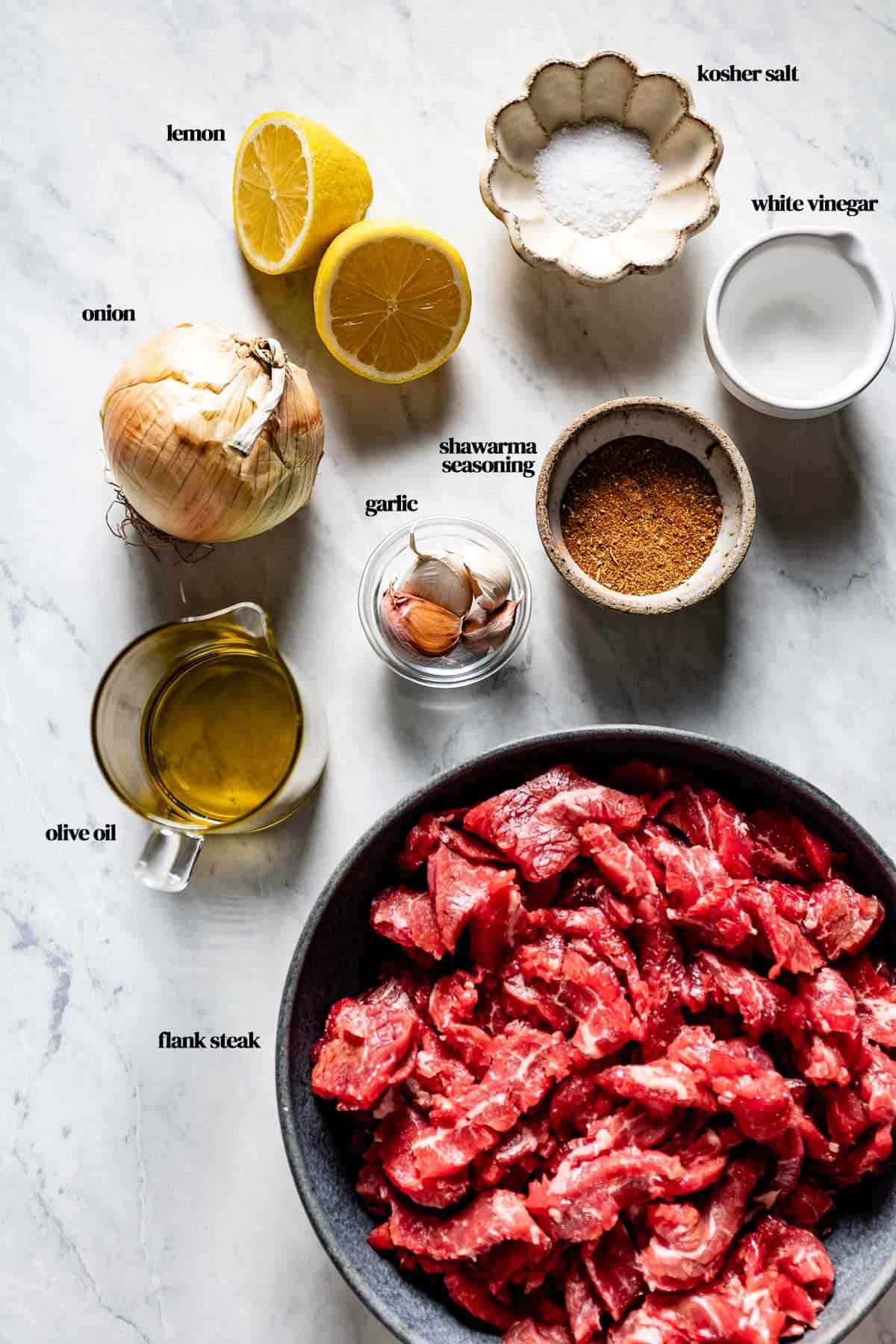
Selecting the right ingredients is key to making the tastiest homemade shawarma. This ingredient list has everything you need, from the best meat to expert seasoning suggestions.
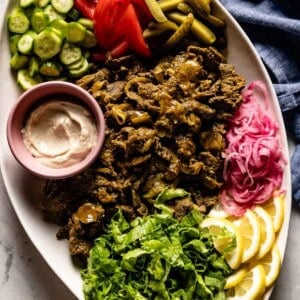
Beef: Flank steak and skirt steak are my favorite meats for shawarma due to their tender consistency and easy marination. You can also use ribeye steak for a more decadent finish, though this cut tends to be more expensive. No matter which cut you choose, just be sure to salt it before marinating to help break down its proteins and free up space for the juices to fill. Shawarma beef seasoning: You can make homemade beef shawarma seasoning by combining ground cumin, ground coriander, paprika, garlic powder, black pepper, ground turmeric, ground cloves, ground cinnamon, ground nutmeg, and ground cardamom. Otherwise, you can simplify your meal prep by trying out a store-bought brand. Sadaf’s and NYShuk are my favorite brands. Marinade: To make a marinade for beef shawarma, you’ll need: Olive oil Fresh lemon juice Finely minced garlic White vinegar: While it is not traditional, you can also use white or red wine vinegar as a substitute, depending on what you have on hand. Onion: A thinly sliced onion helps make the meat more tender by breaking down its proteins. Additionally, onions have natural sugars that add a rich, savory flavor to the meat as it marinates. Sauces: This recipe’s heartier flavors can easily be balanced by topping the meat with fresh condiments like my Yogurt Tahini Sauce, Lemon Tahini Sauce, Tzatziki, or even Hummus. Vegetables: Traditionally, beef shawarma is served with fresh vegetables (such as sliced tomatoes, cucumbers, and curly green lettuce) and pickled vegetables like dill Gherkins, red onions, or pickled turnips. However, this is where you can make it your own with whatever fresh or pickled vegetable you have on hand.
How to Serve Beef Shawarma?
My favorite part about this homemade beef shawarma recipe is its versatility. Below, you’ll find countless ways to make this dish yours, whether you want to serve it by itself or turn it into a crowd-ready platter or a delicious meat shawarma sandwich.
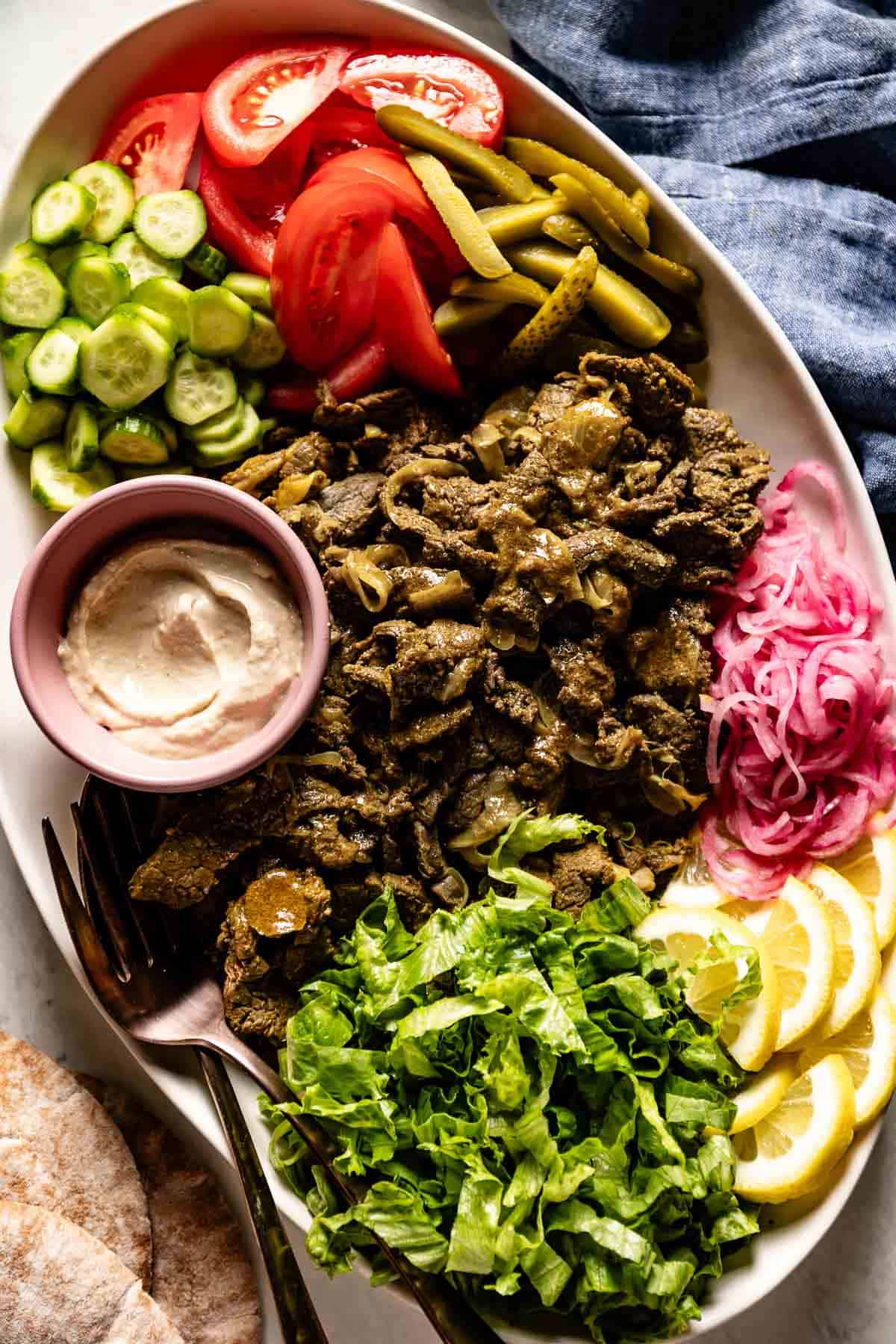
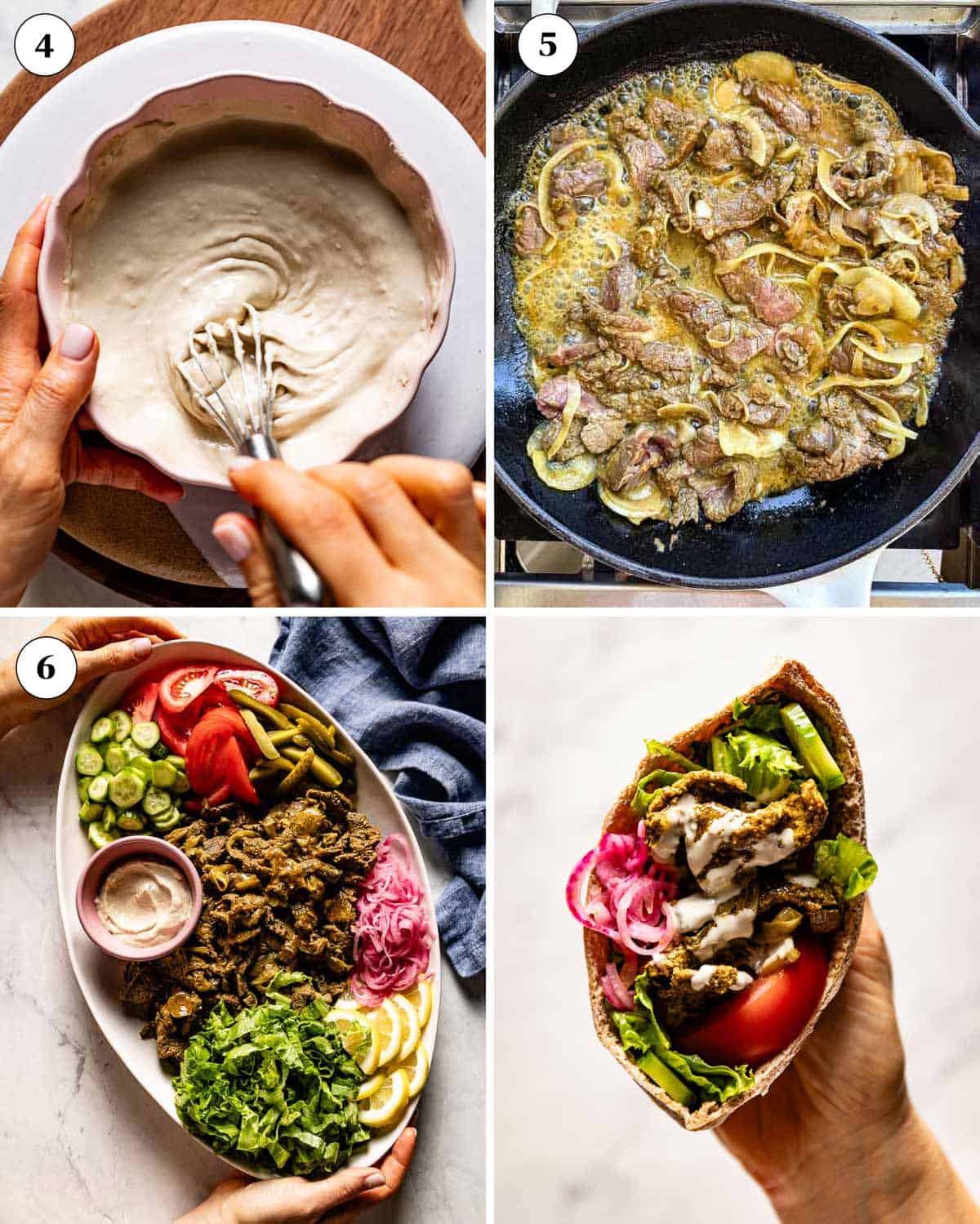
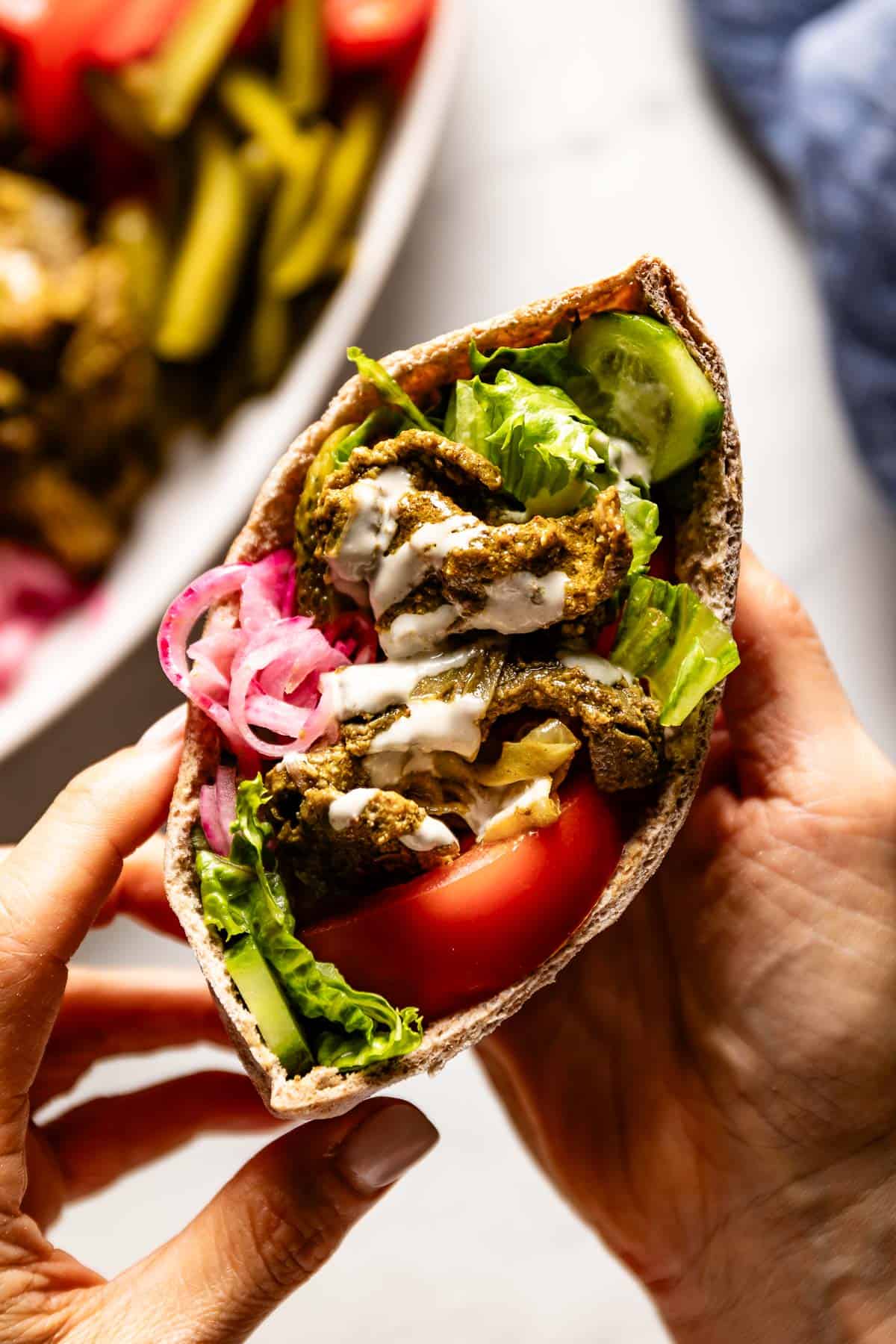
Platter: Equal parts filling and flavorful, a beef shawarma plate is the ultimate weeknight dinner. Serve your meat with a helping of zesty Tabbouleh, flatbread, pickled veggies, and toum (Lebanese garlic sauce), and you’re guaranteed to get a five-star review from all your dinner guests (kids included!). Sandwich: In the mood for a beef shawarma sandwich or pita pocket? Spread a piece of pita with my Tahini Yogurt Sauce, then add your steak slices, sliced tomatoes, pickles, and lettuce. If you want to feel like you are at a Lebanese restaurant, serve this dish alongside a plate of French fries for an authentic Middle Eastern dinner. Wrap: You can quickly transform this dish into a delectable beef shawarma wrap by placing your meat, Pickled Red Onions, tomatoes, and green curly lettuce onto a slice of lavash. Then, drizzle your toppings with Lemon Tahini Sauce and wrap it tightly. Bowl: Easy to eat and deliciously customizable, steak shawarma dinner bowls make meal planning a cinch. All you have to do is serve your shawarma beef, veggies, and fresh parsley atop a bowl of grains (Bulgur Pilaf and Rice with Vermicelli are my favorites!). You can even give your recipe an extra creamy finish by serving it with a side of Hummus, Baba Ganoush, or plain yogurt. Salad: You can get your fill of fiber and protein by topping a bowl of fresh vegetables with this succulent beef shawarma recipe. In particular, this warmly-spiced beef makes a great pair with Lebanese fattoush and my Greek Yogurt Cucumber Salad.
Cut meat against the grain: To prevent your shawarma from becoming chewy, I highly recommend cutting your beef against the grain. Doing so shortens the muscle fibers, making the meat more tender and easier to chew. Don’t overcrowd the pan: When cooking steak shawarma, it’s best to avoid overcrowding your skillet to ensure that the meat is cooked evenly. Furthermore, basting the beef with the pan’s juices throughout the cooking process will ensure that the meat won’t dry out. Let it rest: Do not skip the resting time, as it gives the meat time to reabsorb and equally distribute its flavorful juices. For the best results, I recommend letting this steak shawarma recipe rest for at least ten minutes before serving.