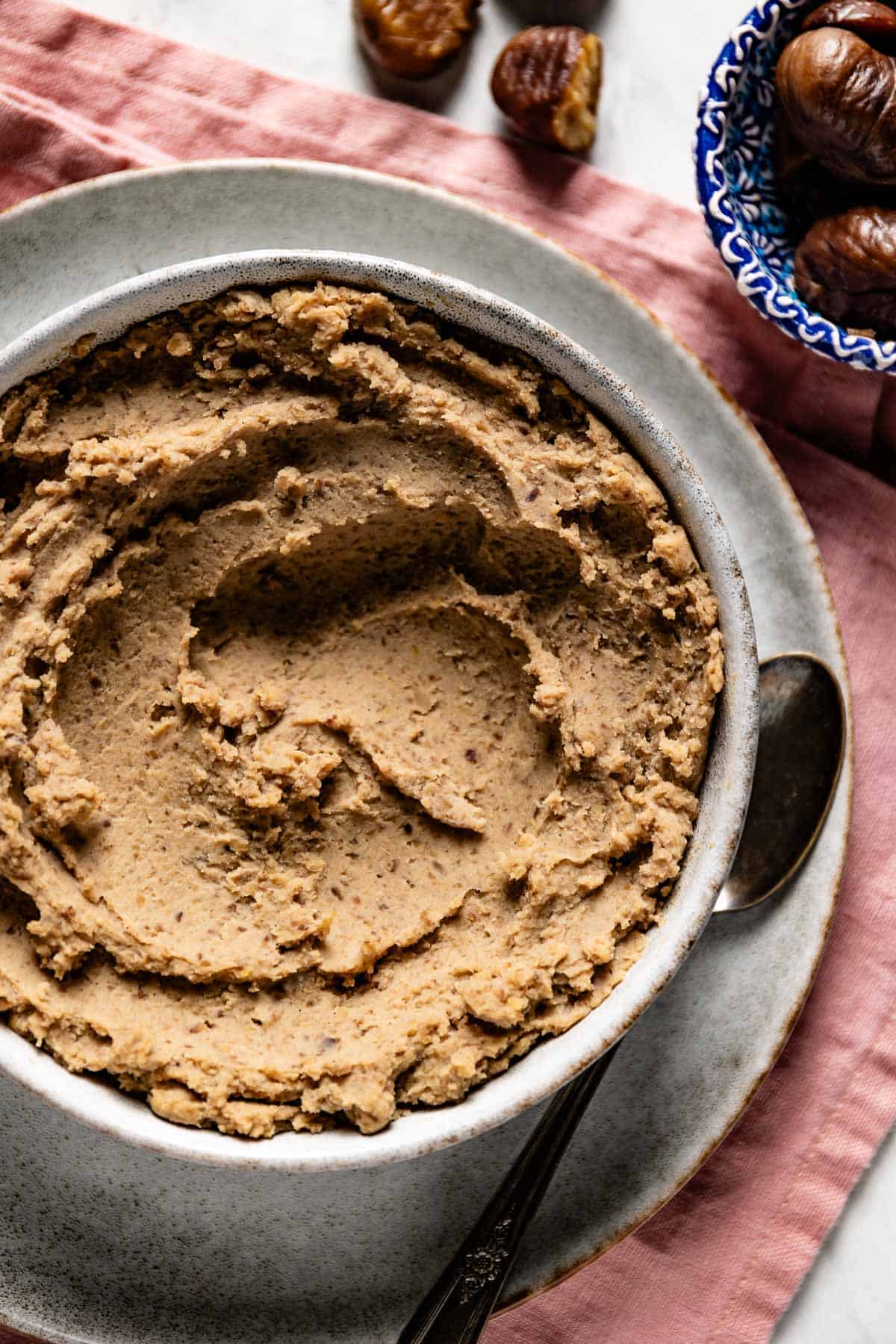
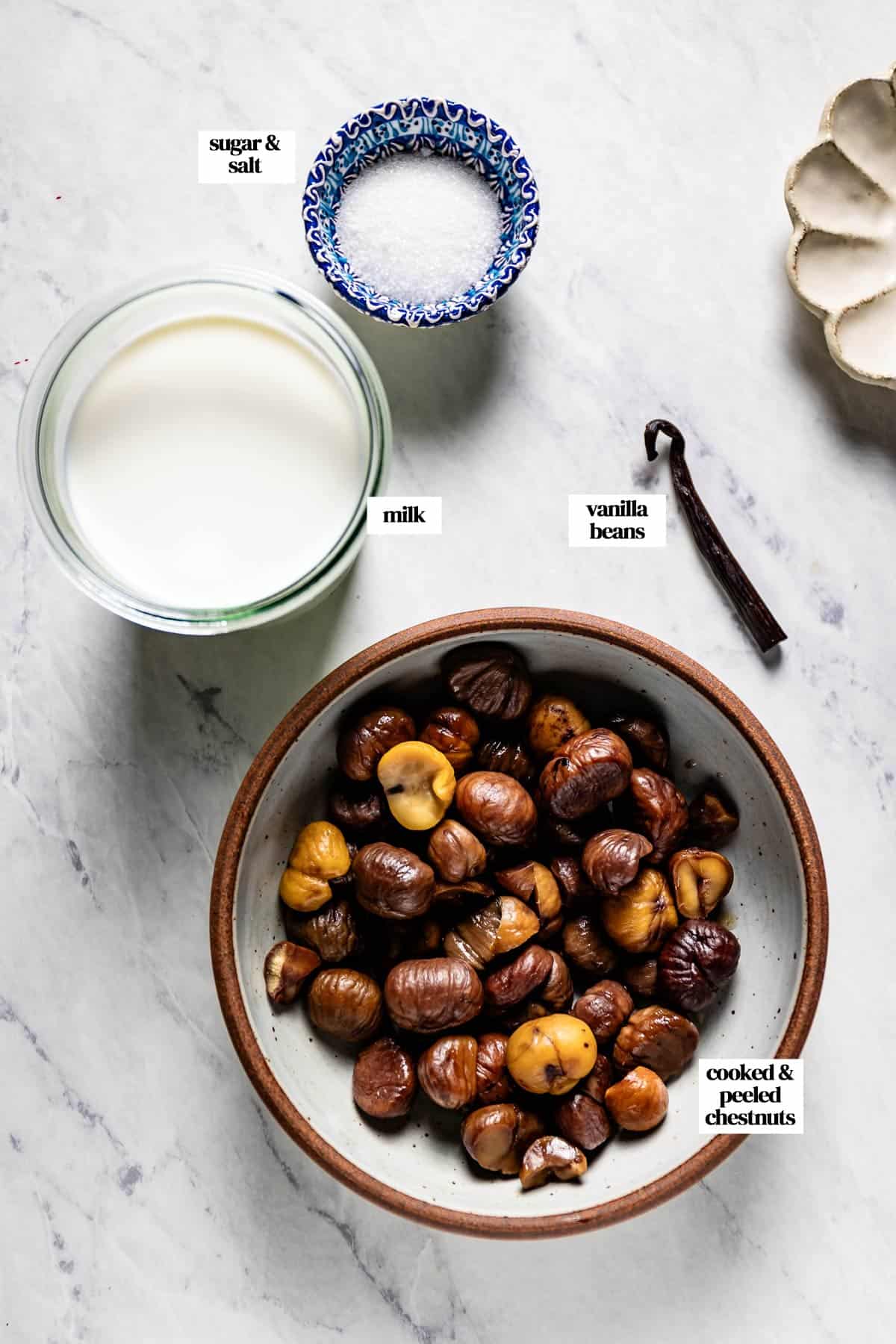
Chestnut purée, also referred to as marron paste, tends to have a nuttier, earthier taste, as it comes together with a mixture of cooked chestnuts, milk (or water), a little (optional) sugar, and vanilla bean (or extract). Because of its mild, versatile flavor, chefs often use it in sweet and savory recipes. Furthermore, chestnut puree recipes usually remove most excess liquid, creating a more paste-like texture. By contrast, a chestnut spread recipe, also known as crème de marrons, is much creamier, smoother, and sweeter, combining mashed candied chestnuts, simple syrup (or glucose syrup), and vanilla extract. This mixture’s sweeter notes, in turn, make it a go-to for sweeter recipes, such as desserts, a spread for toast, and pastry fillings. In fact, one of the most popular brands of chestnut sauce is the sweet French chestnut spread called Creme de Marrons de L’Ardèche by Clément Faugier (affiliate link.)
Chestnuts: Selecting suitable chestnuts is critical to making this recipe smooth and nutty. If you buy cooked chestnuts from a store, make sure that they don’t have any added sugar and that the only ingredient is, in fact, “chestnuts.” My favorite brand is Blanchard & Blanchard’s organic whole chestnuts (affiliate link), which are already roasted and peeled. If you prefer to cook fresh chestnuts, I recommend cooking them following my recipe for boiling chestnuts. Alternatively, you can also cook them using my oven-roasted chestnuts, air fryer roasted chestnuts, or even fire-roasted chestnuts recipes, but please be aware that if you use these methods, you will end up with a chestnut puree with a slightly smokey flavor. Liquid: To make the classic version of this French chestnut recipe, I recommend using whole cow’s milk to simmer your chestnuts. This simple addition will give your puree a delicious creaminess and temper its earthiness. However, you can also use almond milk or water for a vegan chestnut puree recipe. Sweetener: Granulated sugar is the most common ingredient in sweetened chestnut puree, but natural sweeteners, like cane sugar, coconut sugar, or brown sugar, would also work. Furthermore, darker sugars will give your recipe a deeper, toffee-like taste. You can also add pitted dates to your cooking liquid for a healthier, more natural sweetness, as they’ll soften and infuse the mixture with their fruity, caramel undertones. If you’d prefer to make an unsweetened chestnut puree, omit the sugar in this recipe. Vanilla: Vanilla bean—or even vanilla bean paste (affiliate link) —makes a great addition to this chestnuts puree recipe, lending it sweet, delicate, and aromatic notes. However, if you’re looking for a less expensive, more everyday ingredient, you may use 1-2 teaspoons of vanilla extract (affiliate link) instead. Just be sure to add the vanilla extract to your puree only after you finish simmering, as adding it during cooking will evaporate its alcohol. Kosher Salt
Store: To store your chestnut puree, first bring it to room temperature and transfer it to an airtight container. You can then store it in the refrigerator for up to four days. Freeze: Freezing is an easy way to keep this recipe fresh for up to three months. Simply let your puree reach room temperature, place it in an airtight container, and freeze it. A day before you are ready to serve, thaw it in the fridge overnight. You may find that the paste may become watery or separate after thawing. If this occurs, give it a good stir to return it to its original texture.
How to Use Chestnut Puree?
One of the most common ways to enjoy chestnut puree is like the French do: spread it on toast or use it as a topping for yogurt. But why stop there? With your freshly made chestnut puree, you can create dishes that go far beyond the classics. Below is a variety of ideas for incorporating this rich, flavorful mashed chestnut recipe into a range of sweet, savory, and creamy recipes:
Mont Blanc: This iconic French dessert begins by placing orange syrup and whipped cream on top of a small round of white cake, topped with a meringue. Once assembled, chefs often cover the whole dessert with a thin layer of whipped cream, followed by a thick coating of chestnut paste squeezed in the shape of vermicelli noodles. This vermicelli-style mont blanc strikes a decadent balance between nutty, sugary, and delicate flavors. Monte Bianco (Italian): Similar to the French Mont Blanc, this simple Italian version calls for a vermicelli-style serving of sweetened chestnut puree topped with whipped cream—a quick and sweet way to make a five-star dessert! Filling for pastries: Not only is this four-ingredient puree delicious by itself, but it also makes an incomparably delectable chestnut filling for cookie sandwiches, croissants, eclairs, and crepes. Flavoring for baked goods: Want to give your baked goods a smooth, nutty taste? This marron paste makes the perfect addition to all your favorite baked recipes, from cakes to muffins, cookie batters, and even bread puddings for a uniquely delicious flavor. Topping: Pack your breakfast with an extra dose of tasty nutrition by using your chestnut puree to top your morning Chia Seed Oatmeal, Overnight Steel Cut Oatmeal, or Almond Flour Pancakes. You can even start your day on the lighter side by layering your chestnut blend into a Yogurt Parfait. Blend into smoothies, custards, or ice cream: Try adding some sweetened chestnut puree to your favorite smoothie, custard, or ice cream recipes. Adding a dollop of this chestnut paste is an easy way to switch up your regular treats with new flavors. Stuffing and savory puddings: Who says chestnut puree can’t be savory? This simple ingredient makes an excellent addition to savory dishes like Chestnut Stuffing and Chestnut Puree Soup, and it even works as a flavor-packed soup thickener. Cheese platters: One of the easiest ways to serve this gourmet paste is alongside a plate of crackers, taking your Meat and Cheese Platter to the next level. Your chestnut lovers will thank you.
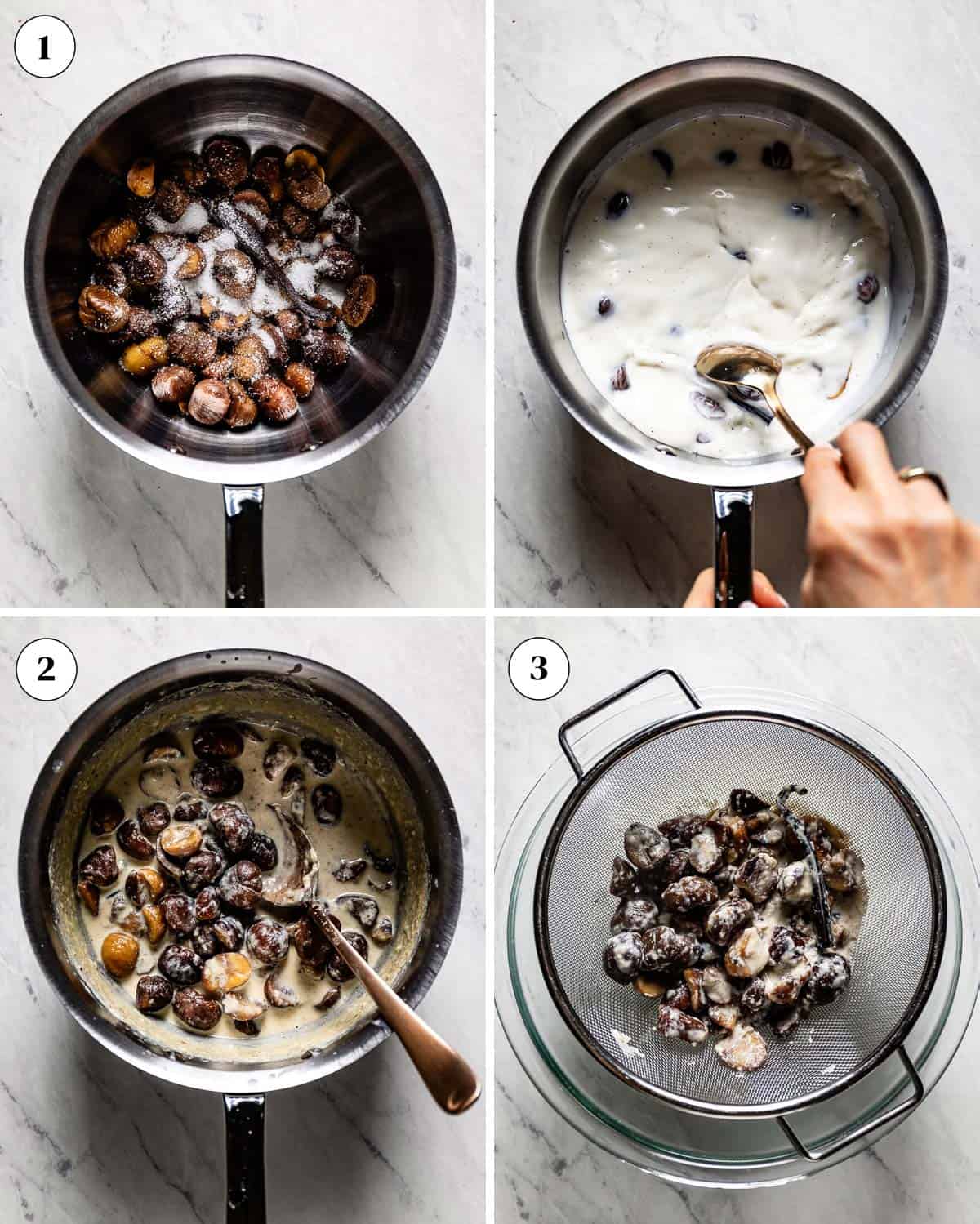
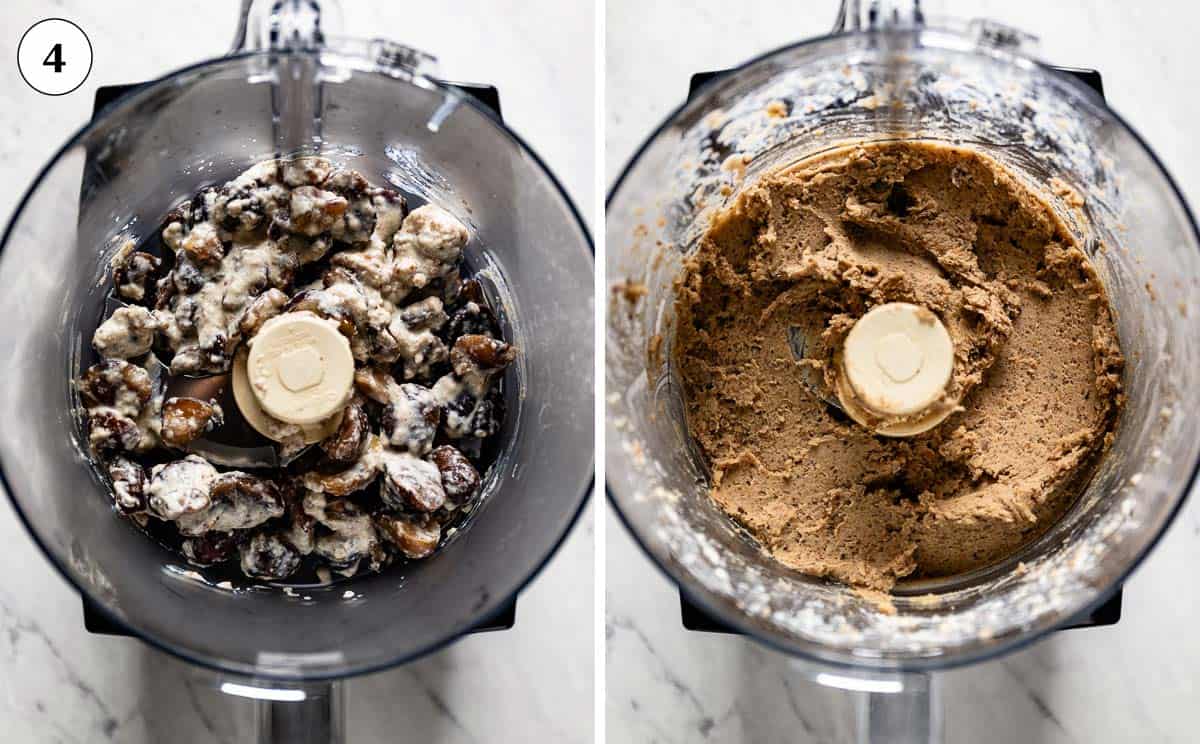
Good quality chestnuts: It’s no surprise that chestnuts are the star ingredient of this puree recipe. And not all chestnuts are created equal. My recommendation is to purchase Italian or American chestnuts instead of Chinese chestnuts, as they tend to have a richer flavor and it is easier to peel them. However, if all you can find is the Chinese variety, then my recommendation is to boil them to use in this recipe. Finally, it is probably obvious, but the chestnuts we are using here are totally different from water chestnuts, so be sure to look for the right chestnuts. Remove inner skin: If you’re boiling your chestnuts, be sure to remove their inner (fuzzy) skin before pureeing them. However, because this layer often clings to the walnuts harder than other layers, don’t worry if your chestnuts break during removal. Keep a close eye on it: While simmering your cooking liquid, keep an eye on the mixture, stirring occasionally while gently breaking the chestnuts with the back of a spoon. As the cooking progresses, this liquid will thicken, and you might begin to see some scorching (especially if you are using milk as your cooking liquid) near the end. Stirring will keep the mixture from burning and encourage a more consistent thickening. Adjust consistency: Depending on the recipe you plan to use, you may want this puree to have a thicker or thinner consistency. If you prefer a denser, more paste-like texture, strain all the cooking liquid from the chestnuts before pureeing. For a creamier, more delicate texture—more like the consistency of the chestnut spread—reserve the cooking liquid after straining the chestnuts and add it to the food processor until the puree reaches your desired consistency. Adjust the sweetness: Although it may seem like a lot, two tablespoons of sugar is very mild in this recipe—especially if you’re not using the cooking liquid in your paste. However, feel free to adjust the amount of sugar you use according to your tastebuds and selected recipe. Adding vanilla: Because of its mild yet rich notes, vanilla bean (or vanilla pod) is ideal for this mashed chestnut recipe, but vanilla bean paste (affiliate link) would also work. If you don’t have either, you can also use vanilla extract, but be sure to add it at the end of preparation, as the alcohol will evaporate during the simmering process. Blending: I use a food processor to give my chestnut puree an ideally creamy texture, occasionally stopping and scraping the sides. However, a blender or a potato masher would also work if you don’t have a food processor on hand.