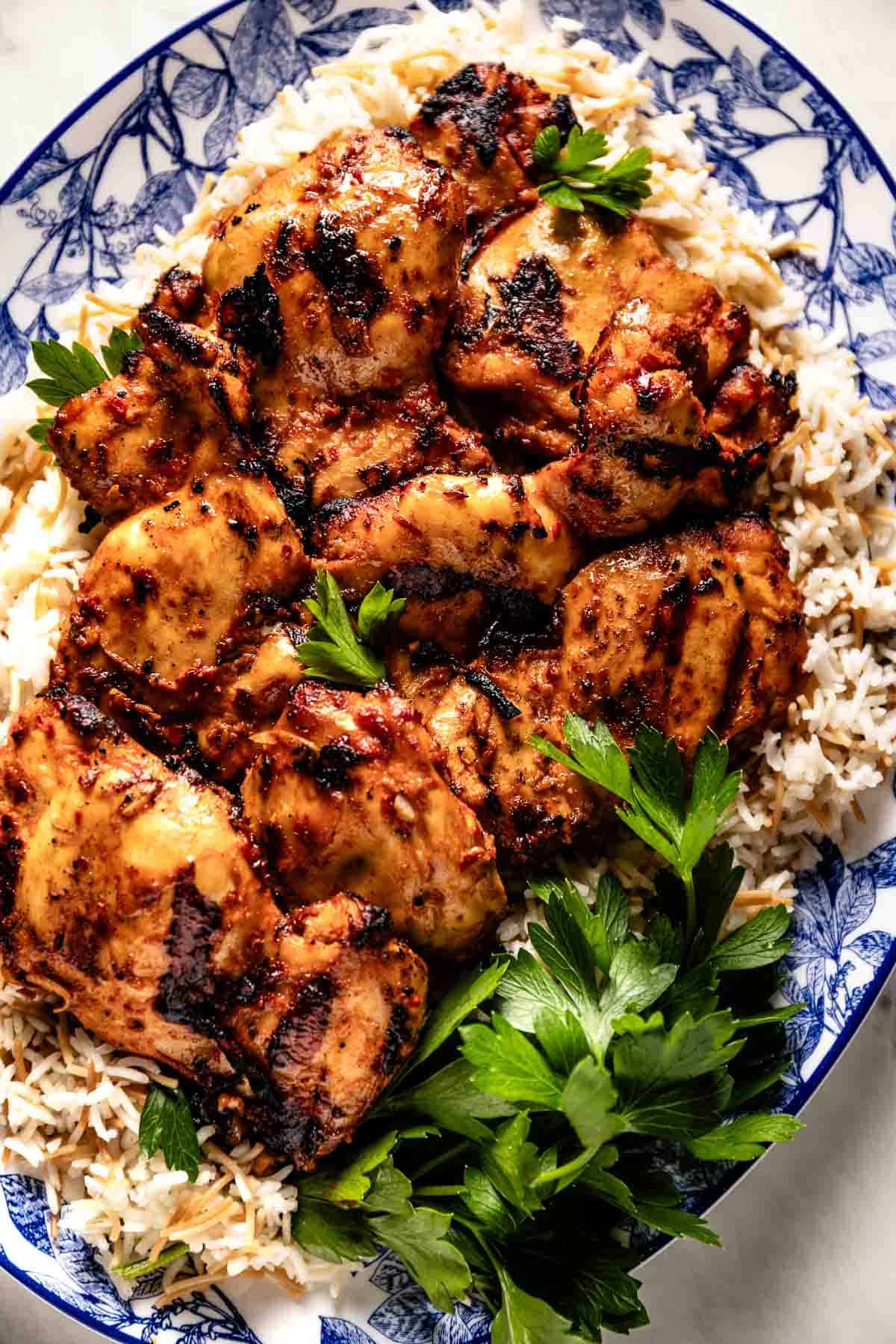
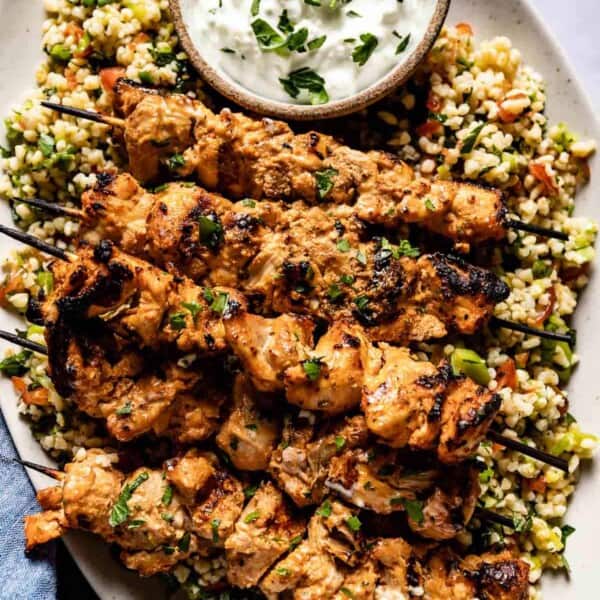
After infusing the meat with harissa’s spicy, aromatic flavors, you can then grill, bake, or pan-fry the chicken and (most often) serve it with a side of grains or veggies. You can also make it a dinner by making our Copycat CAVA bowl.
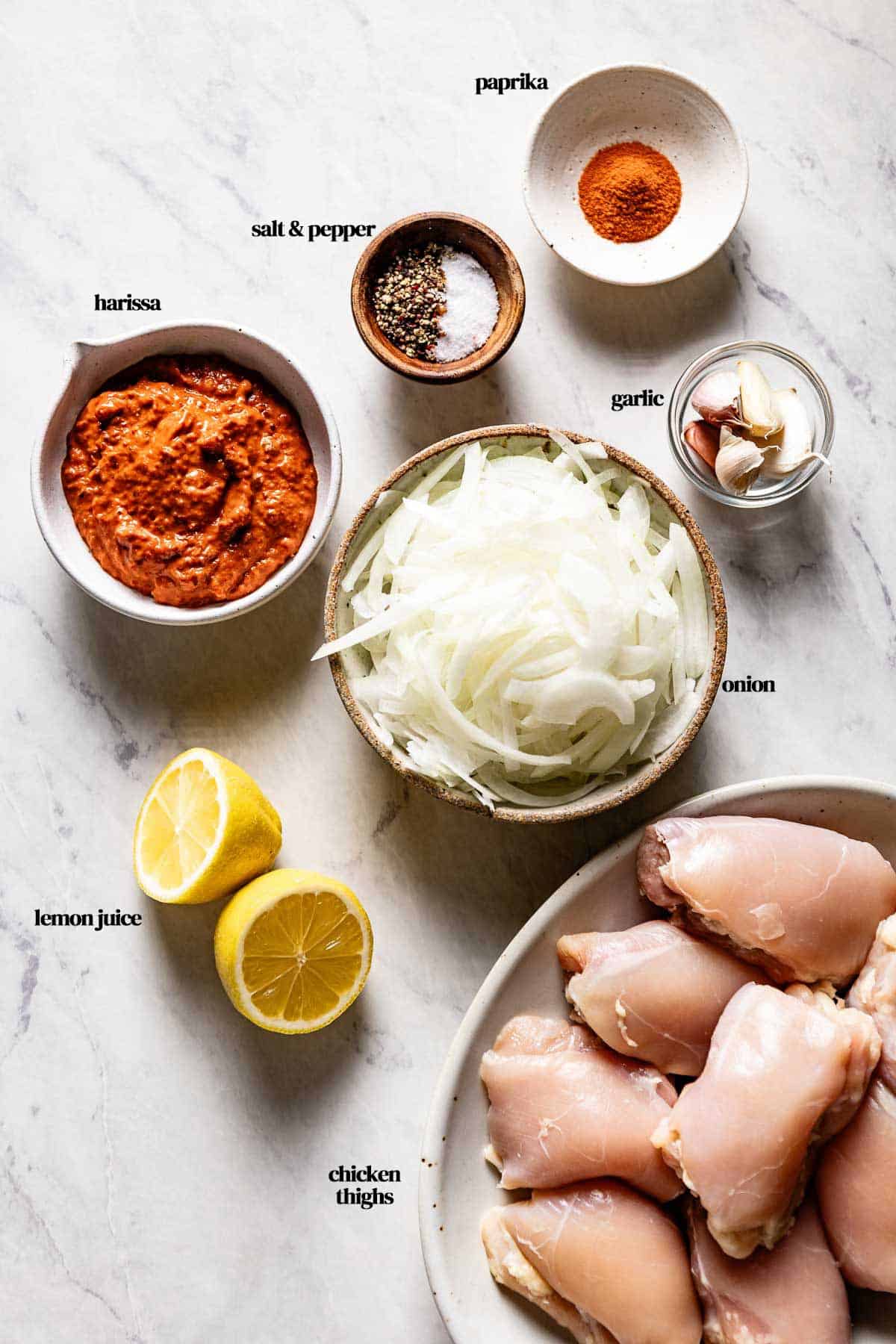
Chicken thighs: I used two pounds of boneless, skinless chicken thighs to make this dish, as dark meat tends to be juicier and more flavorful when grilled. If preferred, you can also make a harissa chicken breast recipe using boneless skinless chicken breasts. However, keep in mind that the grilling times might be longer depending on the thickness of your breasts. Onion: Thinly sliced yellow onion (or red onion) is a great option to give your chicken a sweet yet robust finish. Garlic: Press or grate your fresh garlic cloves before adding them to your marinade to achieve the most potent, even infusion of flavors. Seasoning: Kosher salt, ground black pepper, and paprika are perfect for lending harissa chicken thighs savory, warm notes. Though I used Spanish paprika, smoked paprika would also work. Lemon juice: Vibrant and bright, fresh lemon juice is my go-to when making this harissa marinade. If you don’t have lemon juice, use red wine vinegar or balsamic vinegar instead. Harissa: Because it’s one of the main ingredients in this recipe, I recommend making your harissa sauce from scratch. If you need a shortcut, you can also make Harissa Paste from Powder. Though the homemade version offers greater customization and a deeper flavor, you can also use store-bought harissa to reduce kitchen time. (My favorite brands are NY Shuk and Mina. Trader Joe’s also has one if you want a cheaper harissa.) Olive oil Garnish: To add a touch of color to your final plate, try serving your harissa chicken with quartered lemon wedges and a sprinkle of fresh parsley (or other fresh herbs like chopped cilantro or oregano.) Greek yogurt: Though optional, ¼ cup of Greek yogurt can add a delicious tang and creaminess to your harissa marinade for chicken.
How to Make Harissa Chicken?
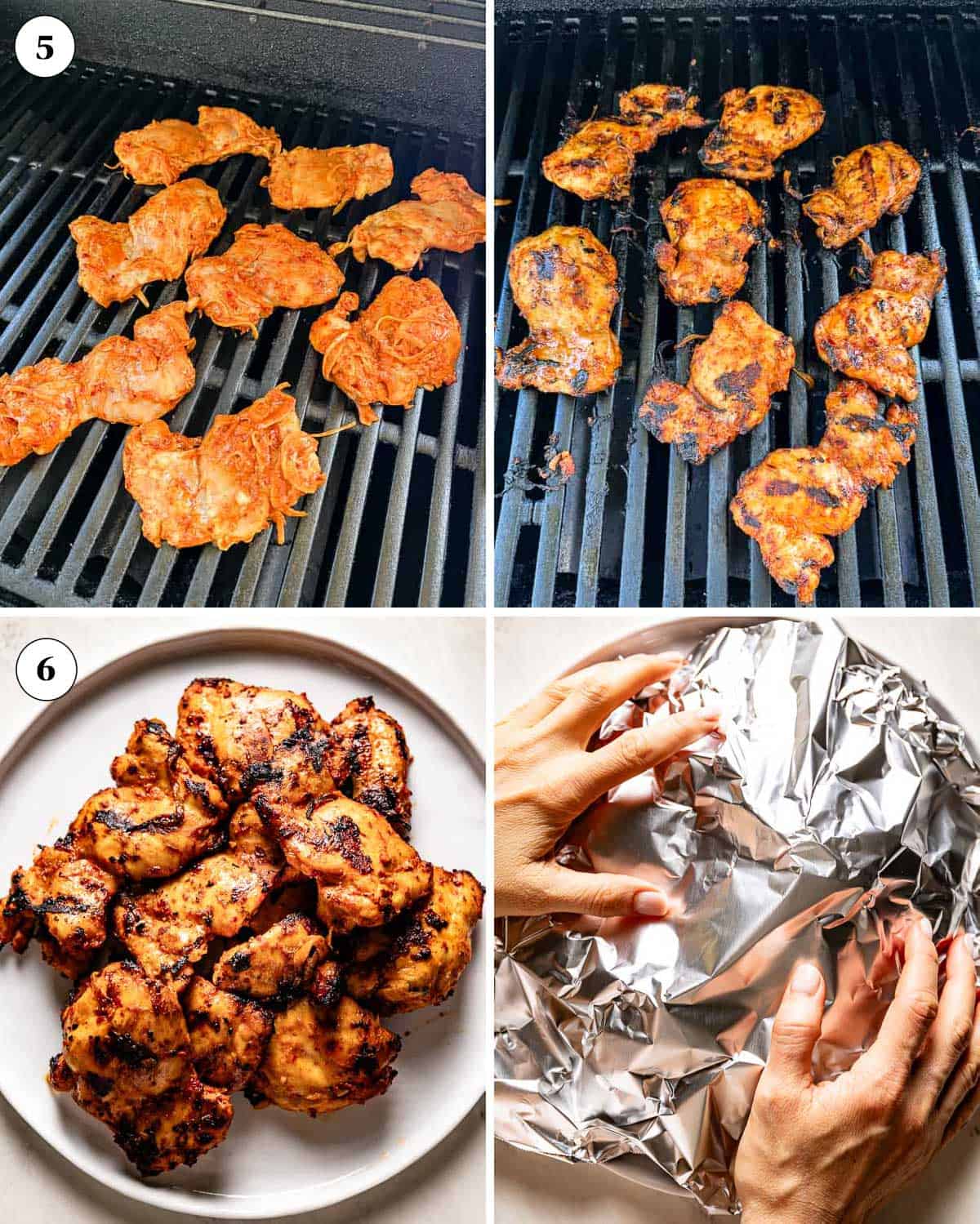
With an irresistible marinade and super-easy grilling technique, this harissa chicken thighs recipe is a cinch to make. Plus, it only takes ten to twenty minutes of hands-on prep!
Store: Let your harissa chicken thighs come to room temperature before storing them. Then, transfer them to an airtight container and place them in the refrigerator for up to 4-5 days. Freeze: There are two ways to freeze harissa chicken for long-term storage: cooked and uncooked. Freezing cooked meat: If you’ve already cooked the meat, let it reach room temperature, transfer it to an airtight container, and freeze for up to three months. Freezing raw meat: For advance meal prep, place the raw chicken and harissa paste marinade into a freezer-safe Ziploc bag with as much air removed as possible. You can then store the raw meat in the freezer for three months. Thaw: To thaw your frozen harissa chicken, transfer it to the fridge and let it defrost overnight. Reheat: You can reheat your chicken thighs with harissa in a low-heat oven (~300 degrees F.) until warmed thoroughly, about 10 minutes.
What to Serve with Harissa Chicken?
It goes without saying that this recipe for chicken harissa is delicious on its own. However, it also makes an incomparable pair with dozens of other tasty dishes—just a few of which I’ve listed below.
Grains: Looking for an easy dinner that’s as delicious as it is filling? Add this spicy chicken recipe to your favorite rice bowls (such as our CAVA Copycat Recipe), and you have an easily customizable option that will tantalize your taste buds any day of the week. I recommend whipping up a serving of Rice with Vermicelli or Turkish Bulgur Pilaf for a rich, savory base. Or, for a lighter, zestier option, you can try serving your chicken with dishes like couscous and Lemon Quinoa. Salads: Chicken thighs and harissa make a fantastic, protein-packed addition to salads. I love adding this recipe to fresh classics, like my Greek Cucumber Tomato Salad, tender Eggplant Caprese, Caprese Pasta Salad, and tangy Spring Mix Salad—especially with a crumble of fresh feta cheese on top! Grilled veggies: Smoky, fresh, and nutritious, grilled vegetables are a no-brainer for harissa chicken. Serve this Middle Eastern dish with Grilled Corn on the Cob or Grilled Eggplant, and you can cut your cooking time in half. Sauces: Serving this spicy chicken recipe with your favorite sauces is an easy way to add layers of flavor. For a creamy, cool accompaniment, I recommend adding a side of plain Greek yogurt, Tahini and Yogurt Sauce, or a refreshing Mint Yogurt Sauce. Or, if you want a spicier accompaniment, you can whip up a delicious Harissa Aioli in a matter of minutes!
If you make your own Grilled Harissa Chicken following our recipe, I would greatly appreciate it if you could take a minute to rate it and leave a comment below. It is a great way to support this website and help those planning to make it. Also, if you took pictures, I’d love to see them. Share your creations on Instagram using #foolproofeats so I can share them with the Foolproof Living community.
Spice levels: Want to adjust the heat level of this harissa recipe for chicken? I highly recommend making your harissa from scratch so you can control your seasoning levels and pick what kinds of hot chiles you use (some are spicier than others). If you opt for a store-bought brand, remember that some are spicier than others, and you can always make a hotter marinade by adding cayenne pepper or red pepper flakes to the mix. Overnight marinade: Marinating your chicken for one hour perfectly suits achieving a total infusion of flavors. During our recipe testing (and research), we found some recipes warning against marinating overnight. We tested it and found nothing wrong with letting your chicken marinate overnight. It is an excellent option for advanced meal prep!—if you want a deeper, richer taste. Grilling with onions: When grilling with onions, remember that some of the onions will likely fall through the grates and cause a minor flare-up. Though this effect is nothing to worry about, it’s a good idea to shift the chicken away from the flames when this happens to avoid unwanted scorching. Adjust the grill’s temperature: When cooking with a grill, keep in mind that closing the lid will increase the cooking temperature. Therefore, it’s important to open and close the lid to maintain an appropriate temperature. Avoid overcooking: The best way to avoid overcooking harissa spiced chicken is to use an instant-read thermometer. When you think your chicken is ready, insert the meat thermometer into the thickest part of the meat. Once it reaches 165 degrees F., remove the chicken from the grill. Thread it in skewers: Another way to make this recipe is to transform it into harissa chicken skewers. Simply cut the meat into small cubes, marinate them, and thread them onto skewers. Then, grill them as-is or add other tasty veggies—like bell peppers, onions, and cherry tomatoes—for a lighter, more colorful dish. Remember that the cooking time might be slightly shorter as the chicken is cut into smaller pieces. Bring the meat to room temperature before grilling: If you can plan ahead, it is a good practice to remove the chicken from the refrigerator 30 minutes before grilling. Doing so will ensure the meat cooks evenly and doesn’t become tough.
Grilled Cornish Hens
Shish Tawook
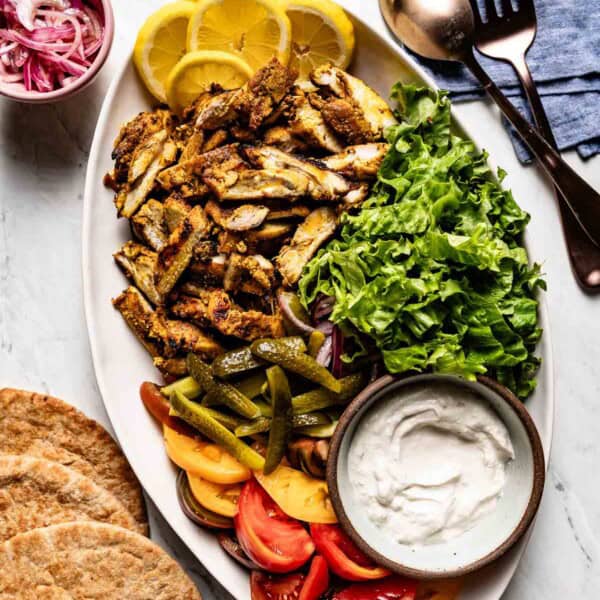
Easy Chicken Shawarma Recipe
This Recipe is: