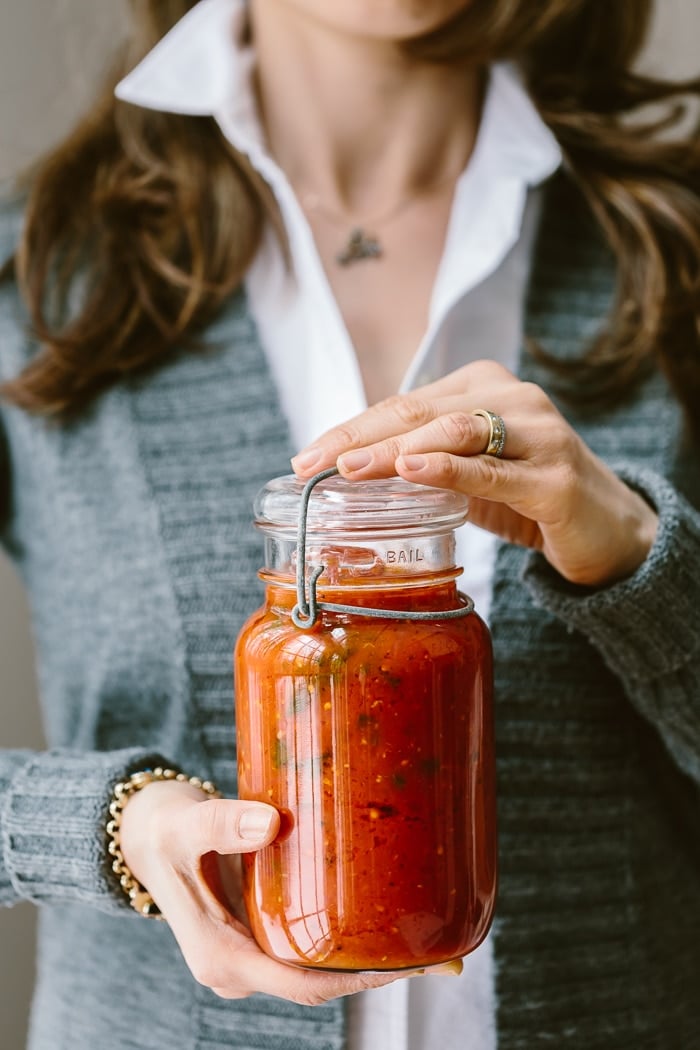
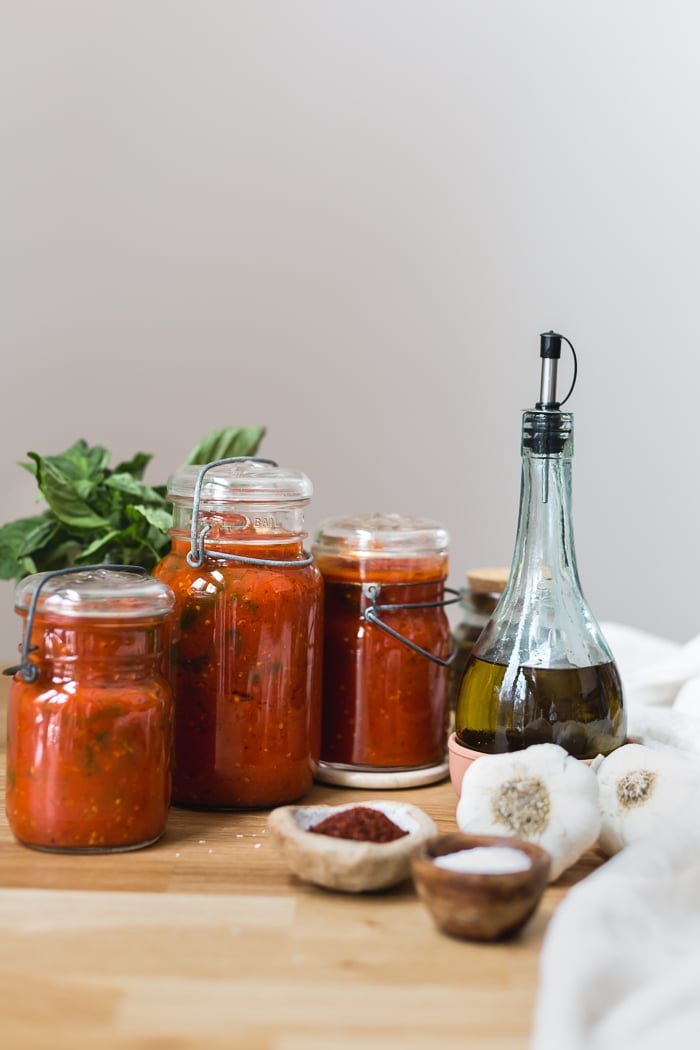
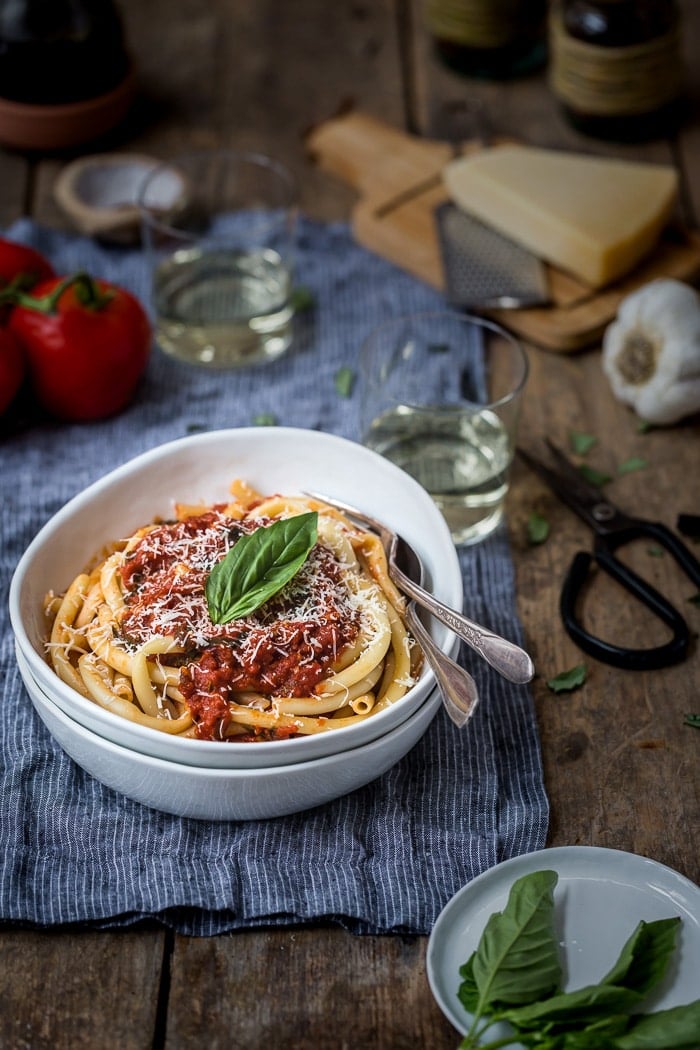
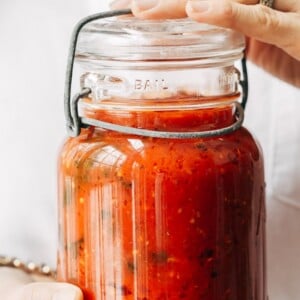
The recipe that I share here is one that I make all the time and keep it in my fridge. In addition to the recipes I mentioned above, I also use it as my go-to Tomato Basil Pasta Sauce when I am in need of a quick, easy, and delicious dinner on a Tuesday night. There are so many uses for this, but I guess my favorite recipes are Baked Turkey Meatballs, Eggplant Involtini, Baked Parmesan Eggplant, and Baked Chicken Parmesan. It freezes well so if you want to make a big batch of it and have some of it stocked up in your fridge, feel free to do so.
How To Make Homemade Tomato Basil Sauce VIDEO
My Tips and Tricks for the Best Homemade Tomato Basil Sauce:
The best thing about this sauce is the fact that it is made with only a few ingredients. But as in all simple recipes, the quality and amount of ingredients you use play a big role in the end product. So here are a few of my tips and tricks to help you, as you make your own.
Whole Tomatoes versus Crushed Tomatoes:
Before I start talking about whole versus crushed tomatoes, please know that the recipe below uses canned tomatoes because I wanted it to be one that you can make year around. If you have fresh tomatoes, feel free to use them instead. The equivalent of two 28-ounce canned whole tomatoes to fresh tomatoes is around 4-4 1/2 pounds. I like my tomatoes peeled, but you can leave the skin on if you like. If you are using canned tomatoes, I recommend using whole canned tomatoes, as most of the time, the only ingredients in those cans are peeled tomatoes and tomato juice. I agree that crushed canned tomatoes are convenient, but they are also packed with chemicals like citric acid and calcium chloride to help them retain their shape. When I make a big batch of this sauce, I use my food processor to crush them faster. If you decide to do so I would recommend using the pulse button and just give them a light crush instead of pureeing them. This way you would end up with chunky tomatoes in your sauce. But if you like your sauce pureed (with no chunky tomatoes) then go for a longer pulse. Additionally, you can chop them up by hand. Some people think that it would be better if you have big chunks of tomatoes in the sauce. I made this sauce both ways and the end product was very good in both times.
Garlic To Tomato Ratio For The Best Basil Tomato Sauce:
I am a huge fan of garlic. I am that person, who uses more garlic than recipes ask for. Throughout the years that I made this sauce, I have doubled (may have even tripled) the amount of garlic used in this sauce. But quite honestly, even though garlic is the main flavoring of this recipe, using more garlic does not give you a tastier sauce. It makes it bitter. So my ratio for two 28-ounce canned tomatoes is to use 5 large cloves of freshly minced garlic. It is more than most similar tomato recipes use so if you prefer yours with less garlicky taste, feel free to use 3 cloves. During the initial cooking, be sure to keep an eye on the garlic and give it a stir often as garlic cooks quickly and burns easily. With that being said, you do need to cook the garlic for it to release all of its flavors so do not leave site of it while it is cooking.
Fresh Basil Leaves For The Finishing Touch:
The second flavoring agent after garlic in this tomato basil sauce is fresh basil leaves you put in the sauce at the very end. Since basil leaves are very thin they bruise easily. So instead of cutting with a knife, tear them with your hands right before you put them in the sauce. They don’t have to be uniformed in size, as they will melt shortly after you place them in the sauce. If you are not a fan of basil or want to try variations of this sauce, you can swap basil with cilantro, Italian parsley, or oregano.
How To Store Homemade Tomato Basil Sauce in the Fridge?
You can store this sauce in the fridge in an airtight container up to a week.
Does This Homemade Tomato Basil Sauce Freeze Well?
Absolutely. If it is stored properly, it will maintain its freshness up to 4 months.
What Is The Best Way to Store Homemade Tomato Basil Sauce?
Best thing to do is to store them in airtight plastic containers or freezer safe glass jars. Yes, you read it right. I use glass jars to freeze tomato sauce. Quite honestly, I had no idea that I can freeze food in glass jars until I read Rebecca Katz’s cookbook Clean Soups. The following about containers is from her book (page:12): “If using glass containers be sure they are made of tempered glass that can be frozen. If you are using any type of plastic, be sure it is BPA-free and that the soup (in our case, the sauce) has cooled completely before storing…” If you decide to use glass jars, leave one to two inches of space at the top of the jar to prevent it from cracking in the freezer. If you are in need of a recommendation, I use these Ball Mason “PINT” Jars or WECK jars to do the job and never had a problem. Alternatively, you can use heavy duty freezer bags.
How Can I Make This Sauce Thicker and Visa Versa?
The thickness of this sauce depends on the time you cook it. The longer you cook it the thicker it will get. Though I have to caution you on two things here: In the same manner, if you want it to be thinner then I recommend cooking it less than 20 – 25 minutes.
Do I Need To Put Sugar in Homemade Tomato Basil Sauce?
Yes, you do unless you want to end up with a bitter tomato sauce. I used organic cane sugar, but in the past I also used honey and maple syrup as well. They all work.
Should I Use Vinegar?
After I first published this post, a few readers reached out and said that they also add a few tablespoons of vinegar (i.e. white wine vinegar, apple cider vinegar, etc.) to balance out the flavors. I did try the recipe with a tablespoon of vinegar and I thought it was good, but to be honest I did not feel like it made a huge difference.
More Tomato Recipes You Might Also Like
Tomato Curry Soup Pizza Caprese Tomato Ricotta Tart Heirloom Tomato Galette Tomato Mozzarella Salad