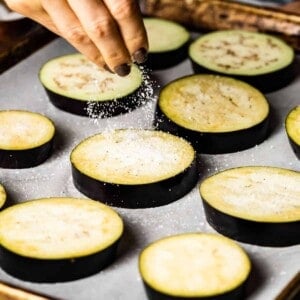
However, if we go back in time and look back at when people first began to cook eggplants, the vegetable had a bitter taste. They came up with this salting process to help get the bitterness out of the eggplant before cooking it, thereby making it more palatable. Since then, however, farmers have bred out much of eggplants’ signature bitterness. As Deborah Madison says in her cookbook New Vegetarian Cooking for Everyone (affiliate link):
Ingredients
To purge eggplant, you will need globe eggplants and salt.
Salting eliminates bitter flavors that come from storing your eggplants too long or using older eggplants. Today’s eggplants may be sweeter, but they still have some bitter liquid inside, especially if they are not fresh. Fried eggplant is crispier and more savory when it’s been pre-salted. When preparing eggplant for frying, the salting process ensures the vegetable absorbs less oil. As a result, taking the time to salt eggplant prior to frying yields perfectly seasoned fried eggplant with a silkier texture. Salted eggplants are seasoned from the inside out. Translation: Their interiors will have the same savory, rich flavor as their exteriors. It is an easy way to make eggplant taste good.
In short: Do you need to salt eggplant before cooking? Not always. But it can’t hurt! Though I am using a globe eggplant—the thicker, more spherical kind of eggplant most often found in the U.S.—you can use this technique to salt other types of eggplant (such as Japanese eggplant).
How to Purge Eggplants
Preparing aubergine is a cinch when you have these two methods on hand. Whether you prefer sweating eggplant or prefer brining it, you’ll find all you need right here.
Method 1: Sweating Eggplants
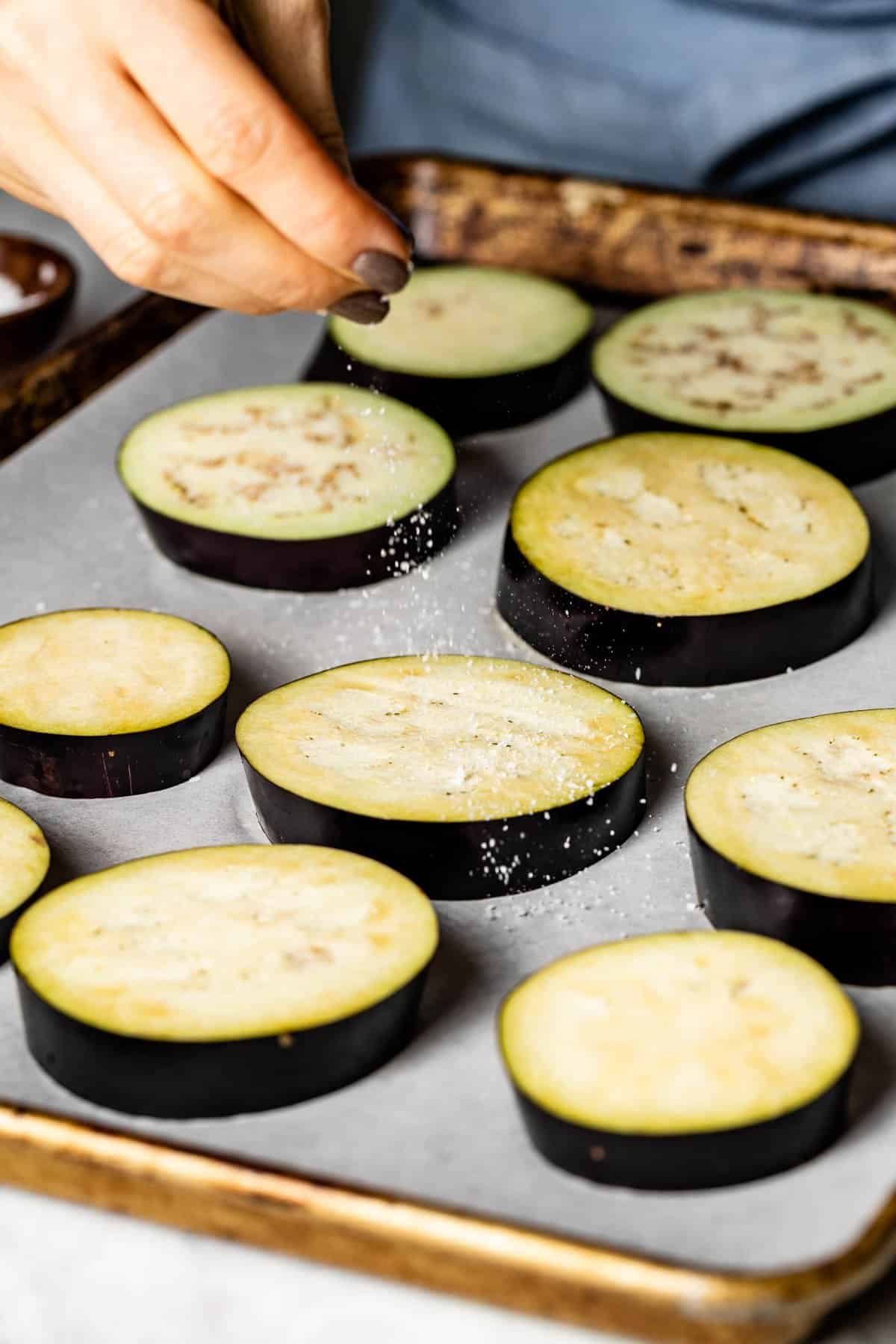
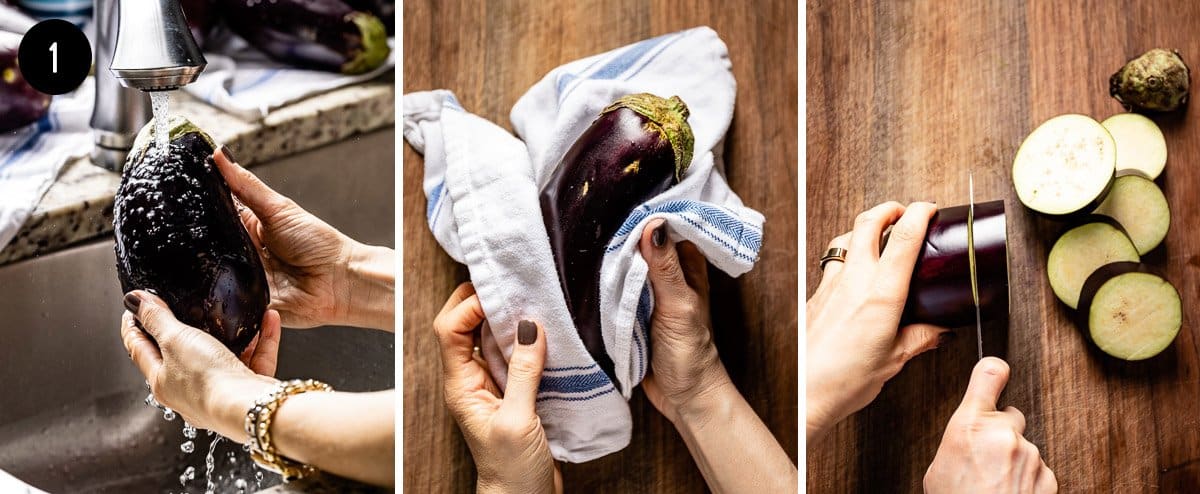
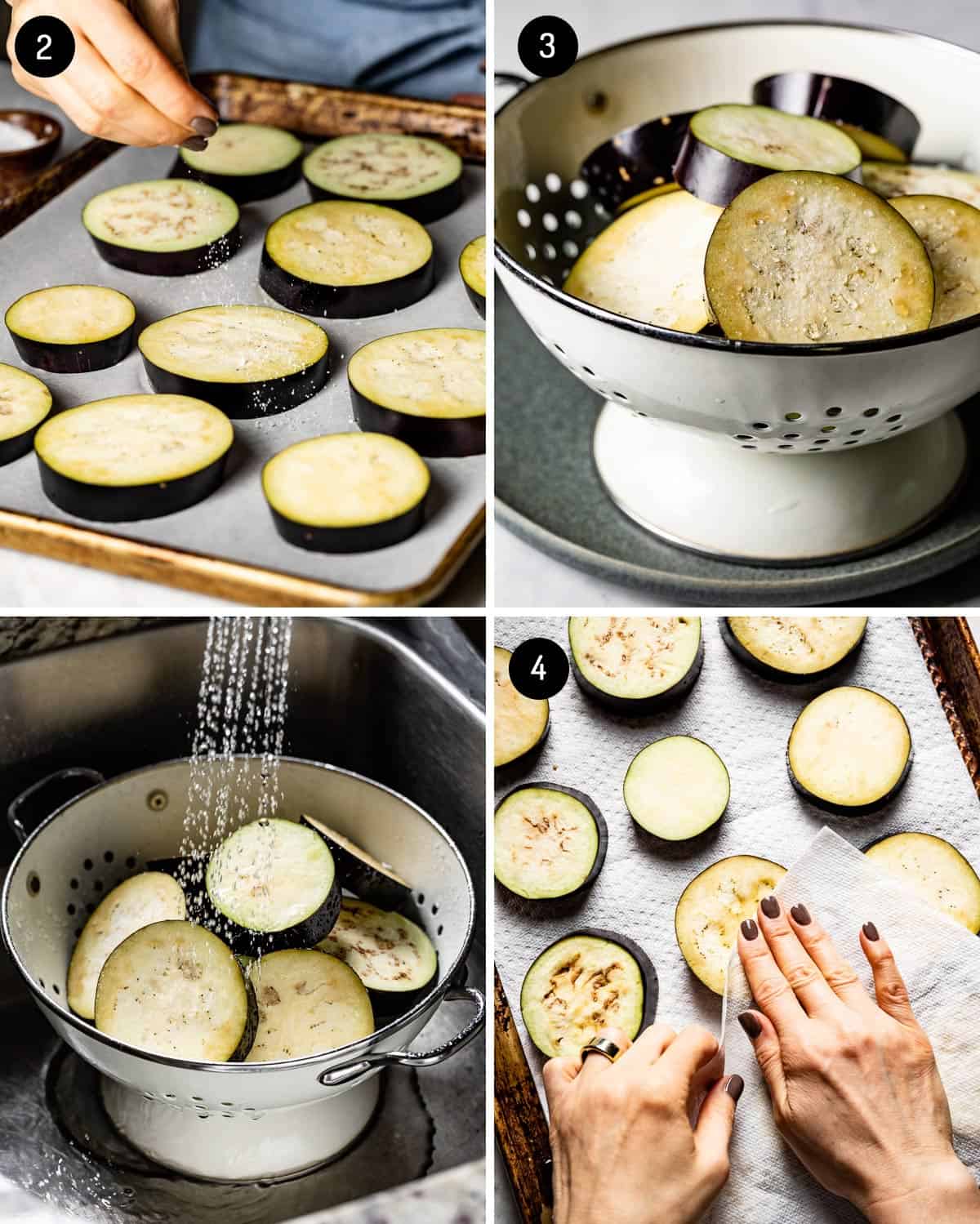
The first method of salting eggplant—“sweating”—requires zero added liquid. Instead, a generous layer of salt does all the work. Now you can learn how to sweat eggplant in just five easy steps.
Method 2: Brining Eggplants
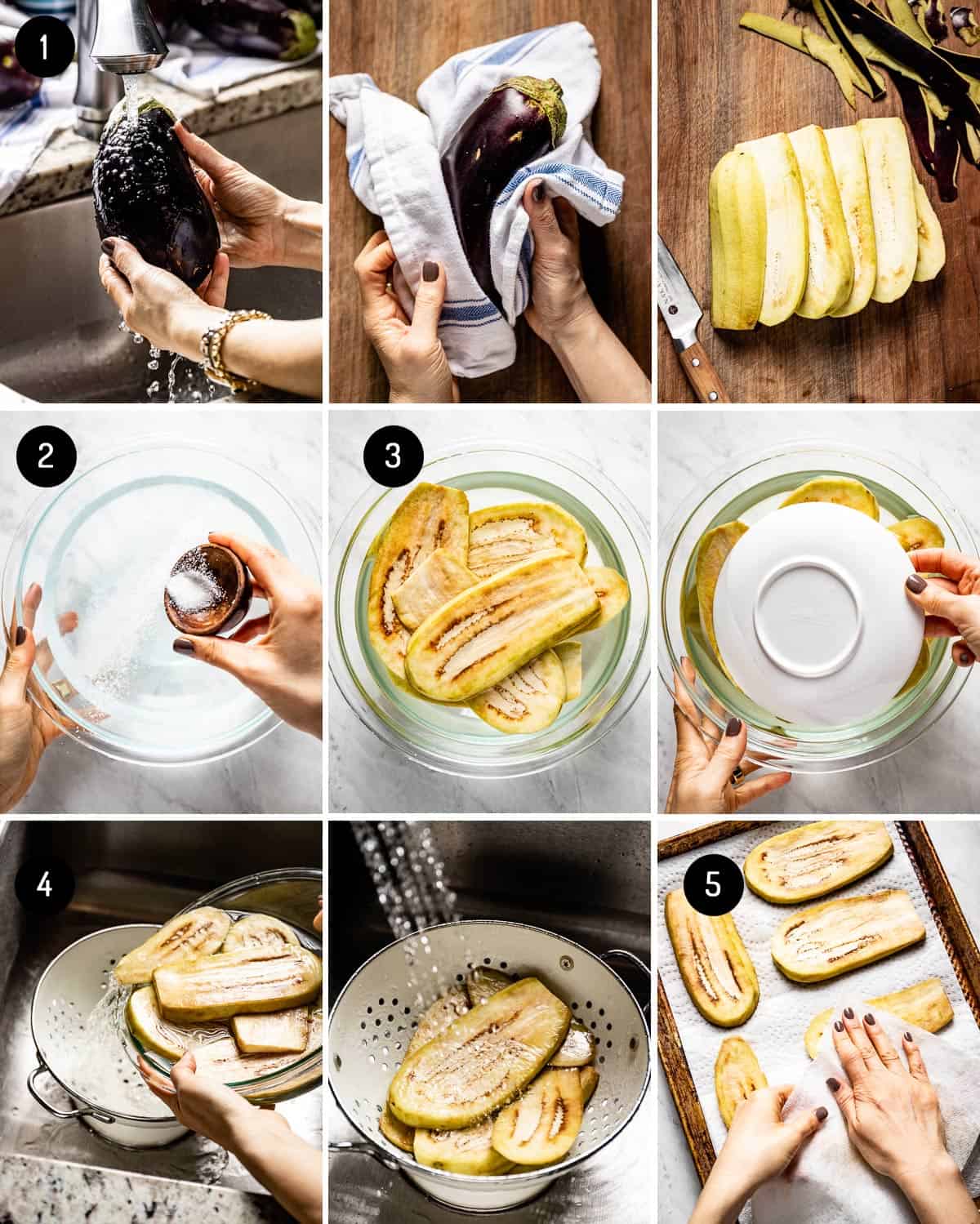
Soaking eggplant in salt water—also known as “brining”—is another easy way to prepare eggplant. Make a bowl of salt water, add your eggplant slices, and let time work its magic in this simple process.
How to Store
If you’re looking for easy meal prep, these expert storage tips are for you! Not a single bite of your brined eggplant will go to waste when you have this neat guide at your disposal.
Storage: Once you have prepared eggplant in brine or sweated your slices, store them in an airtight container. Your eggplant will remain fresh for 1-2 days. To freeze: To freeze your prepared eggplant, place it in a plastic bag and squeeze out as much air as possible before sealing. The eggplant can remain in the freezer for up to a month. Let the eggplant thaw in the refrigerator for 24-48 hours before using.
Eggplant Recipes You Might Like
Now that you know how to salt and prepare eggplant for cooking, here are a few recipes you can use eggplant along with a few different ways of cooking it:
Roasting Eggplant on Stove Sauteed Eggplant Roasted Eggplant Halves Roasted Whole Eggplant Eggplant Involtini Turkish Eggplant Dip Karniyarik Recipe – Aka Turkish Stuffed Eggplant
If you try any of these methods for salting eggplant, please take a minute to rate the recipe and leave a comment about your experience below. It helps others who are thinking of making the recipe. And if you took some pictures, be sure to share them on Instagram using #foolproofeats so I can share them on my stories.