Hummus Ingredients
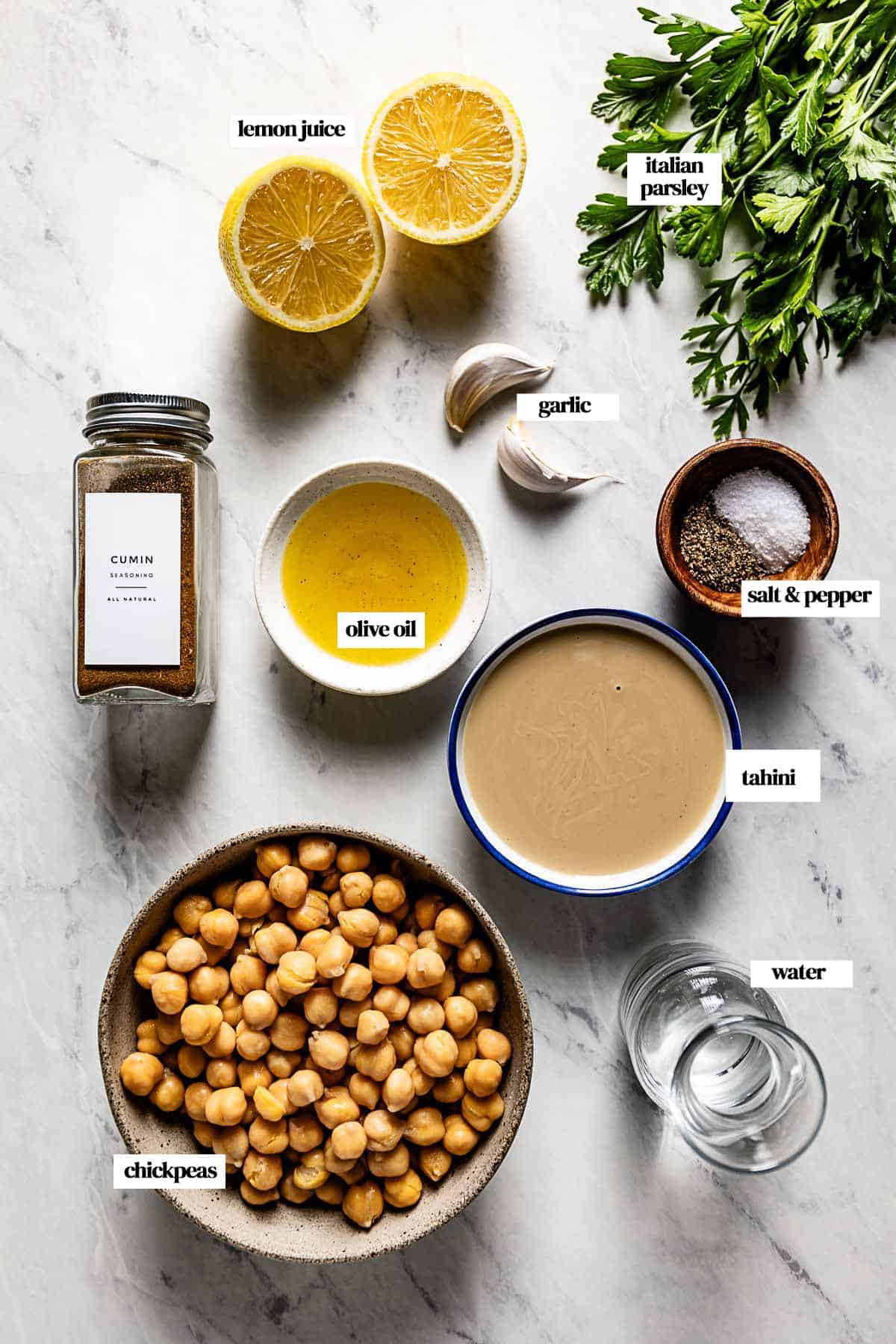
A traditional hummus recipe requires just a handful of ingredients. Since hummus is the Arabic word for chickpeas, it’s no wonder this is the main ingredient. Below is what you’ll need:
Chickpeas: Although you can cook your own chickpeas (more on this below), I find using canned chickpeas is easier and does not require any advanced planning. We will need one can of chickpeas (also known as garbanzo beans) rinsed and drained. Lemon Juice: Fresh lemon juice will provide a fresh pop of citrus. Water: A bit of water helps with consistency. For best results, use ice-cold water. Tahini Paste: A high-quality tahini (sesame paste) makes all the difference and gives this easy hummus recipe that special nutty flavor. I love super creamy Soom tahini (affiliate link) or Seed + Mill (affiliate link.) Extra Virgin Olive Oil: Use good quality olive oil for the best flavor. Garlic Cloves: I use raw garlic when making this hummus recipe from scratch. However, if you want to take things up a notch (and are not a fan of the pungent garlic flavor), you can use Roasted Garlic, or, quicker, Air Fried Garlic as well. Seasonings: Cumin, cayenne pepper, black pepper, and salt add Mediterranean flavor and warmth. Fresh Herbs: Upon serving, a final sprinkle of fresh herbs like parsley is all you need.
How to Make Hummus From Scratch?
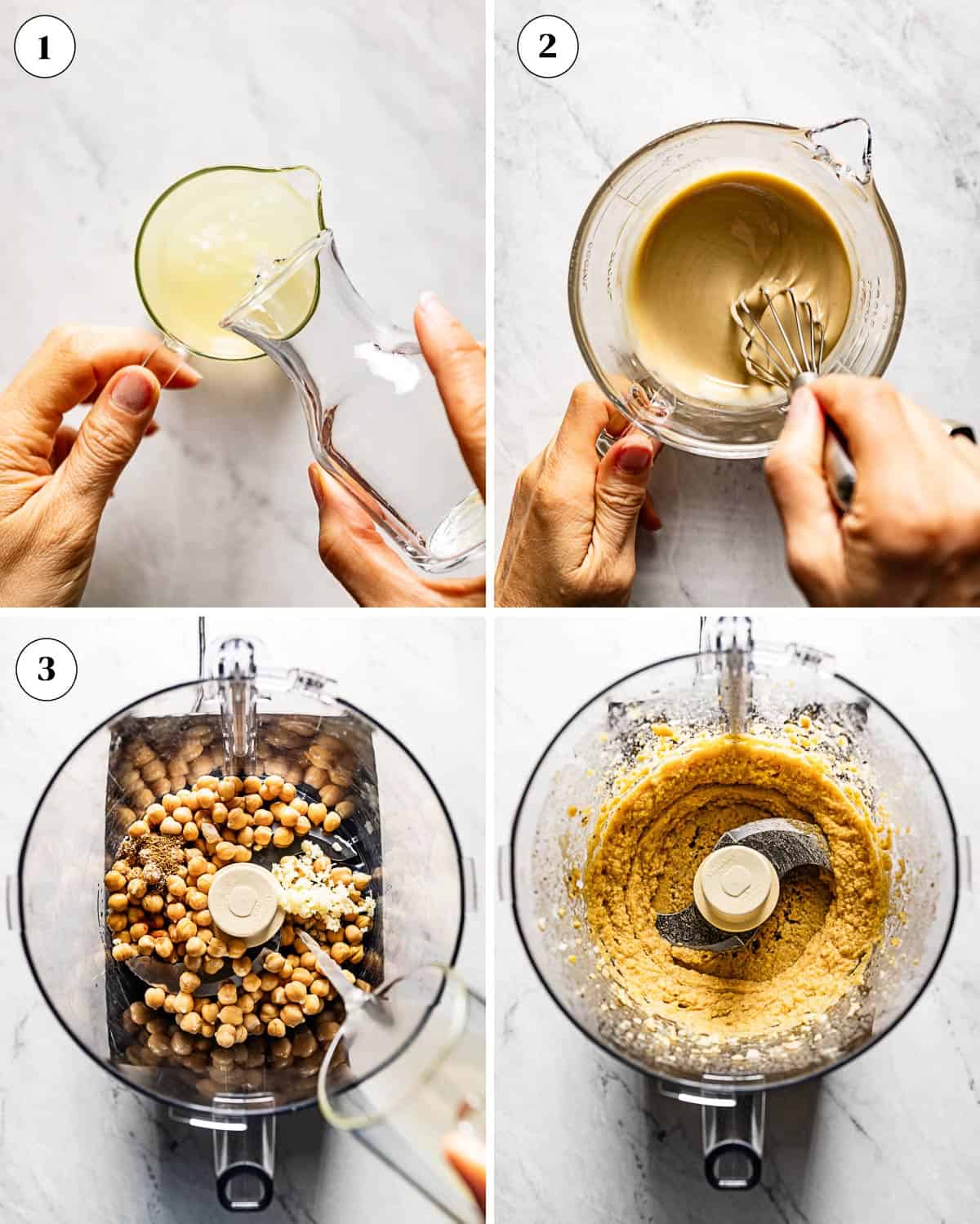
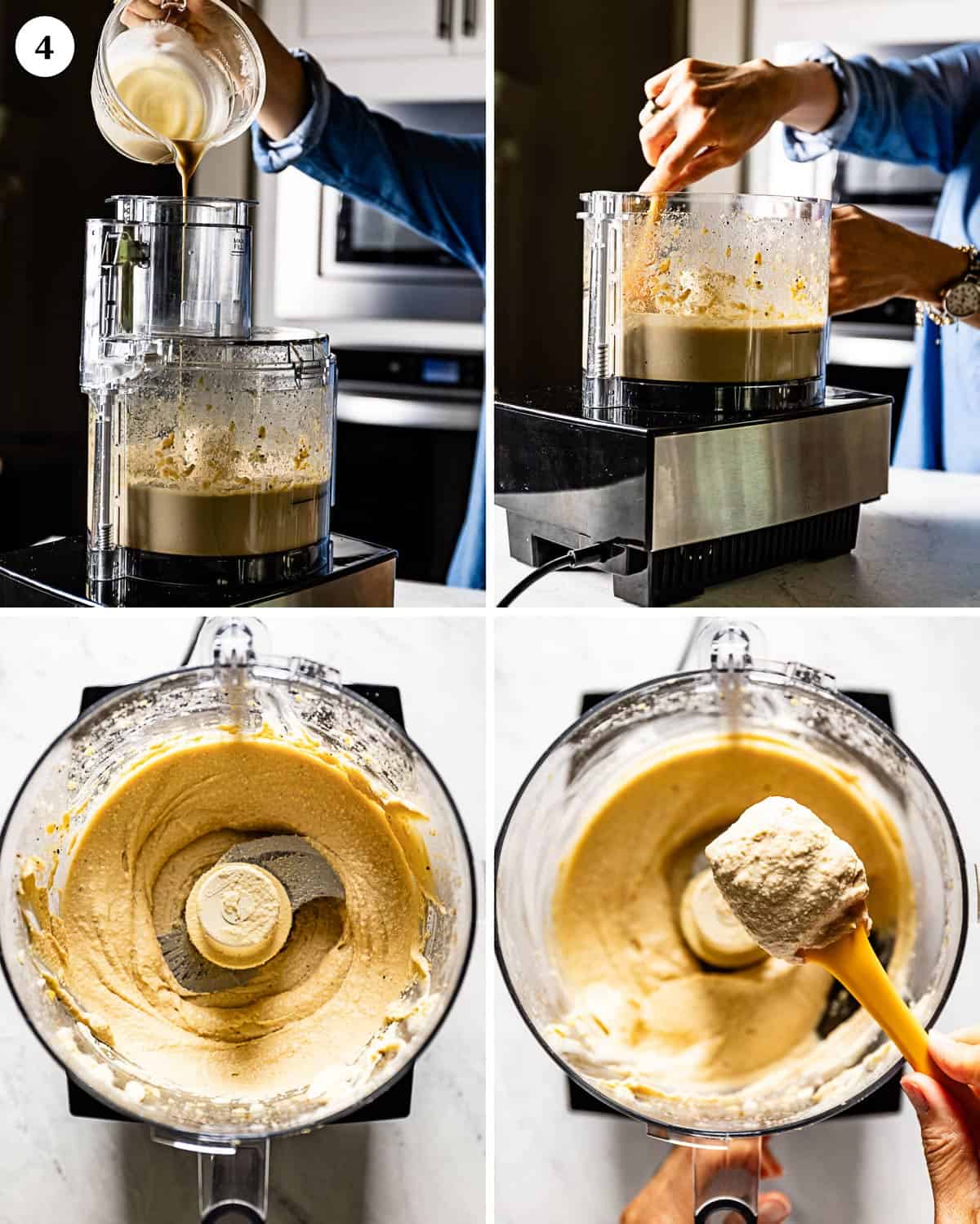
If you are ever looking for a step-by-step hummus recipe, you have come to the right place. Making your own hummus will always be better than store-bought hummus and might even be faster than taking a trip to the grocery store. Here’s how I like to do it:
Chickpeas: If you would prefer to make hummus from dried chickpeas, I recommend trying Ottolenghi’s method of cooking chickpeas. Place 1 ⅓ cups dry chickpeas in a bowl, cover with cool water, add 1 teaspoon baking soda, cover and soak overnight. The next day, drain, rinse, and cook in a pot of water for 40 minutes to an hour, or until softened. And if you prefer it to be quicker, you can cook chickpeas in a pressure cooker as well. Olive Oil: Create a deep crevice into the bowl of hummus with a large spoon and finish with a generous drizzle of olive oil. Pine Nuts + Olives: Add crunch and fruitiness by finishing with toasted pine nuts and chopped Kalamata olives or green olives. Hummus Seasoning: Finish with an array of spices and herbs, such as my Mediterranean Seasoning or Baharat Spice Blend, bright and tangy sumac, or dried oregano. Greek: Garnish with chopped sun-dried tomatoes, crumbled feta cheese, chopped red onion, and a drizzle of olive oil.
How to Make Ahead, Store, and Freeze?
Easy homemade hummus can be made ahead and stored in both the fridge and freezer. To do so, simply:
Make Ahead: Prepare this homemade hummus recipe as directed up to 2 days in advance. The flavors actually get better the longer they have a chance to marry together. Store: Leftovers of this chickpea hummus recipe can be kept in an airtight container in the fridge for up to 4 days. Freeze: Store in a freezer-safe airtight container, with a little space at the top (to count for expansion), for up to 3 months. Thaw overnight in the fridge.
How to Serve
This basic hummus recipe can be served in a number of different ways. Go the more traditional route or think outside of the box by serving as:
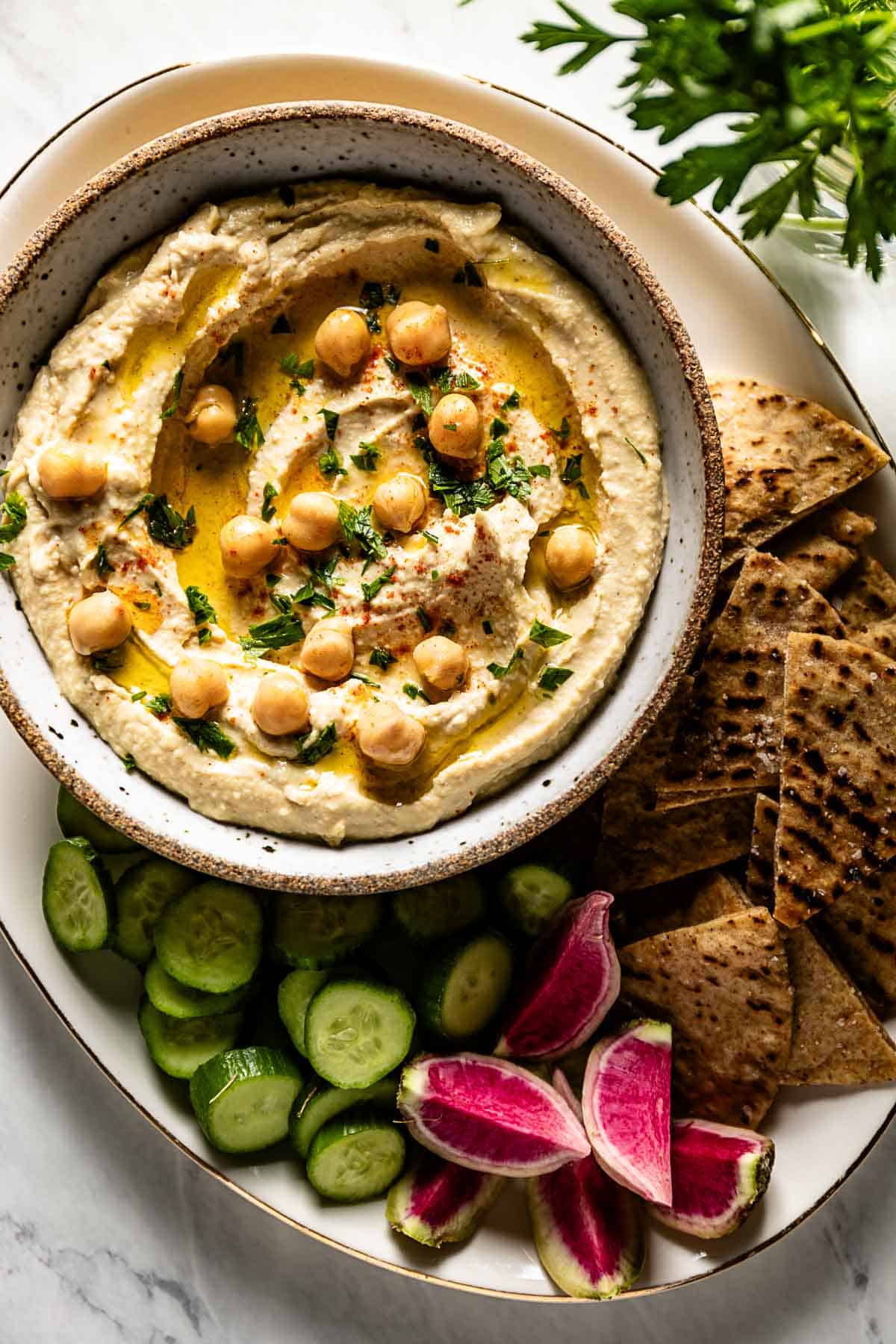
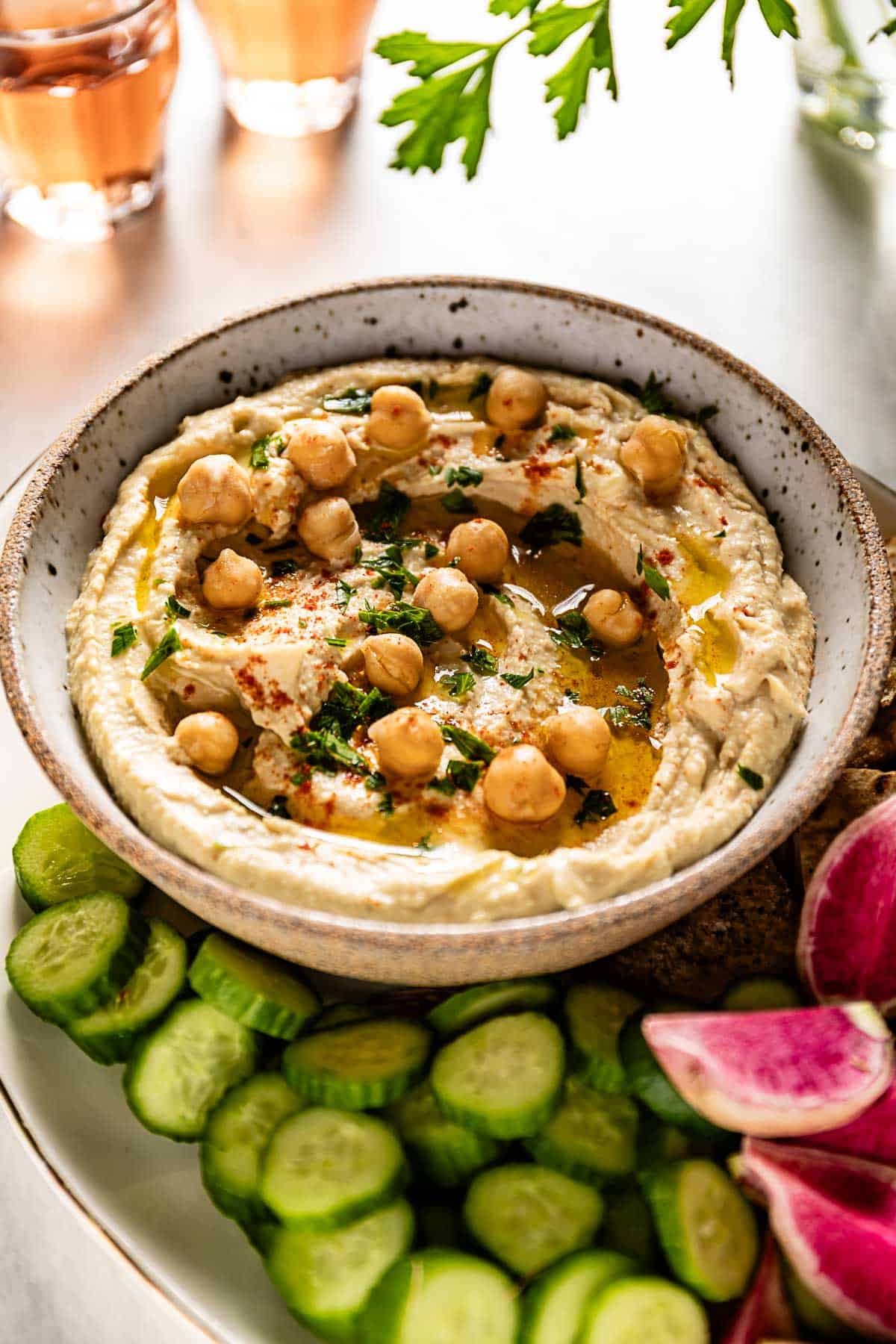
Mezze Platter: The adoration for hummus is a social activity that is meant to be enjoyed amongst the company, and no mezze plate would be complete without it. Enjoy it alongside Baba Ganoush and Middle Eastern Red Pepper Dip for an authentic experience. Grilled Meat: Make it a part of a filling meal by serving your garbanzo bean hummus alongside Mediterranean Chicken, Chicken Kabobs, Grilled Lamb, or beef kabobs. Appetizer / Dip: Cut up fresh veggies like raw celery sticks, English cucumber, carrots, bell peppers, or radishes and dip right into Mediterranean hummus bowls. Spread: Use it as a sandwich spread to make your lunch that much more enjoyable, or add it to your favorite grain bowls. Pita / Bread: Give it a casual approach with toasted pita bread, pita chips, crackers, Air Fried Garlic Bread, Olive Bread, or No Knead Artisan Bread.
Other Mediterranean Recipes You Might Enjoy:
It is no secret that I love making and sharing Turkish recipes on the blog. Below are other Mediterranean classics that I know you’ll like:
Should I remove the skins of chickpeas? I am sure you’ve seen a lot of recipes suggesting removing the chickpea skins. While I get why they recommend doing so, I personally do not have the time or patience to do so. And I guarantee you that this recipe is just as creamy and delicious without removing the skin. Use high-quality tahini: The quality of your tahini makes a huge difference here. For optimal taste and texture, use a brand of tahini that uses the buttery white Humera sesame seeds from Ethiopia. It should also be soft and creamy. If the tahini bottle has been sitting in the fridge for a while, be sure to give it a good stir before using it. Use an ice cube: This is an optional step, but it really works. To achieve an extra smooth and creamy hummus, add 1-2 ice cubes near the end of processing. No food processor? Use a blender. However, please keep in mind that if you have a high-speed blender like Vitamix (affiliate link), you might have to stop the machine and scrape the sides a few times. Serve at room temperature: Fun fact – restaurant hummus is never refrigerated and is made fresh each morning. While I refrigerate my batch of homemade hummus to get ahead, I always serve it at room temperature.
Turkish Tabbouleh Tzatziki Sauce Recipe Muhammara Yogurt Tahini Sauce Bread Dipping Oil
If you try this Mediterranean Hummus Recipe, please take a minute to rate the recipe and leave a comment below. It helps others who are thinking of making the recipe. And if you took some pictures, be sure to share them on Instagram using #foolproofeats so I can share them on my stories.