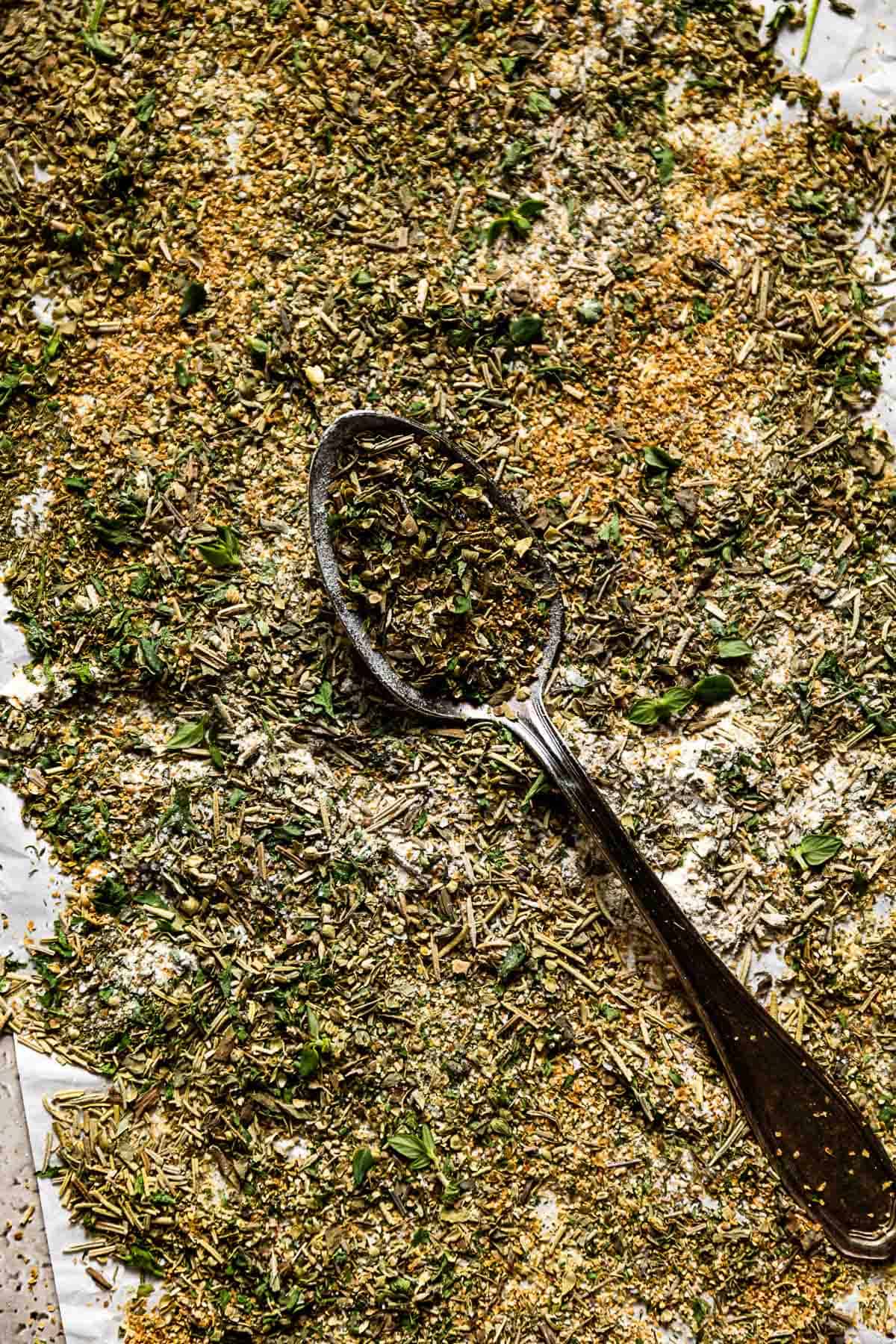
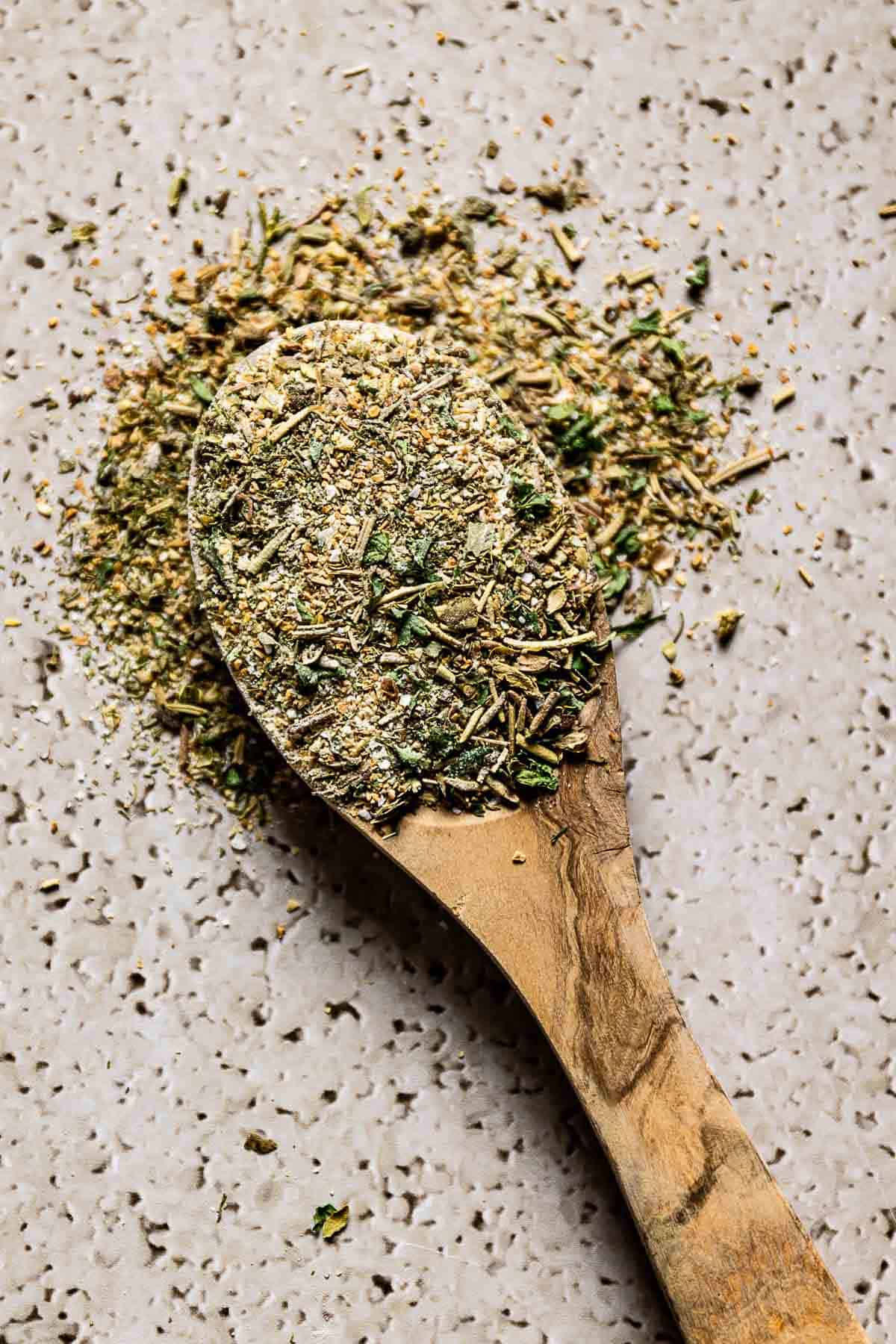
So, go ahead and make a batch and bring the most-loved flavors of the Mediterranean region to your own kitchen with this unique combination of warming spices you probably already have in your spice cabinet.
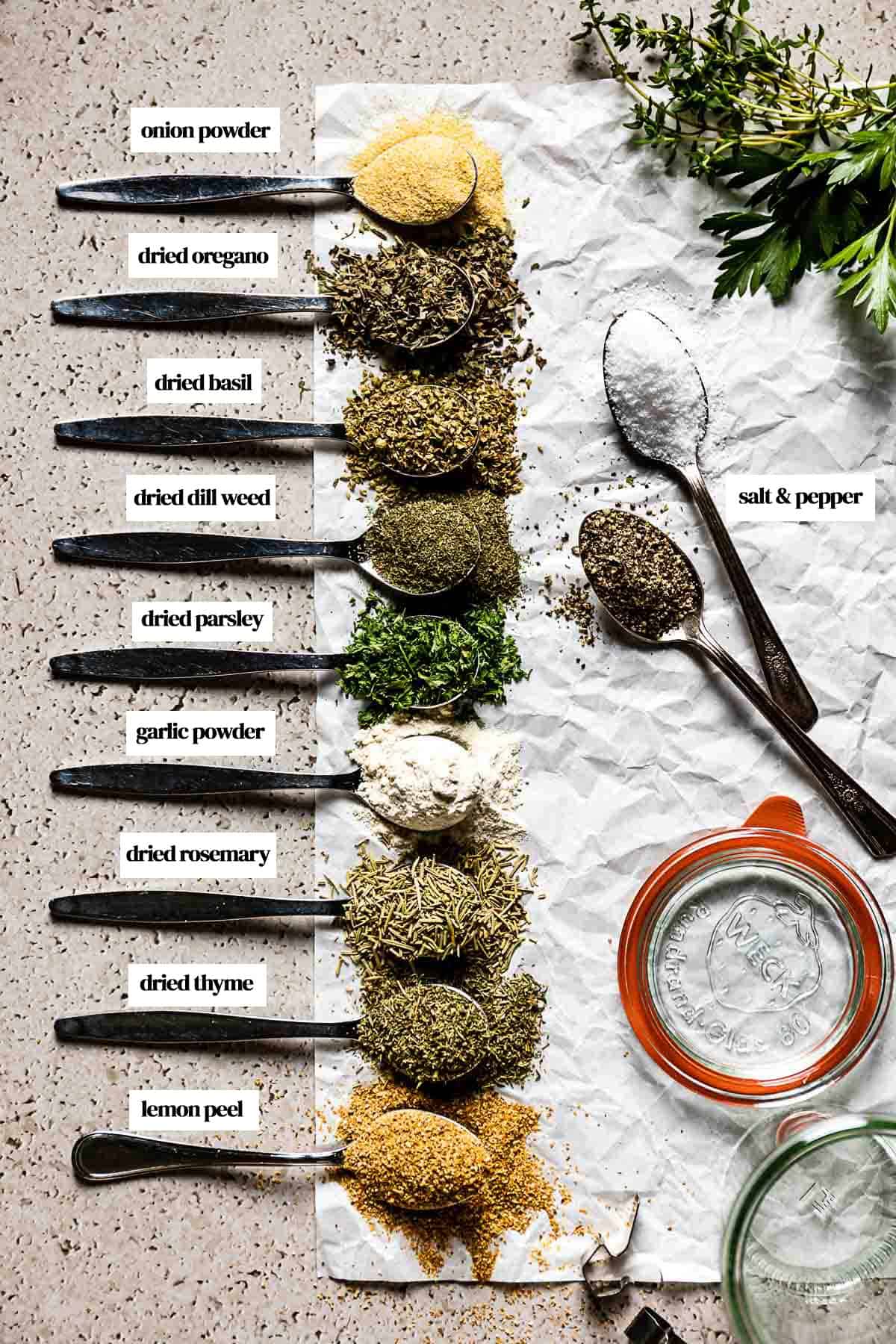
Garlic powder: I use garlic powder here. However, you can use granulated garlic if you can’t get your hands on it. The granulated version is thicker compared to its powdered version. Therefore, if you prefer a finer Mediterranean spice mix, simply use a food processor or spice grinder to crush your granulated garlic into smaller fragments. Onion powder Dried basil Dried oregano: I prefer Italian oregano in this spice blend recipe due to its minty, herbaceous undertones. Mexican oregano will add too much citrusy flavor, resulting in a different flavor profile. Dried dill weed Dried parsley Dried rosemary Dried thyme Ground black pepper Dried Lemon peel: This is probably the only ingredient that may require a trip to the store, but it is worth it. Dried lemon peel (affiliate link) lends this simple spice mixture an irresistible hint of fresh, tart flavor—in addition to its signature bright color. However, you could also use orange peel. And if that doesn’t work, you can add fresh lemon zest right before you are ready to use this Mediterranean seasoning in your recipe.
How to Make This Recipe?
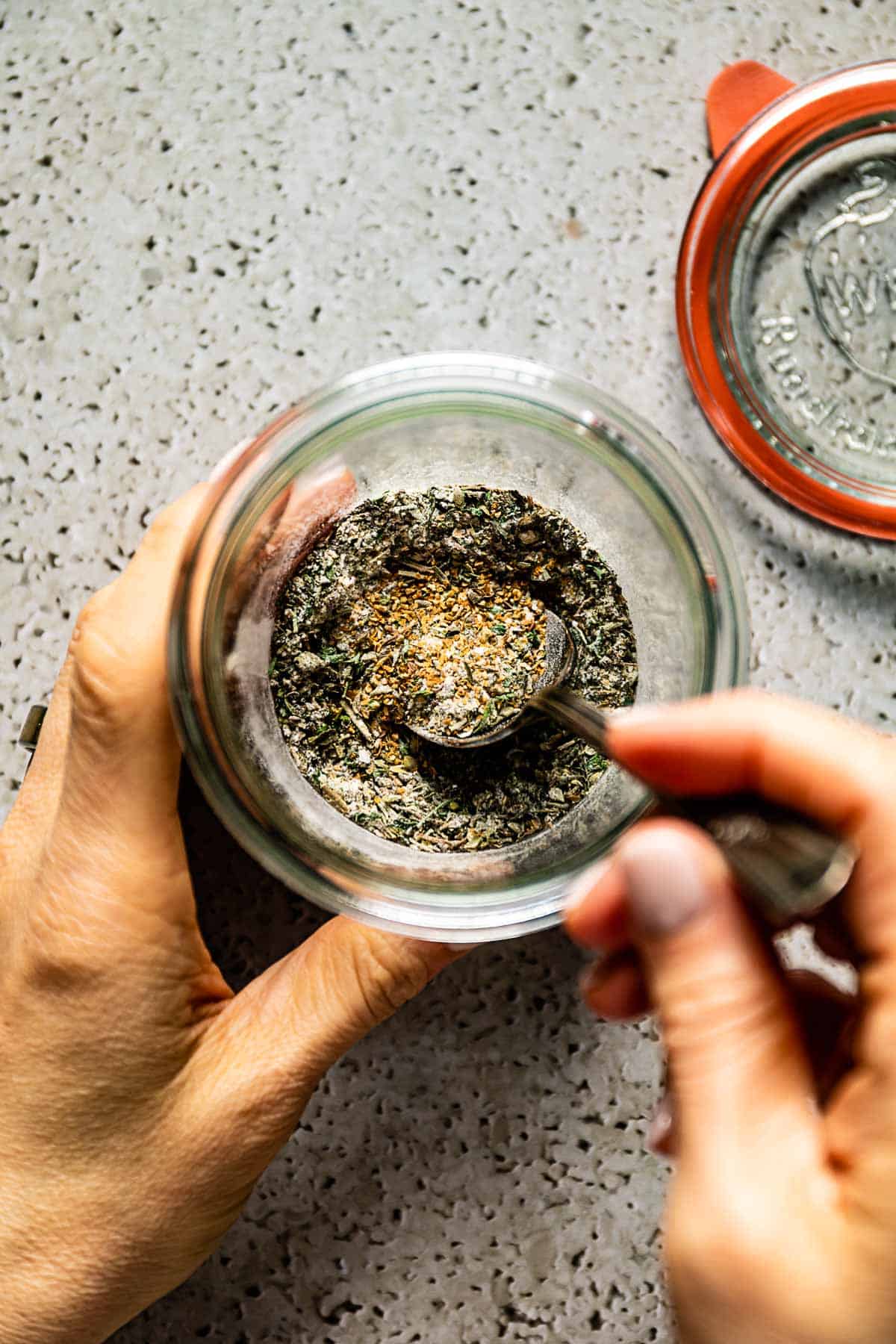
You can have a sumptuous flavoring for all your favorite dishes in just five minutes and one step. Simply add your ingredients to a small mixing bowl, adjusting the salt and seasoning levels to your taste. Mix until thoroughly blended. Use it in your recipe right away, or transfer the Mediterranean herb seasoning to an airtight jar for later use.
Storage Instructions
Whether you’re using this Mediterranean spice blend recipe for weeknight meals or a special occasion, use these storage tips to ensure that your mix stays fresh and flavorful for months.
Airtight container: It’s essential that you store your Mediterranean herb mix in an airtight container to ensure the ingredients don’t lose their flavor over time. A jar with a tight-fitting lid is ideal. Check for dryness: Ensure your storage container is fully dry before adding your spice mixture. Also, if you dried your own fresh herbs, ensure all ingredients are completely dry before storing them. Any moisture will make your blend difficult to use, dull its flavors, and may result in unwanted bacteria or mold. Store in a dark place: To keep your spices’ flavors as robust and fresh as possible, store your mixture in a cool, dark place, such as a pantry or cupboard. Exposure to heat and sunlight can strip your herbs of their flavors and limit how long you can use them. Date and label: I recommend dating and labeling your Mediterranean spices and herbs before storage to keep track of their freshness. This way, you won’t have to fret over your calendar every time you prepare a new dish. Use within six months: To ensure maximum flavor, I suggest using it within six months of preparation. Though the seasoning won’t go bad, it will likely lose its potency the longer it sits.
Uses of this Mediterranean Spice Mix
There are endless ways to incorporate it into your cooking. In minutes, you can add fresh, sunny flavors to fan-favorite recipes, from hearty chicken to light seafood.
Rub for chicken and turkey: This Mediterranean rub does wonders to enhance the succulent, tender flavors of chicken and turkey recipes. Use it to season chicken thighs in my Mediterranean Chicken with Lemon to bring out their zesty profile. Or, sprinkle a bit over my Baked Split Chicken Breast for a savory, herby addition perfect for soups, salads, and everyday meal prep. For an elegant recipe made for presentation, you could use this spice in my Baked Turkey Tenderloin or add it to my Middle Eastern Chicken Kabob recipe for a summer-ready dish any party crowd will love. Beef and steak seasoning: Using Mediterranean spices for beef is an easy way to balance the hearty flavor of steaks, burgers, meatballs (hello, Turkish Kofte!), and roasts with delicately fresh flavors. Lamb: If you’re a fan of its grassy, robust taste, I recommend using your Mediterranean spices for lamb. Take your recipe to the next level by adding this seasoning mix to lamb shanks, grilled chops, or lamb burgers with feta. Grilled seafood: It’s no secret that Mediterranean cuisine and fresh seafood go hand in hand. Rub fresh-caught fish with olive oil, lemon juice, sea salt, and Mediterranean seasoning for a delectable dish that comes together in minutes. Or, add a dash of this tasty rub on some of my favorite seafood recipes, like Grilled Mahi Mahi and Shrimp Kabobs. Marinades and sauces: You won’t be able to resist eating your favorite sauces by the spoonful when you include this simple recipe. Add a touch of authentic Mediterranean taste to flavorful kitchen staples, like Basil Tomato Sauce, Green Pasta Sauce, or Garlic Butter Sauce. Or, elevate your meat marinades using it in my basic Easy Shrimp Marinade or Greek Yogurt Chicken Marinade recipes. Salad Dressings: Looking for an easy way to bring your weekday salads to life? Mix your Mediterranean seasoning with olive oil, minced garlic, and either lemon juice or vinegar, and you’ll have a light, healthy salad dressing you can use all week long. You can also embellish my tart Lemon Dressing or creamy Yogurt Dressing by adding a pinch of this easy mixture. Soups and stews: There’s no reason why your favorite soups shouldn’t explode with flavor. Add this Mediterranean blend to my healthy Broccoli and Feta Soup, creamy Red Lentil Soup, or hearty beef stews (hello, Eggplant Beef Stew!) to enliven every spoonful with herby, savory flavors. Bread dipping oil: The only thing better than a piece of freshly baked bread is one that you serve alongside delicious dipping oil. This Olive Oil Bread Dip would be the perfect accompaniment to dozens of menu ideas—with the addition of this spice mix, of course! Sautéed or roasted vegetables: While some may only think to use this Mediterranean rub for chicken, this fragrant spice mix is one of the easiest ways to add mouthwatering flavor to your favorite veggie dishes. I love including this simple spice in tasty sides, like Pan Roasted Eggplant, Roasted Whole Carrots, and Roasted Cauliflower.
Use new herbs and spices: The trick to getting your spice mixture as herbaceous and flavorful as possible is using fresh ingredients. You can make your own dried herbs for extra freshness, but ensure they dry thoroughly before adding them to your mixture. Make it your own: My favorite part about making my own spice blends is how easy they are to customize. Feel free to adjust the spices in this recipe to match your taste. Or, if you don’t like any of the ingredients, you can omit them entirely or use a bit more of something else. For example, if you’re not a fan of dill, you can leave it out and add more thyme. For a spicier mix, you can add red pepper (aka chili pepper flakes), or you could include Spanish paprika for a slightly smokier taste. Give it a good shake: Shake your spices’ storage container before incorporating the blend into your cooking. Because some ingredients tend to shift to the bottom during storage, shaking your mixture will ensure an even distribution of flavors. Start with a small amount: When adding this seasoning to your cooking, I recommend beginning with a small amount and adding more after tasting. Remember, you can always add more spice but you can’t take it out. Customize your salt levels: When you buy spice blends at the store, you never know how much salt is inside. That’s why I prefer to make my own seasoning mixtures. For this recipe, you can either add the salt directly into the blend or omit it and add salt to your recipe as needed.