What is Muhammara?
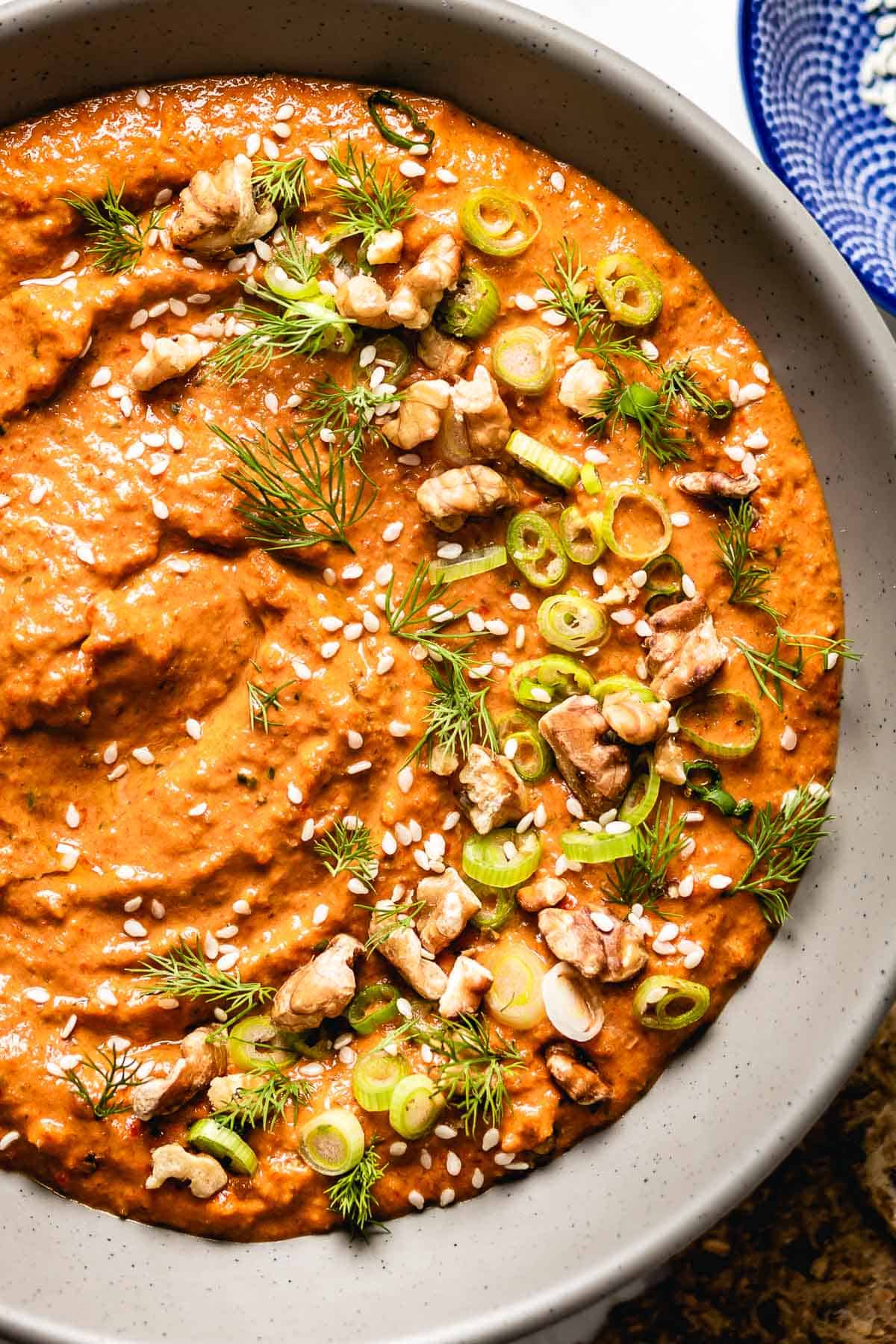
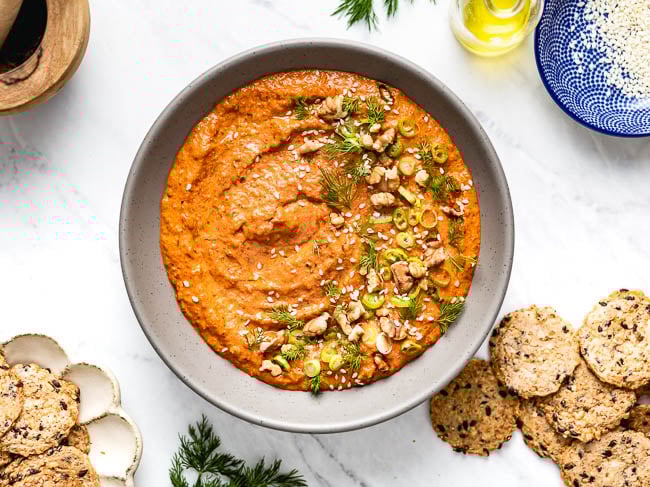
Muhammara is a traditional Middle Eastern red pepper dip or condiment typically served a dip or sauce with warm pita bread. It is claimed by many countries, but the actual origin is the Syrian city of Aleppo. Also called Muhumra, Hamara, or Marmara, the dip is popular throughout Lebanon, Turkey, Armenia, the Middle East, and Meditteranean. It’s one of those recipes widely adapted according to the region and personal taste. If you’ve never made this Middle Eastern pepper sauce, prepare to be amazed! Similar to its simpler version, roasted red pepper walnut dip, it is robust in flavor with sweet red peppers, nutty walnuts, and pomegranate molasses added to it to make it closer to its traditional version. All you need is a food processor and 30 minutes for a Meditteranean-inspired dip that is bright in color and flavor! Intrigued? Let’s break it down. My aunt was the queen of Muhammara sauce! This a delicious dip I grew up eating. We put it on everything – pasta, eggs, vegetables – and brought it to all our special occasions. Being one of the popular recipes of the Turkish Cuisine, pita chips and muhammara dip was our version of bread and butter.
Other sauce/dip recipes you might also like:
Mediterranean Hummus Roasted Carrot Hummus Recipe Yogurt Tahini Dressing Greek Yoghurt Dressing Bread Dipping Oil Cashew Avocado Sauce Creamy Avocado Dressing
This recipe has been adapted (with minor changes) from Vegetables Illustrated (affiliate link).
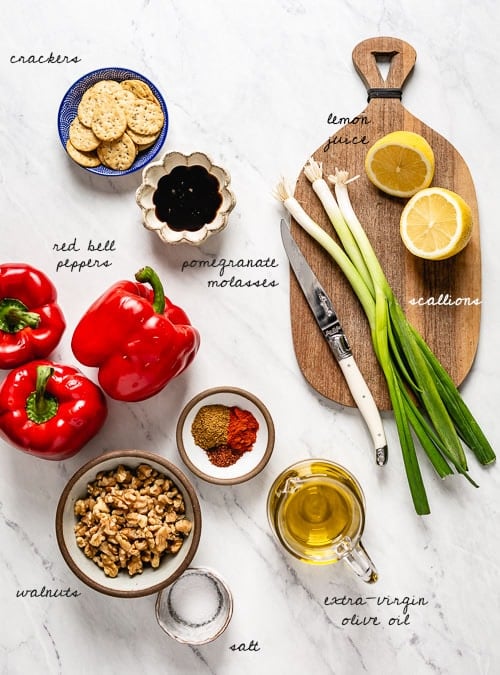
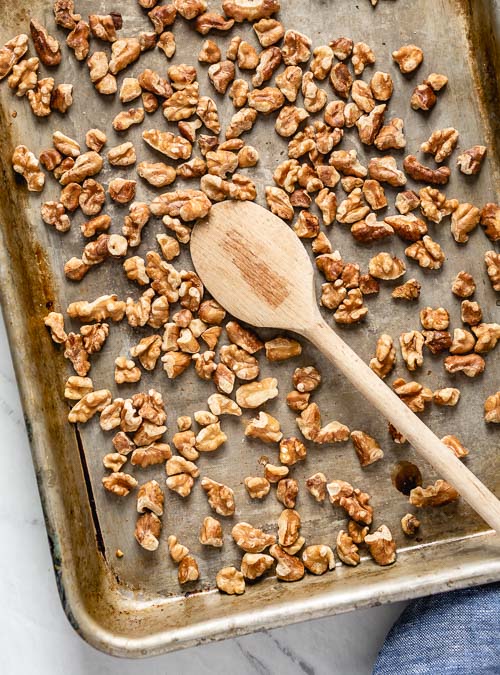
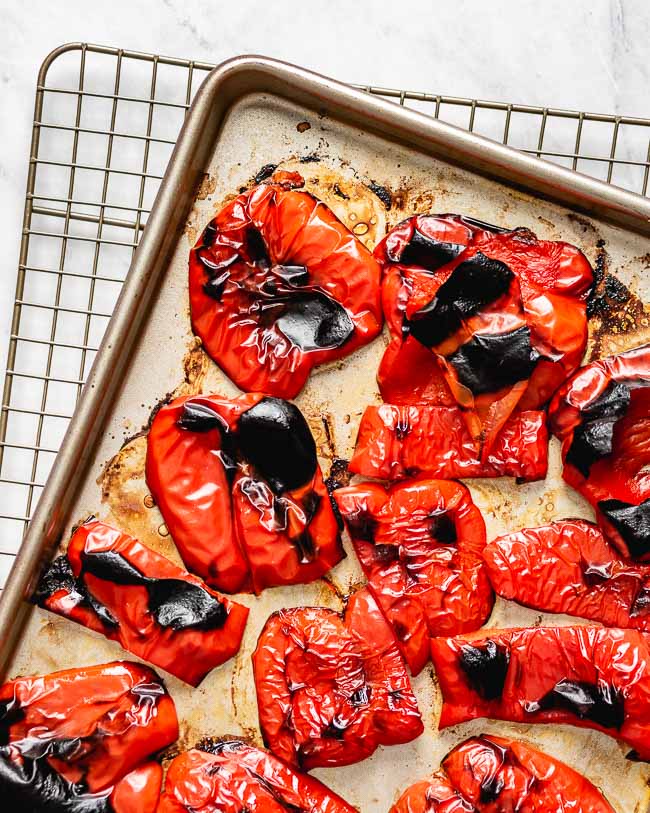
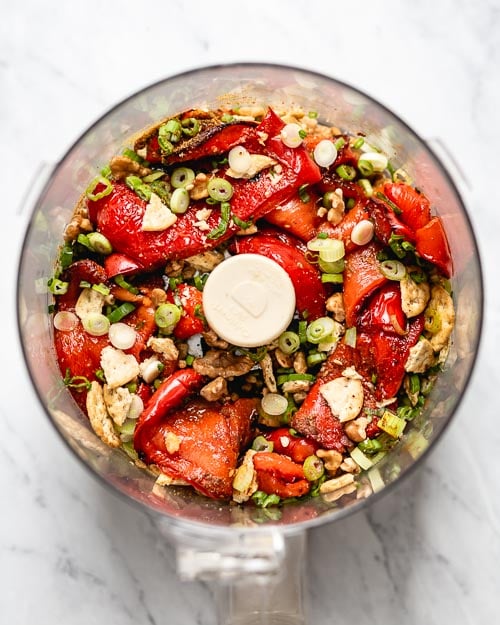
Red Bell Peppers – Purchase fresh, organic, sweet red bell peppers the day you are going to prepare the dip for the best flavor. If you’re in a pinch, jarred roasted red peppers can be substituted; however, it’s worth noting that the flavor of homemade roasted red peppers is much sweeter than using ones from a jar, and the texture is softer. Raw Walnuts – Toasting walnuts beforehand brings out more of their nutty, creamy flavor. I like to purchase a bulk of walnuts and toast them in a single layer on a large baking sheet in a 350-degree oven until light golden brown (about 7 minutes) as soon as I get home from the store, then cool completely and store them in an airtight container in the freezer. That way I have toasted walnuts ready whenever I need them! Crackers – The authentic muhammara recipe is made with bread crumbs. In this modern version, I followed in the footsteps of the authors of the Vegetable Illustrated and used crackers instead. You can use any type of lean crackers, such as the simple water cracker. However, for even more flavor variation, use a cracker scented with rosemary, thyme, flax seeds, or sesame seeds. For best results, gently crack the crackers in a zip-top bag and finish crushing with a rolling pin. Scallions – Use both green and white parts and be sure to roughly chop prior to adding to the bowl of your food processor. Extra Virgin Olive Oil – This is a raw, uncooked sauce, so a good-quality Extra Virgin Olive Oil makes all the difference. My favorite is California Olive Ranch (affiliate link). Pomegranate Molasses – If you are unfamiliar with pomegranate molasses, it is a slightly sweet, slightly tart syrup made from boiling down pomegranate juice (similar to how balsamic glaze is prepared). It gives the dip its signature sweet and tangy taste, adding an extra depth of flavor. It is a very popular ingredient in Middle Eastern cuisine and an authentic ingredient for this red pepper spread. Most supermarkets sell pomegranate molasses, but you can also purchase it online. If you need a suggestion, this pomegranate molasses (affiliate link) is the brand I use. Lemon Juice – A hint of fresh acidity goes a long way and locks in the color of those beautiful roasted red peppers. Paprika – I prefer sweet paprika over hot since the spice factor will come from the cayenne. Cumin – Although not typically included, I like the punch of savory, smoky goodness cumin brings to this dip. Kosher Salt – Use the amount called for in the recipe and adjust the taste to your liking at the very end. I also recommend finishing it off with some flaky sea salt. Cayenne Pepper (or red pepper flakes) – A slight kick from the cayenne pepper transforms it into a healthy spicy capsicum dip (capsicum is another word for pepper). If you are not into spiciness, you can simply omit it. Alternatively, if you can get your hands on it, you can swap cayenne pepper with Aleppo pepper.
Dip: Definitely the most authentic, serve it as a dip with seed crackers, pita bread, or fresh sliced vegetables as a part of your mezze platter. Spread: Slather it on sandwiches, fresh pita bread, wraps, or your morning toast. In my opinion, leftover muhammara makes the best sandwich spread. Pasta Sauce: Prepare your favorite pasta and toss it in a large bowl with the muhammara and a bit of pasta water – no additional cooking required! Pizza Sauce: Replace the tomato sauce on pizza with muhammara – such a fun, Meditteranean twist! Topping: A scoop of muhammara makes an excellent topping for homemade CAVA bowls and pairs beautifully with other Mediterranean sauces like tzatziki and hummus.
This Recipe is: