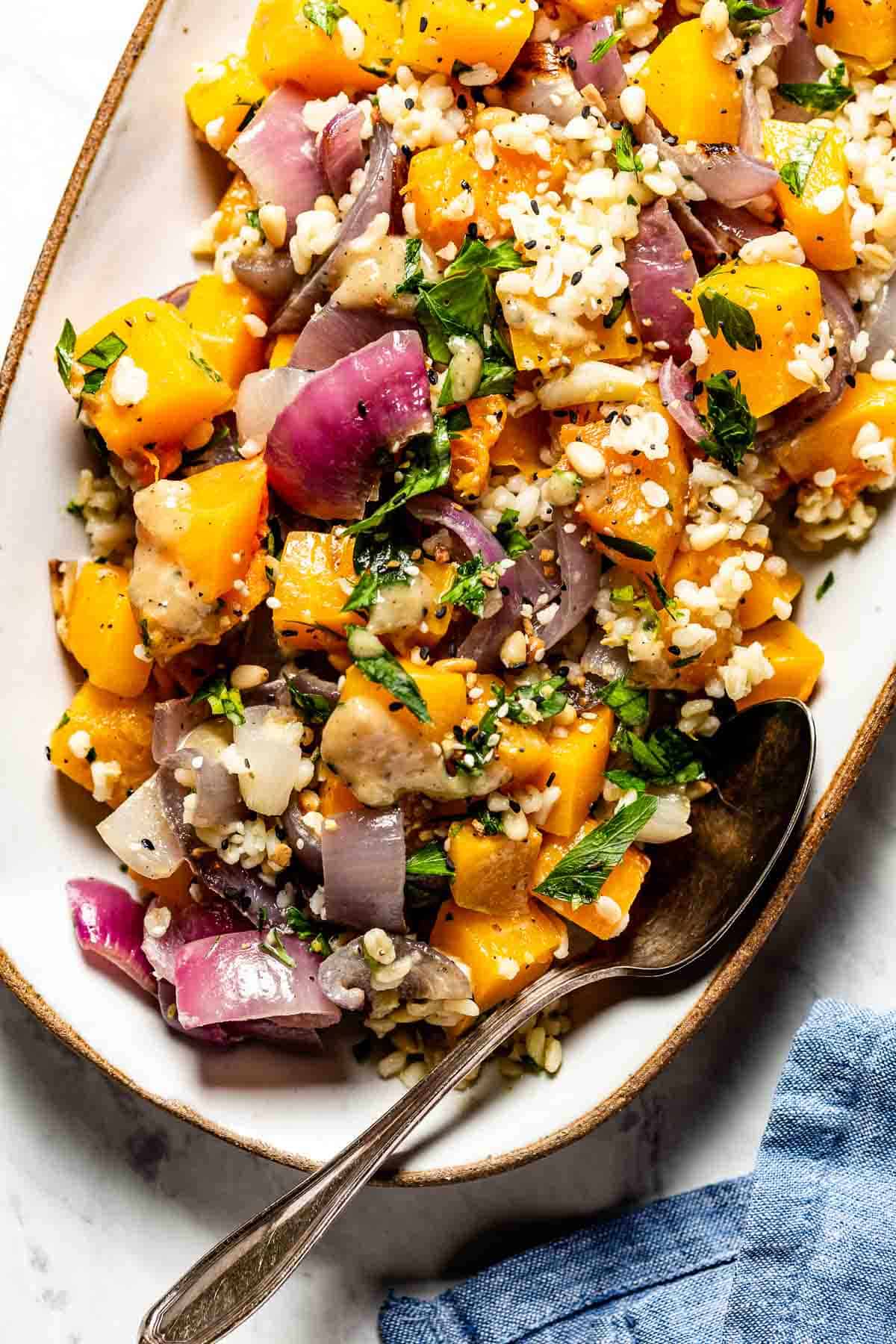
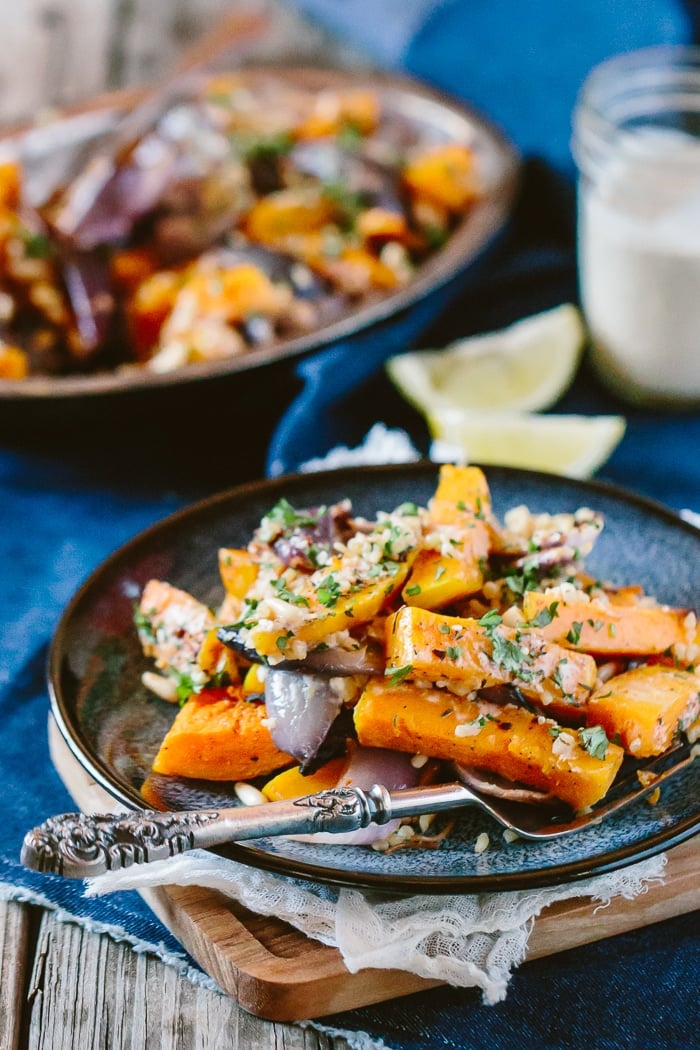
Seasonal root vegetables, namely butternut squash, with golden brown bits are the star of the show, with some background highlights of hearty grains, crunchy nuts, and a super special herb blend to make it a complete meal. It can be served at any temperature degree – warm, room temperature, or cold – making for a wonderful make-ahead recipe. It’s super customizable, meaning you can swap out those maybe hard-to-find Middle Eastern ingredients for ones you already have on hand. It’s the best way to use already prepared roasted butternut squash halves or baked butternut squash cubes.
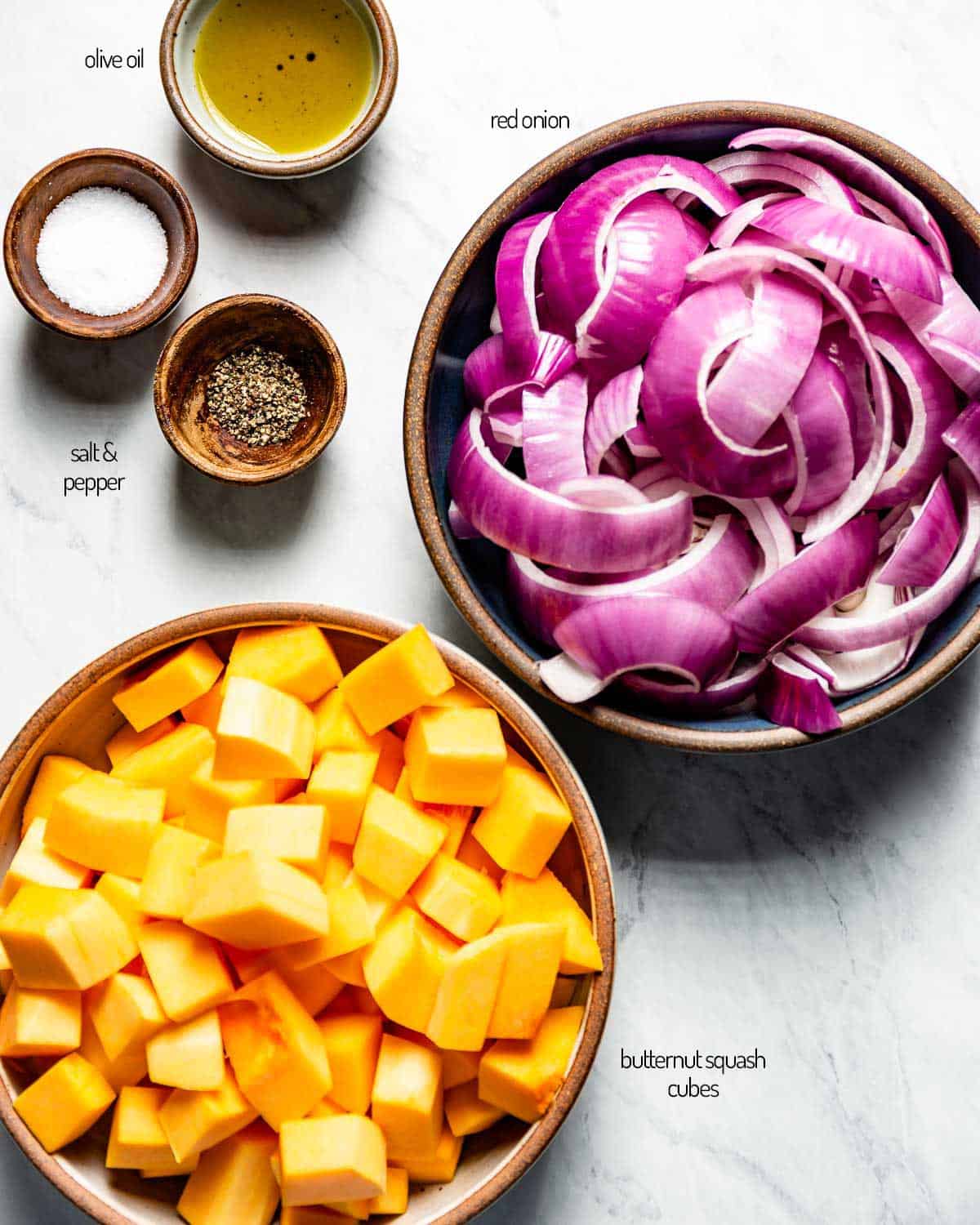
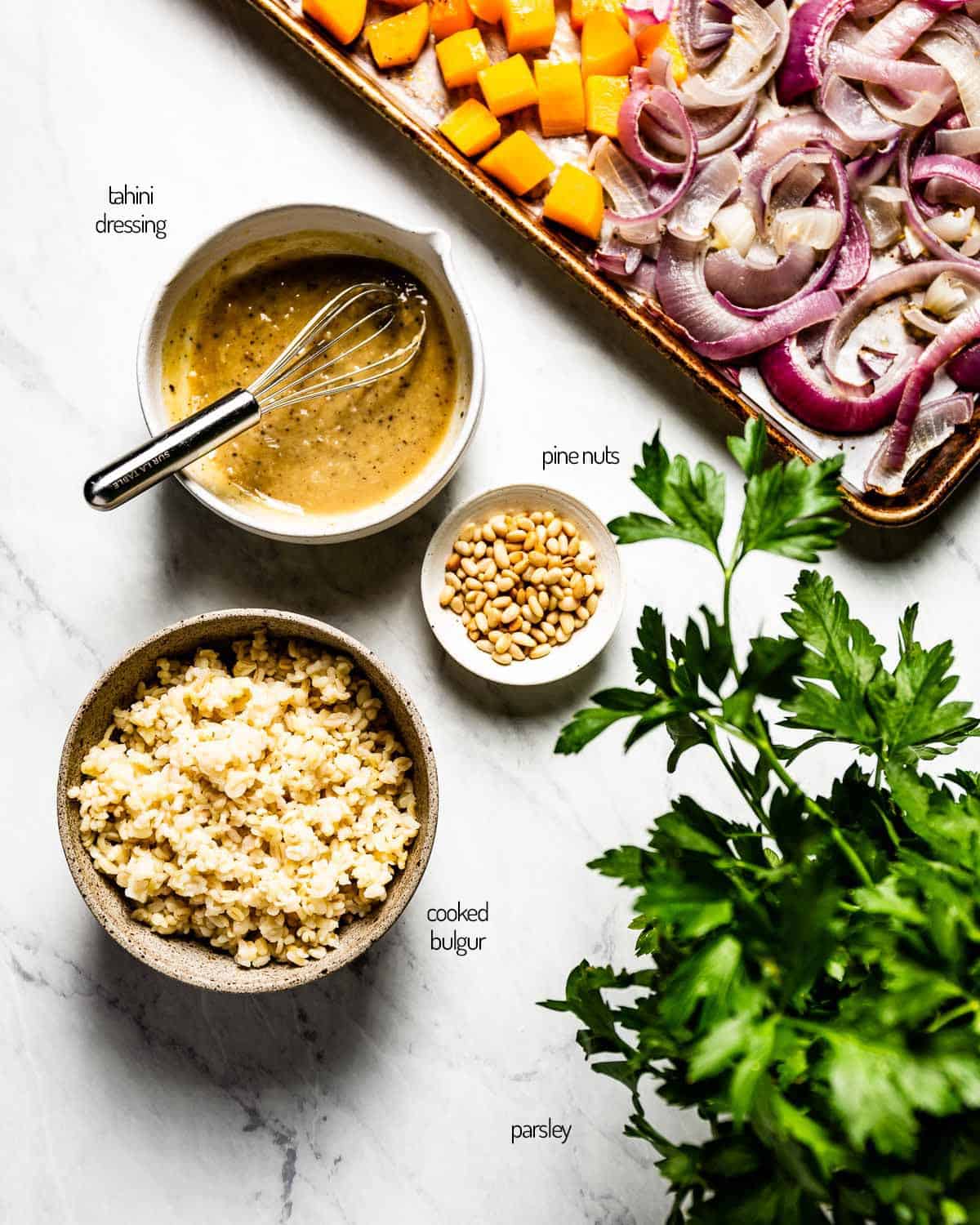
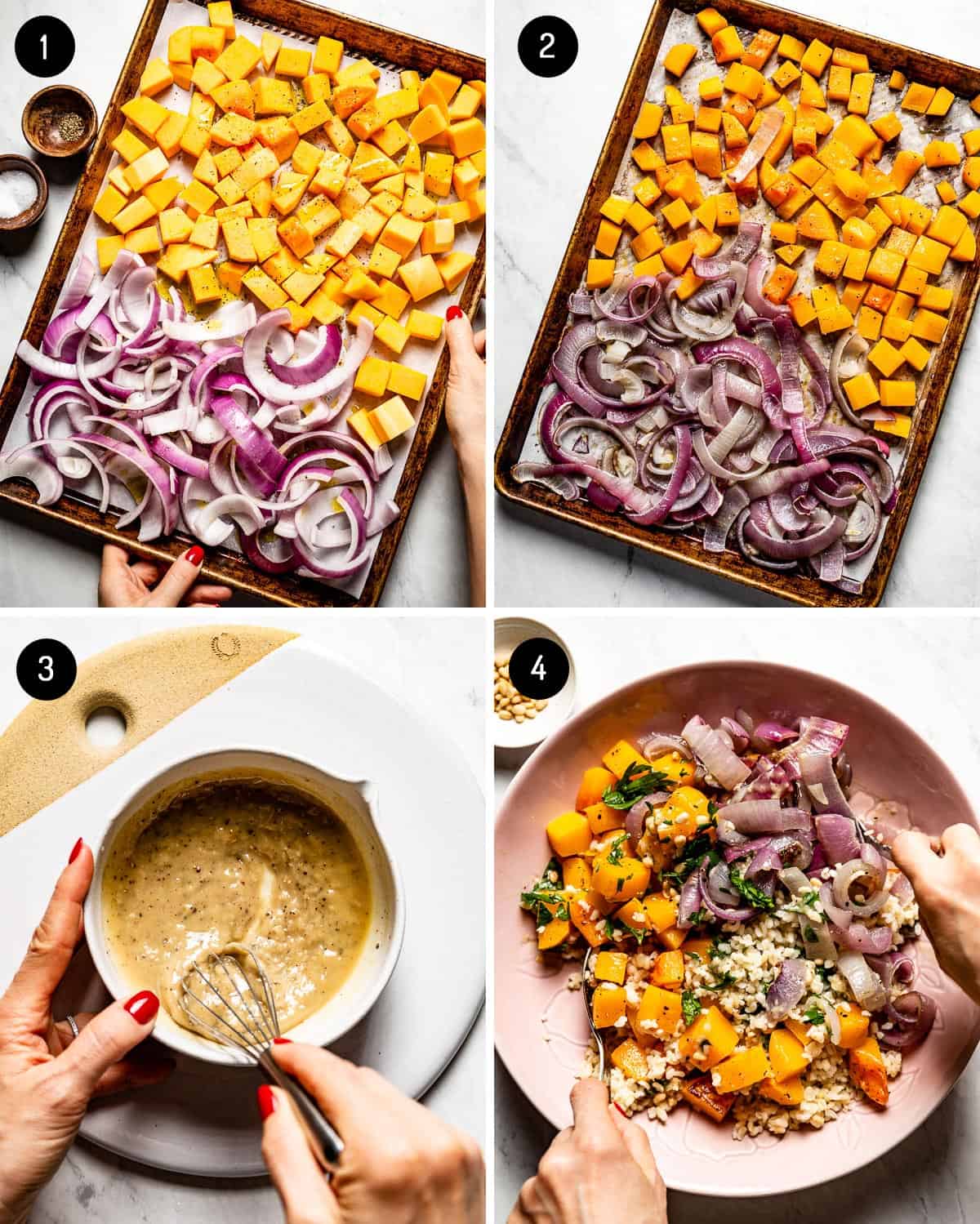
Roasted Vegetables: Pick up some butternut squash, red onions, olive oil, salt, and pepper.If you are new to cooking butternut squash and need a bit of guidance, be sure to check out my guide on how to prepare and cut butternut squash.
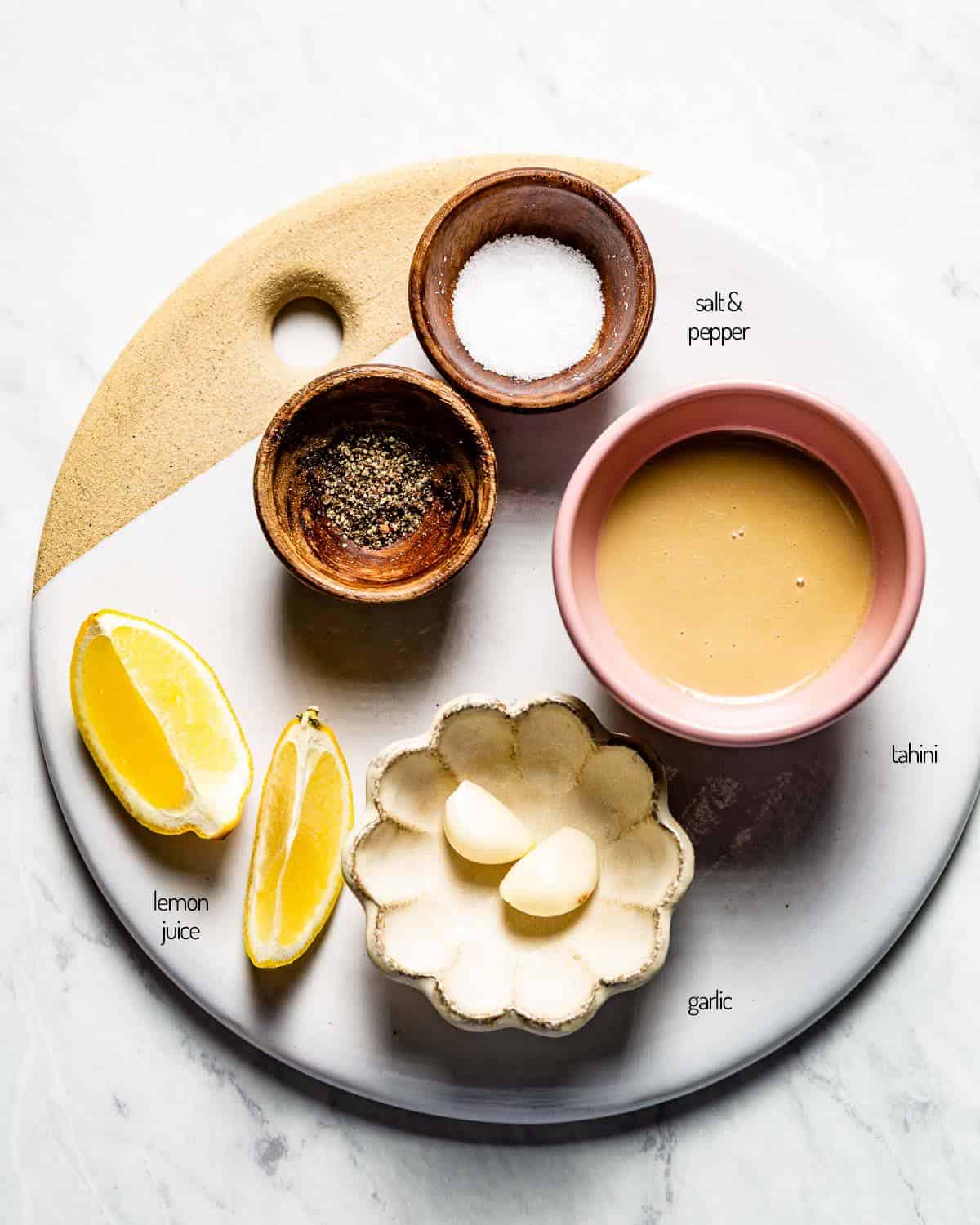
Tahini Dressing: This requires a simple mix of light tahini, lemon juice, chopped garlic clove, water, and Kosher salt. Or, change it up a bit with tahini yogurt dressing for a vegetarian option.
Bulgur and Mix-ins: Gather together cooked bulgur, za’atar, toasted pine nuts, Italian parsley, flaky sea salt, and black pepper.If you are new to cooking bulgur be sure to check out my comprehensive guide on how to cook bulgur. In that post, I share everything you need to know about types of bulgur and how to cook them.
A Few Notes on Ingredients:
Bulgur: Bulgur is cracked wheat that is sold in a number of different varieties. Look for it in the international section of the grocery store. This recipe uses medium coarse bulgur but coarse or even red bulgur would also work. If you are not familiar with types of bulgur, be sure to check out my detailed post on Types of Bulgur Wheat.If you can’t get your hands on bulgur wheat or are looking for a gluten-free option, use an equal amount of cooked quinoa or pick one of the many bulgur wheat alternatives. Za’atar: This unique herb-seed blend is a mix of dried oregano, thyme, and/or marjoram, sumac, and sesame seeds. It’s savory, tangy, and pungent. You can make Za’atar at home or buy it at the store. If all else fails and you can’t get your hands on it, simply use 1 tablespoon of sesame seeds instead. Pine Nuts: Buy a small package of pine nuts, since these tend to be the most expensive nut on the market. They are usually sold raw, so toast for a few minutes in the oven when you get home or in a small frying pan over medium-low heat with a little extra oil. With that being said, you can also use walnuts or pumpkin seeds (for a nut free option) in this recipe. Fresh herbs: The recipe below uses fresh parsley to finish it off but if you are serving it for your Thanksgiving dinner, you can use chopped sage leaves as well. Pomegranate Seeds: Sprinkle on a handful of pomegranate seeds for extra pop and color. Citrus Zest: Add some lemon zest from a large lemon or even orange zest at the very end.
Lunch: Serve it as is, and keep the rest for meal prep throughout the week. Dinner: Serve it on separate plates as a side dish to easy weeknight dinners. This dish would be a perfect side dish with Cornish Hens, Beef Stroganoff, and Mediterranean Lemon Chicken. Holiday Party or Celebration: Bring it to your guest’s house and serve it as a lovely compliment to potlucks, holiday parties, and more.
Vegetables: Roast as directed and store in an airtight container in the fridge. Tahini Dressing: Mix as directed, then transfer to a mason jar. Keep in the fridge until ready to serve. Bulgur and Mix-Ins: Store the cooked bulgur on its own, with the chopped parsley sprinkled on top, if desired. Store the toasted pine nuts in a small container on the kitchen counter.
Leftovers will keep for up to 5 days in an airtight container in the fridge. I do not recommend freezing the salad. This Recipe is: This recipe is adapted (with minor changes) from the cookbook: Jerusalem by Yotam Ottolenghi & Sami Tamimi (affiliate link.)