Beef broth or beef stock: You can use either beef broth or beef stock in this rib roast au jus sauce recipe. I prefer beef broth, as it has a less overpowering, concentrated flavor that better balances the richness of the pan drippings. However, if you decide to use beef broth, try to purchase a low-sodium variety to avoid oversalting your sauce. Worcestershire sauce: This pantry staple is essential to giving your standing rib roast au jus delectable umami flavors. Red wine: Though the classic au jus recipe uses red wine to get its crisp, acidic flavors, this ingredient is optional. If you want to make this au jus recipe without wine, simply add the equivalent amount of beef broth to your mixture. However, if you do use red wine, be sure not to use cooking wine. Cooking wine tends to be of lesser quality, filled with preservatives and extra salt that may negatively affect your recipe’s flavor profile. Instead, I suggest using a French red drinking wine, such as Cabernet Sauvignon or Pinot Noir. Seasonings: Because beef drippings already pack a ton of meaty, flavorsome taste, all you need to season your prime rib roast au jus is a simple mix of salt and pepper. Pan drippings: If you’re making prime rib, I highly recommend adding the drippings deposited in your roasting pan to your au jus, giving it a hearty, beefy finish. Remember, too, that straining your drippings is optional for this recipe. I prefer not to strain my pan drippings for an extra deep taste and thicker texture (thanks to the generous coating of my Prime Rib Rub), but you can strain yours if you want a clear au jus. Furthermore, you can also make this prime rib au jus without drippings, though it will have a less full-bodied flavor profile.
A sprig of rosemary or thyme: Floral, fragrant, and bright, these fresh herbs add a light finish to rib roast jus, perfectly balancing its heartier base. A few cloves of smashed garlic while simmering: If you want to give your au jus bold, savory-sweet undertones, add a few cloves of smashed garlic to your sauce while it simmers. The heat will help develop its depth of flavor, more thoroughly infusing the recipe with garlicky flavors.
Store: Store your prime rib jus in an airtight container, such as a jar, in the refrigerator for up to three days. Freeze: To freeze this delicious au jus recipe, bring it to room temperature. Then, transfer it to a freezer-safe container or jar, or pour it into an ice cube tray for easy future use. However, if you use a jar, leave a few inches at the top to accommodate any expansion, especially as a top layer forms over the sauce. You can then store your au jus in the freezer until ready to use. Thaw: When ready to thaw your leftover au jus, place it in the refrigerator overnight. Then, reheat it in the microwave or stovetop before using.
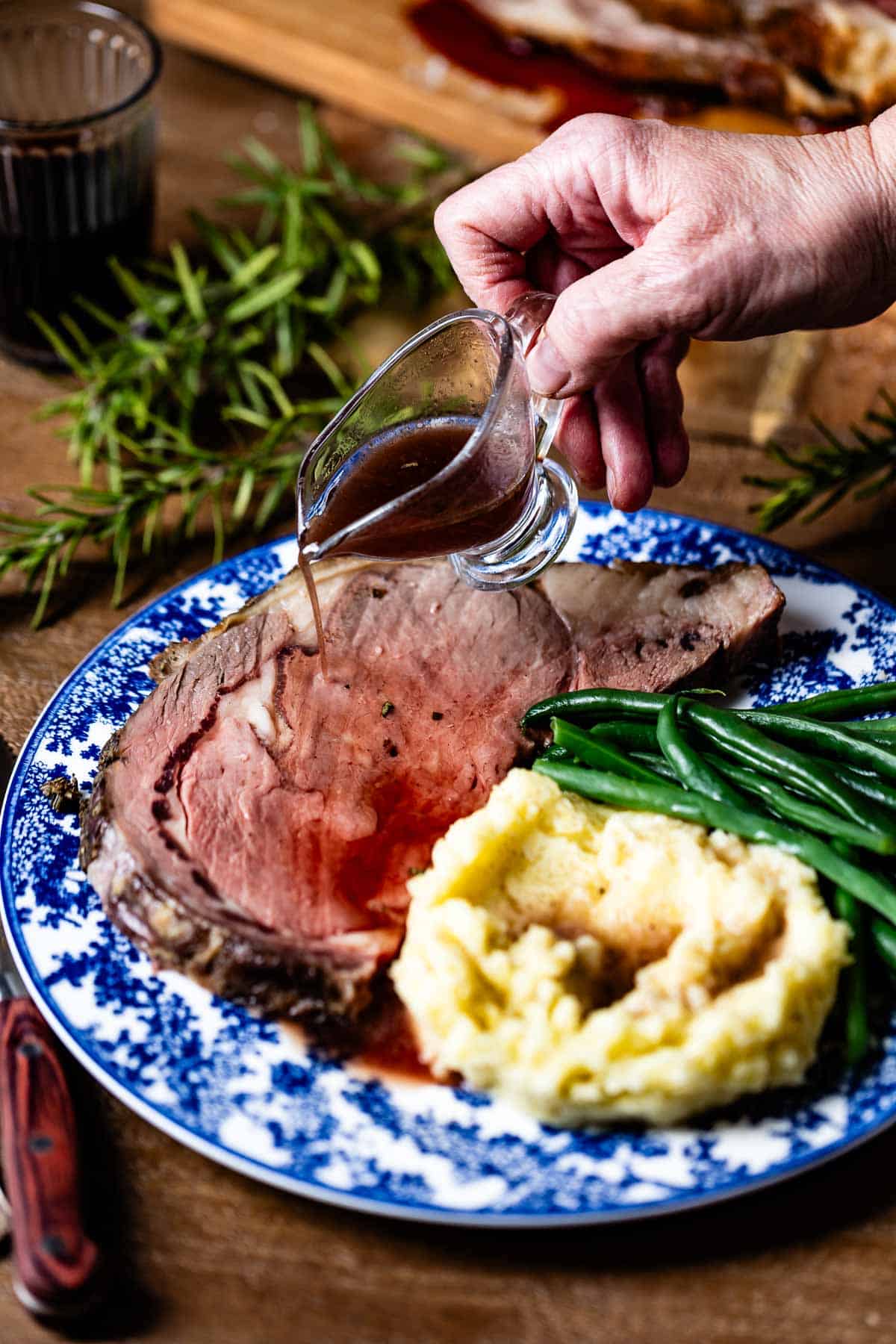
Dipping sauce: The most popular way to enjoy this flavorful sauce is to use it as an au jus dipping sauce for prime rib, beef tenderloin, and other beef dishes. This tantalizing pair will ensure every bite has maximal moisture and flavor. Drizzle over meat for extra moisture or flavor: If you’re on the hunt for the juiciest, most flavorful meat, au jus is precisely what you need. Drizzle your steak, filet mignon, or prime rib with au jus sauce, and every bite will come to life with succulence and hearty taste. Sandwiches: Not only does this recipe make a great addition to various meat-based mains, but it also makes an incomparable dip for your go-to sandwiches. You’ll get dozens of compliments when you serve this gourmet sauce alongside everything from delicious Leftover Rib Roast Sandwiches to tender French dip sandwiches to gooey Philly cheesesteaks or even Chicago-style Italian beef. Mashed potatoes: You don’t need to prepare a fresh batch of gravy to enliven your mashed potato recipe. Instead, pour some meaty au jus on top of your fluffy potatoes, and you won’t be able to resist a second helping. Cooking or braising liquid: Infused with bold, meaty flavor, this prime rib jus recipe is a no-brainer when preparing an equally flavorful, all-purpose cooking liquid. Use it to braise protein-packed meats or cook your favorite vegetables; every forkful will astound you with its ample flavor. Soups and stews: If you want a hassle-free solution for bland soup recipes, au jus is your answer! Pour some of this mouthwatering blend into your savory soup or stew recipes—especially beef-based ones!—and you’ll be spooning even more into your bowl in no time.
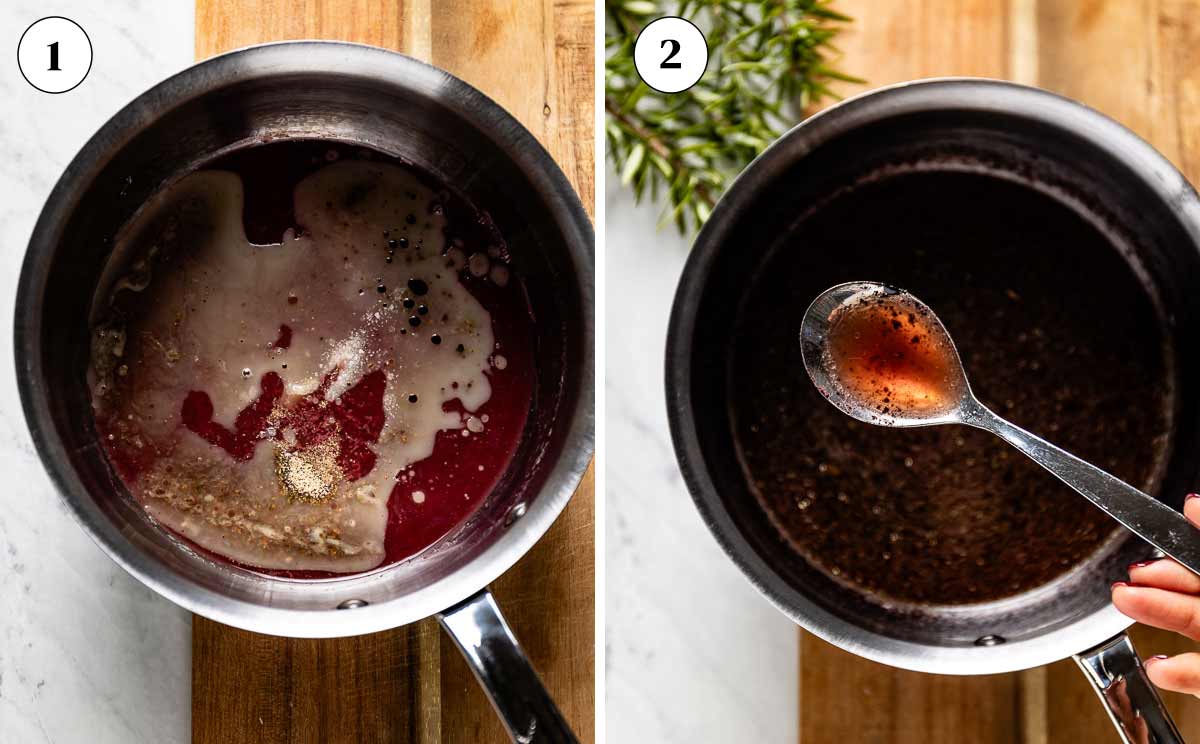
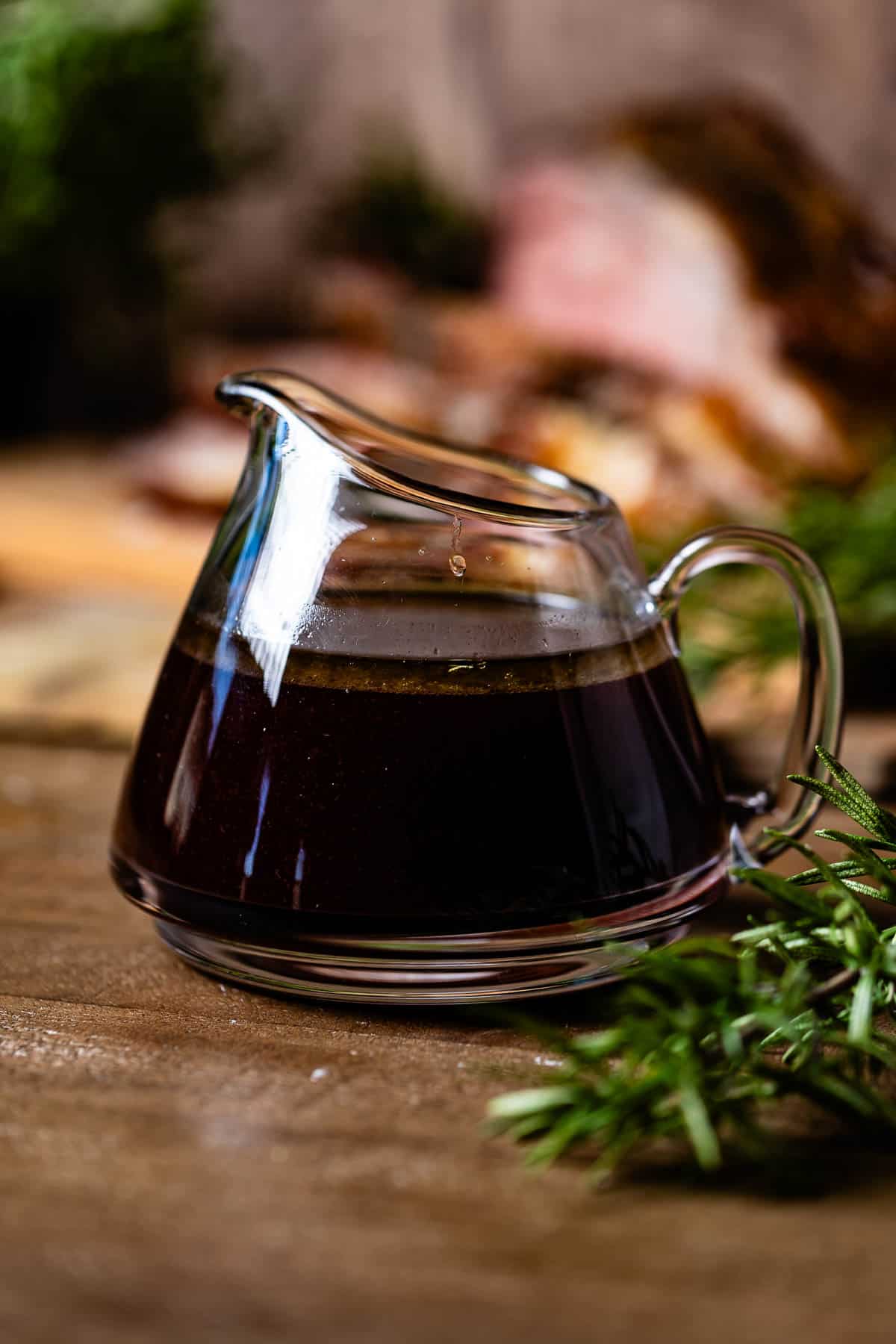
Pan drippings: When you make au jus from prime rib drippings, it’s up to you whether or not you want to strain your pan drippings before adding them to your au jus mixture. I usually use un-strained drippings, as the thicker bits add extra flavor to the juice. Still, you may strain your drippings if you prefer a clearer sauce. A word on reducing: It’s important to let your ribeye au jus simmer a bit to help the flavors fully develop, concentrate, and blend during the cooking process. However, be careful not to over-simmer the mixture. Otherwise, the sauce will become too intense as it reduces, giving it an unpleasantly overpowering taste. Seasoning: The best au jus sauce for prime rib is one that has an ideal amount of seasoning. Therefore, it’s essential that you taste your beef sauce before serving and add additional seasoning if necessary. Fat content: While preparing your au jus sauce for prime rib, you may find that the mixture produces too much fat for your liking—especially when the drippings come from your prime rib’s fat cap. If your simmered liquid has too much, feel free to skim the top to eliminate excess fat. Ideal consistency: A classic French au jus sauce is very liquidy, making it the perfect addition to hearty beef mains, whether drizzled on top or served as a dipping sauce. While it is not traditional, if you prefer a more creamy au jus sauce, you can mix a tablespoon (or more – depending on the consistency you are after) of cornstarch with some of the liquid and make a cornstarch slurry. Then you can pour it into the au jus sauce and mix until combined and reached a creamer consistency.