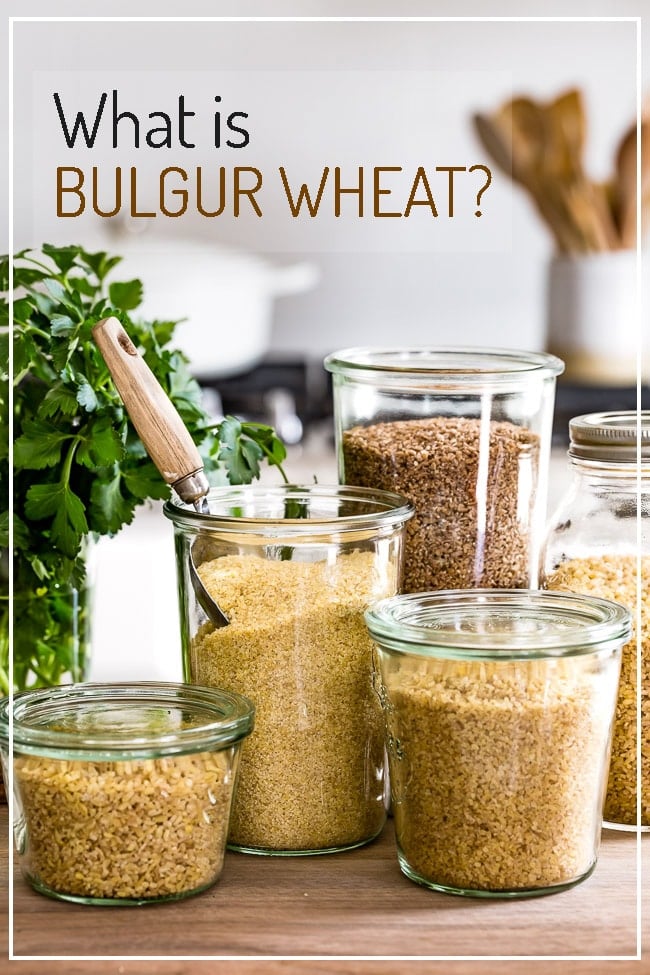
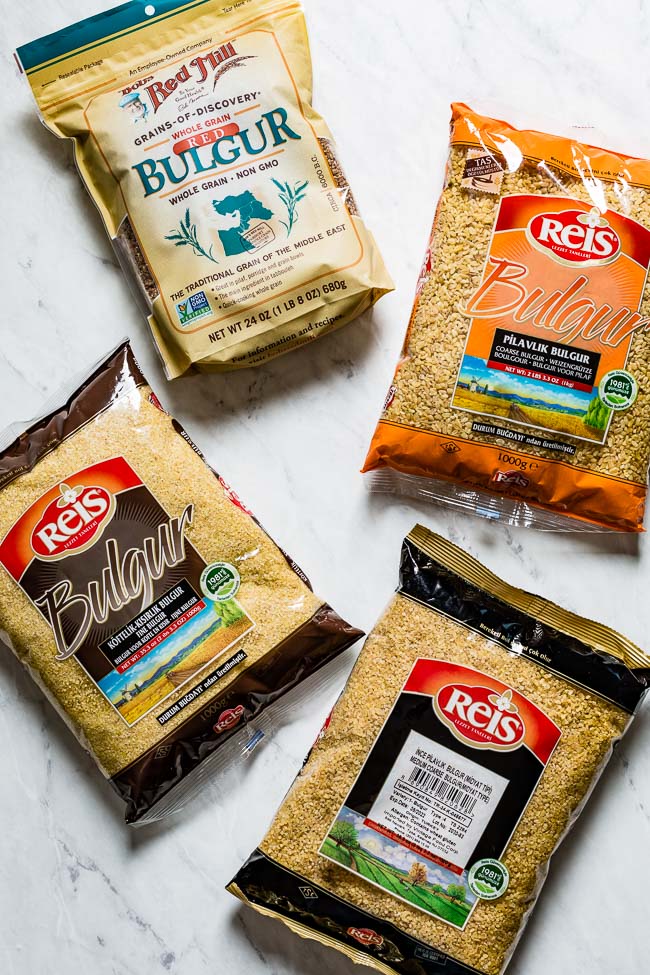
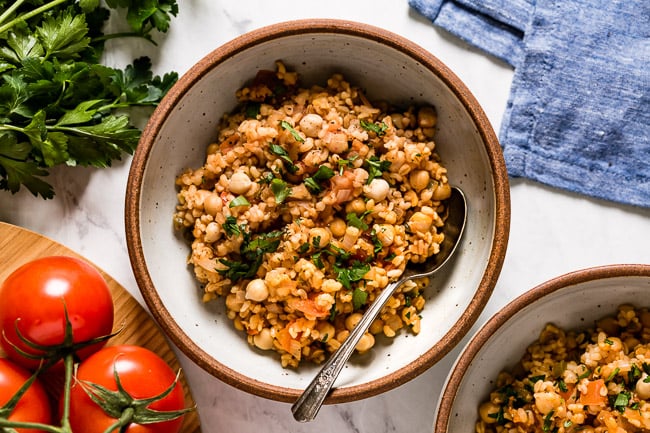
After I moved to the US, I realized that most people don’t know what bulgur is. Because of that they are intimidated by it. They are also confused about what to buy at the grocery store when a recipe calls for bulgur. I thought it would be helpful if I were to create a guide for bulgur, where I explain everything you need to know about it, including what is it made of, types of bulgur, where to find it in supermarkets (and online), health/nutritional benefits (including protein value & calories), and recipe ideas to use it in your daily cooking. I hope that with the help of this guide, from now on, you will be able to shop for bulgur and use it in your daily cooking with confidence.
What is it made of? Is Cracked wheat and bulgur the same thing?
You cannot define bulgur wheat without first defining cracked wheat as they are pretty the same thing with one big difference. Then you might ask, what is cracked wheat? According to this article I found on Dr. Weil, cracked wheat are whole wheat berries made by milling them into smaller pieces. This process reduces cooking time while preserving the nutrient and fiber-packed bran and germ layers. On the other hand, bulgur wheat is cracked wheat that is parboiled, dried, and then broken into various smaller pieces. This is why, when you look for bulgur you see most brands specify the type of bulgur on the packaging as fine (or also referred to as extra fine), medium-coarse, coarse, or extra coarse bulgur. Additionally, the fact that bulgur wheat is cut into smaller pieces makes bulgur a quick-cooking grain. However, the process and time of cooking change depending on its size. To answer the initial question, crack wheat and bulgur are essentially the same things, but bulgur is parboiled (or steamed) during the processing. This is why bulgur cooks faster than crack wheat.
Is bulgur whole wheat?
Yes, it is, and the best explanation I was able to find comes from this article I found on Wikipedia: If you are not familiar, durum wheat (also called pasta or macaroni wheat) is the second most cultivated wheat globally. Additionally, according to this article on Healthline, it is considered a whole grain because the entire wheat kernel; including the germ, endosperm, and bran, is eaten.
Is it Gluten-Free?
Since it is made from wheat, bulgur is not gluten-free. If you have celiac disease and/or follow a gluten-free diet, I would not recommend consuming bulgur. If you need a gluten free alternative for bulgur, be sure to check out our article on the best Bulgur Substitutes.
Where is it from?
While the specific country of origin is unknown, it is believed that it was born in the Levant region – the large area in the Eastern Mediterranean region that consists of Syria, Lebanon, Israel, Palestine, Jordan, Turkey, and Iraq. With that being said, according to this article on Wikipedia, it is commonly used in Indian and Pakistani cuisine as a cereal to make sweet or savory porridge.
Types of Bulgur:
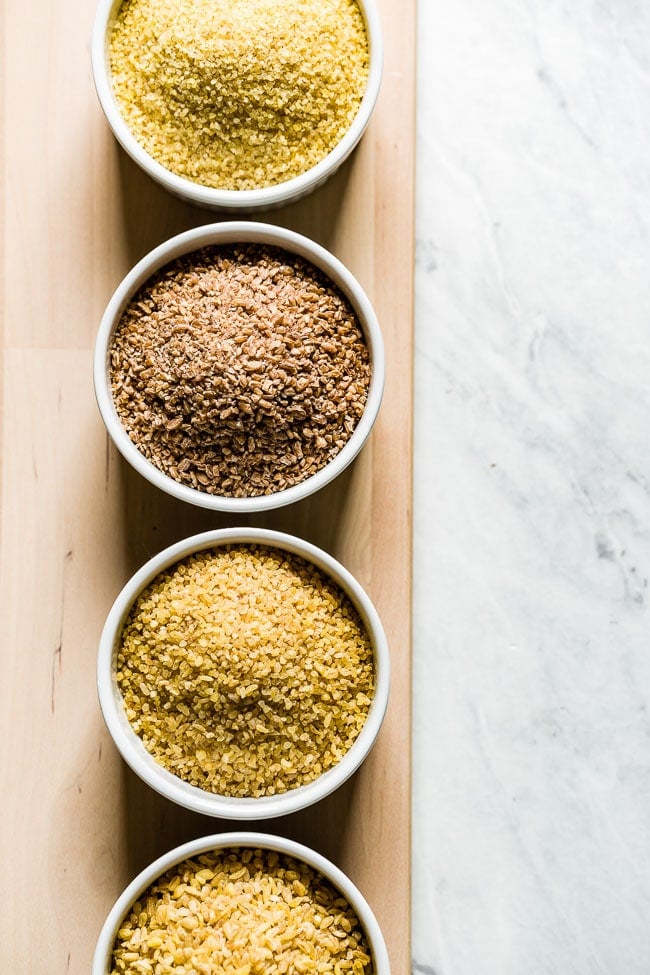
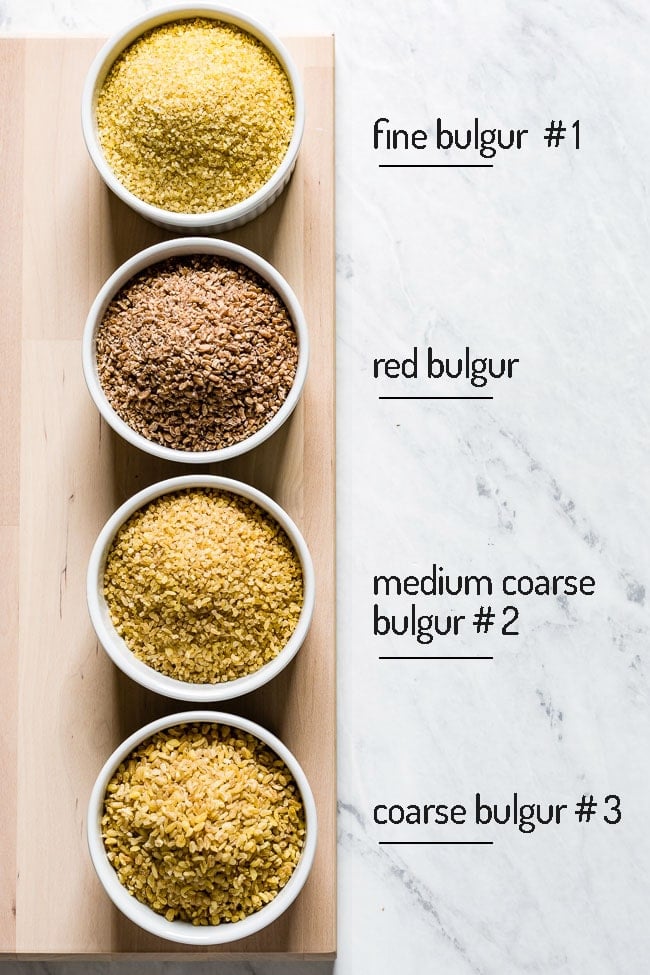
When you go to the store or search for it for purchasing it online, you will see that bulgur comes in different sizes. As I explained earlier, this is because bulgur is cut into various sizes during its production. I think this is one of the main reasons why most people feel confused about which one to get for the dish they are making that calls for bulgur. Bulgur Wheat comes in four different types and there are fine, medium coarse, coarse, and extra coarse bulgur. Below you will find each type of bulgur with popular uses of recipes that you may have heard of. If you want to learn more about cooking each of these various sizes of bulgur, be sure to check out my post on How To Cook Bulgur Wheat.
Fine Bulgur:
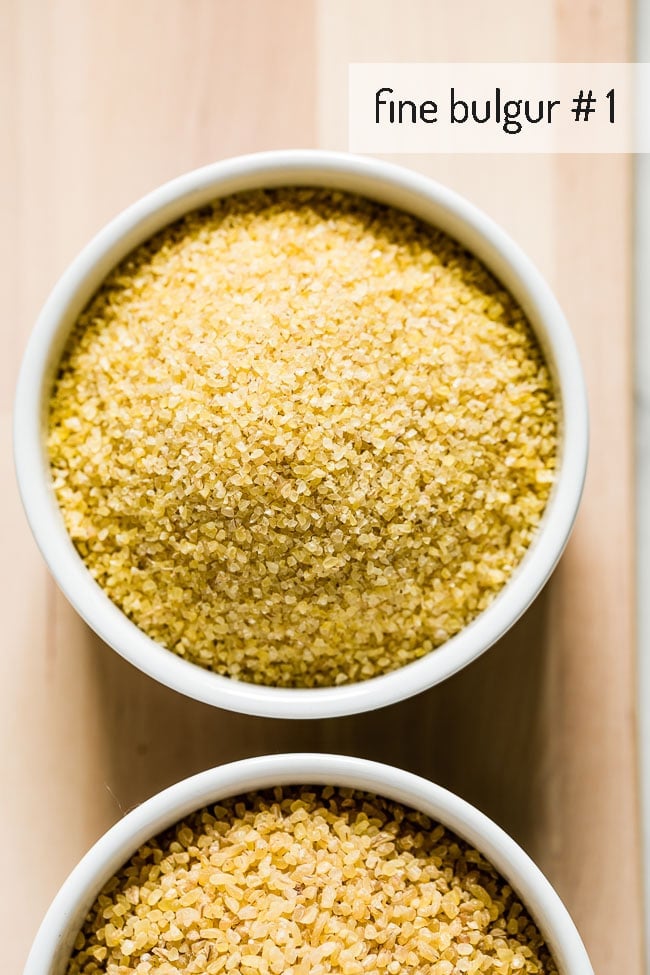
Also called quick-cooking bulgur and extra-fine bulgur, this is the smallest size of bulgur. Some brands also advertise it as #1. In Turkish cuisine, this is what we use in making kisir (aka tabbouleh salad). Since it is so small, it cooks the fastest compared to its medium and coarse varieties. While some other Middle Eastern countries cook it like rice on the stovetop, in Turkish cuisine, we soak fine bulgur in boiling hot water for about 10 minutes instead of cooking it on the stovetop in a pan.
Medium Coarse Bulgur:
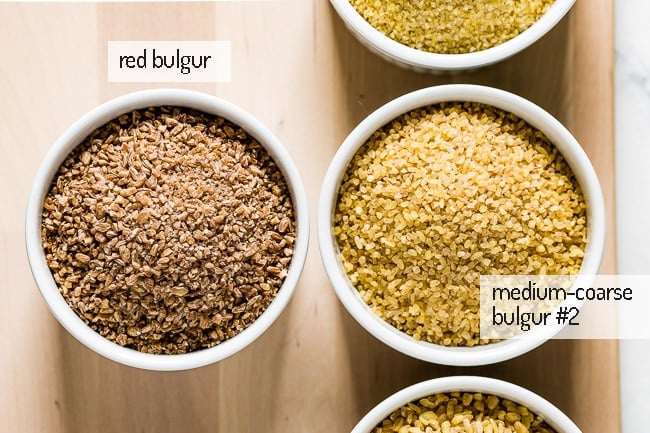
Medium-coarse bulgur is the most widely available type of bulgur in the US. This is the variety of bulgur you find in the bulk bins of most supermarket chains. Some brands advertise it as #2. As the name suggests, it is medium coarse. In other words, in terms of its size, it is between fine and coarse. Medium coarse bulgur can be used to make bulgur pilaf, porridge and as an addition to various stuffing, salad, meatball, soup, stew, and stir fry recipes. While I am sure there are exceptions, you can use medium-coarse bulgur in many recipes where you use rice, quinoa, and couscous.
Red Bulgur – How is it different than the regular kind?
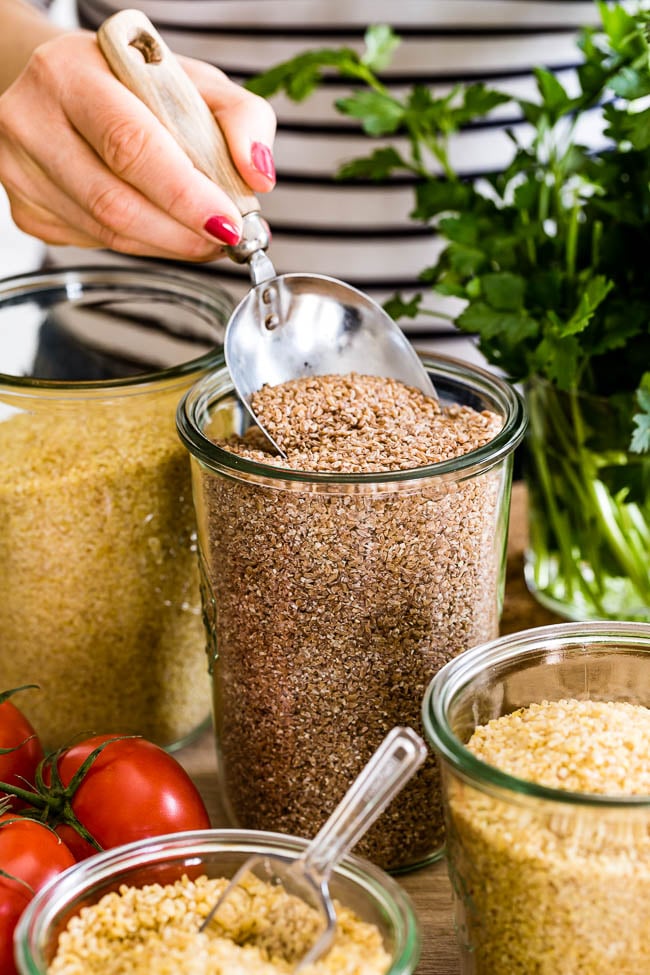
There is also red bulgur, which is also considered a medium-coarse cut. Bob’s Red Mill sells red bulgur and advertises it as a quick-cooking whole grain in the US. As the name implies, red bulgur is darker in color. It is made from whole grain red wheat, which is softer than yellow bulgur made from durum wheat (the hardest of all wheat.) Because of that, technically, it cooks faster compared to bulgur made from durum wheat. However, during my recipe testings in my own kitchen, I found that the difference in time was no longer than a few minutes.
Coarse & Extra Coarse Bulgur:
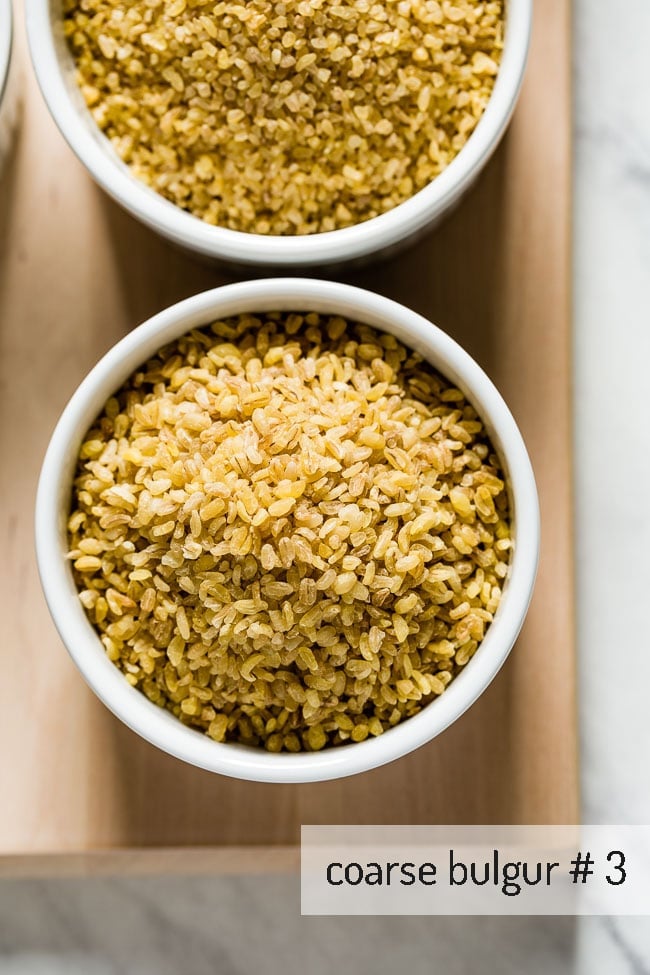
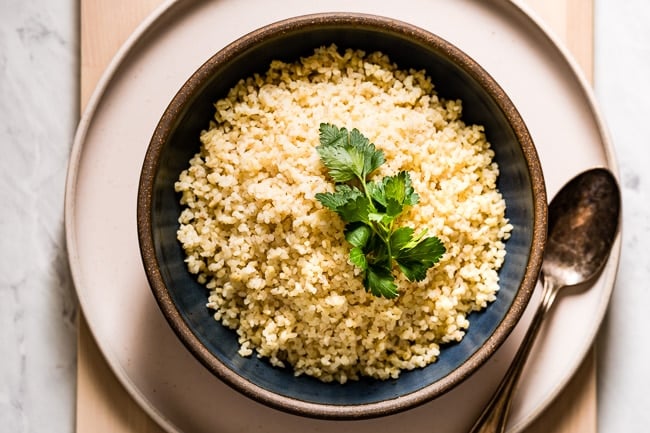
These are the largest size when it comes to types of bulgur. They are also advertised as #3 & #4. In Turkey, we refer to coarse bulgur as pilavlik bulgur, which means bulgur used for making pilaf. Due to being the largest bulgur type, it takes the longest to cook. If you want to cook bulgur like rice, I find that this is the best type of bulgur to use. With that being said, depending on the recipe that you are using, the time difference in cooking between medium-coarse and coarse bulgur is usually no longer than 2-4 minutes. This is why, in general, you can use medium-coarse and coarse bulgur interchangeably and cook them the same way. A great example of this is my tomato bulgur pilaf recipe. Either type of bulgur can be used to make bulgur pilaf and deliver great results.
What Does It Taste Like?
Bulgur has an earthy and nutty flavor. It has a satisfying chewy texture, which is why it is usually served as a side dish for chicken and meat dishes in the Middle Eastern Cuisine. This is also why bulgur makes the best stuffing/filling in vegetarian recipes, similar to how I used it in this Middle Eastern Stuffed Peppers recipe.
Nutrition Facts:
According to this article in Healthline, because it is minimally processed, it is a nutritious grain than more refined wheat products. It is high in fiber and offers a variety of vitamins and minerals. 1 cup (182 grams) of cooked bulgur offers (source 1 & source 2):
Calories: 151Carbs: 34 gramsProtein: 5.6 grams – 11% of the Daily IntakeFat: 0 gramsFiber: 8 gramsFolate: 8% of the Daily Intake Vitamin B6: 8% of the DINiacin: 9% of the DIManganese: 55% of the DIMagnesium: 15% of the DIIron: 10% of the DI
As you can see above, bulgur is rich in manganese. This mineral has many health benefits, including but not limited to improving bone health and blood sugar regulation and reducing inflammation. (Source)
Where to find it in the supermarket?
Nowadays, you can easily find bulgur in the international section (Mediterranean or Middle Eastern sections) of most supermarkets. I also recommend looking for it in bulk bins in major supermarkets like Whole Foods and Fresh Market.
Duru – Fine Bulgur (#1) to make tabboulehReis – Coarse Bulgur (#3) to make pilafBob’s Red Mill Red Bulgur – You can also find this in most supermarkets if you prefer not to order online.
Storage & Shelf Life
Bulgur should be stored in an airtight container and protected from light, heat, and moisture. As it is with any other whole grain, as long as it is properly stored, it should be fresh for up to 24 months.
What do I do with it? Recipe Ideas:
Now that you know what to look for and which type of bulgur to buy, here are a few ways I recommend using it in your daily cooking: